Ever thought your hair solution could be in your kitchen or garden? Many head straight for chemicals, but nature offers great fixes for thinning hair. This piece gives you tips and tricks from experts on how to use natural remedies for your hair. We cover nutrition, lifestyle, and scalp care to help you get fuller hair. Plus, we talk about what causes hair loss and when to see a professional for it.
Key Takeaways
- Iron and zinc deficiencies are common causes of hair loss that can be addressed through dietary changes.
- Natural remedies like essential oils and herbal treatments can promote hair regrowth.
- Regular scalp massages have been shown to improve hair thickness.
- Maintaining a balanced diet that includes protein-rich foods supports hair health.
- Stress management techniques and proper hydration also play a vital role in promoting healthy hair growth.
Understanding Hair Thinning
Hair thinning can be a tough experience. It often points to underlying issues that need attention. Knowing the common causes is key for addressing the problem well. Factors from genetics to lifestyle choices play a role. Catching hair thinning signs early leads to timely action and the best treatments.
Common Causes of Hair Thinning
Genes are a big part in hair thinning, affecting both men and women. Hormone changes related to pregnancy or birth control, or even big weight losses, can cause thinning. So can lacking nutrients like iron, folic acid, and vitamin D. Too much stress can trigger too much shedding. Knowing these causes helps in finding good solutions.
Signs of Hair Thinning
Spotting hair thinning signs early helps a lot in treatment. You might see more hair falling when you brush or wash it. Look out for thin spots or less hair overall. Losing more than 100 hairs a day or sudden patchy loss means it’s time to see a doctor.
When to Consult a Professional
Sometimes, hair thinning happens as we get older. But if you lose a lot of hair, visit a doctor, especially if there’s itching or skin issues. Knowing when to seek help is key. It leads to the right treatments suited to your situation.
| Cause | Description | Signs to Look For | Recommended Action |
|---|---|---|---|
| Genetics | Family history of hair loss affects likelihood. | Gradual thinning at the crown or temples. | Consult a specialist for assessment. |
| Hormonal Changes | Changes due to pregnancy or medication. | Sudden thinning or patchiness. | Discuss potential treatments with a doctor. |
| Nutritional Deficiencies | Lack of essential vitamins and minerals. | Weak nails; dry, brittle hair. | Consider dietary adjustments or supplements. |
| Chronic Stress | Emotional and physical stress impacts hair growth. | Hair falls out in clumps, often after stressful events. | Engage in stress-relief activities. |
Nutrition for Healthy Hair Growth
Eating the right foods is key to having healthy hair. Our bodies need many vitamins and minerals for strong, lively hair. A balanced diet helps people get these important nutrients. This promotes hair growth naturally. If we don’t get enough of certain nutrients, we might see our hair getting thin or falling out.
Essential Vitamins and Minerals
Some vitamins are very important for our hair. Biotin, vitamin A, C, D, and E are essential. Biotin helps make our hair strong. It’s rare, but not having enough can cause hair loss. Vitamin A produces sebum to keep our hair moist. It’s in foods like sweet potatoes and spinach.
Vitamin C is needed for making collagen, which strengthens hair. Eating strawberries or yellow sweet peppers gives us plenty of vitamin C. This makes our hair strong. Vitamin D helps with hair growth cycles, and vitamin E improves blood flow for healthy hair. Foods like almonds and avocados are full of these nutrients.
Foods That Promote Hair Health
Adding certain foods to your diet can boost hair health. Eggs are great for protein and biotin, which are good for hair. Oysters are rich in zinc, which helps hair grow and repair itself. Beans and legumes provide iron and protein, helping to prevent hair loss.
Eating these foods helps our body use vitamins and minerals well. For more about these nutrients, visit this link. Focusing on what we eat helps address thinning hair problems. It also helps maintain a healthy scalp.
Natural Remedies for Thinning Hair
Looking into natural ways to fix thinning hair offers good options for people wanting healthier hair. Essential oils and herbs are noted for helping hair grow back. Adding these natural remedies to your daily care can make your hair thicker and grow faster.
Essential Oils for Hair Regrowth
Essential oils are known for their healing effects. Some top picks for hair regrowth are:
- Rosemary oil: Research says it works similarly to minoxidil for certain types of hair loss.
- Coconut oil: Putting it on your scalp might make your hair healthier.
- Jojoba oil: Packed with Vitamins B, C, E, and key minerals, this oil helps in growing strong, healthy hair.
- Pumpkin seed oil: It’s famous for stopping a process that could lead to hair loss in men.
Herbal Treatments to Consider
There are also many herbal treatments for hair loss. Some notable ones are:
- Aloe vera: Long used for soothing the scalp, though more studies are needed on its effectiveness.
- Green tea: Rich in catechins, it may help undo hair loss caused by DHT and promote healthy follicles.
- Geranium oil: One study found it can help increase blood flow and hair growth.
- Onion juice: Clinical research found it can significantly increase hair growth, making it a strong option.
| Natural Remedy | Key Benefits | Application Tips |
|---|---|---|
| Rosemary Oil | Stimulates hair growth, similar effectiveness to minoxidil | Massage into the scalp daily for best results |
| Coconut Oil | Enriches the scalp microbiome, prevents damage | Apply before shampooing to nourish the hair |
| Onion Juice | Promotes increased hair growth | Use as a topical treatment 2-3 times a week |
| Green Tea | Reverses DHT-related hair loss | Apply cooled tea to the scalp for 30 minutes |
| Geranium Oil | Improves circulation, enhances hair growth | Mix with a carrier oil before application |
Using these natural remedies can help you fight thinning hair. With regular use of these herbs and essential oils, fuller, healthier hair is possible.
Scalp Care Techniques
Effective scalp care is key to having healthy hair and promoting regrowth. By doing things like scalp massages and exfoliation, you boost blood flow. This helps keep your scalp clean and your hair follicles happy.
Massages to Stimulate Blood Flow
Scalp massages boost hair growth. A study from 2020 found they help women regrow hair after chemotherapy. Another study in 2016 showed men got thicker hair by massaging their scalps each day for 24 weeks. For best results, massage your scalp for at least five minutes, several times a day.
In 2019, a survey found that 69% of people saw more hair growth by massaging twice a day. Using scalp care techniques like this can help blood reach your hair follicles better. This could make your hair denser.
Exfoliation Methods for the Scalp
Keeping your scalp healthy is also crucial. Exfoliating gets rid of dead skin and too much oil, helping your hair follicles work their best. You can use natural stuff like sugar or coffee grounds to make gentle scrubs. Exfoliating your scalp regularly keeps it clean and can cut down on itching and irritation.
To create a good environment for hair growth, it’s also important to eat right and stay hydrated. If you want to know more about how to take care of your scalp naturally, check out this helpful resource.
Hair Care Products That Help
Finding solutions for thinning hair is crucial. The right hair care products can greatly improve the situation. Various shampoos and conditioners are made to boost hair health and encourage regrowth. It’s important to understand how these products work to make good choices for your hair.
Shampoos to Thicken Hair
Special shampoos can add volume and guard against damage. They usually have biotin, caffeine, and niacinamide. These ingredients nourish the hair. They help your hair look fuller and grow healthier.
| Product Name | Key Ingredients | Price | Effectiveness |
|---|---|---|---|
| Kérastase Densifique Bodifying Shampoo | Glycerin, Biotin | $34 | Strengthens and adds density |
| Nioxin Cleanser Shampoo | Ginseng, Niacin | $28 | Prepares scalp for thicker hair |
| Redken Thickening Shampoo | Filloxane, Wheat Protein | $25 | Builds fullness with each wash |
Conditioners for Strengthening
Conditioners help by reducing breakage and making hair easier to manage. Picking ones that strengthen is smart. They usually contain keratin, vitamins E and B5, and natural oils. These components make hair strands stronger and encourage growth.
| Product Name | Key Ingredients | Price | Effectiveness |
|---|---|---|---|
| Kérastase Resistance Conditioner | Pro-Keratin, Lipids | $36 | Repairs and strengthens damaged hair |
| OGX Thick & Full Biotin & Collagen Conditioner | Biotin, Collagen | $10 | Increases hair thickness and softness |
| Moroccanoil Moisture Repair Conditioner | Argan Oil, Keratin | $32 | Revitalizes dry and damaged hair |
Choosing the right shampoos and conditioners is key for thinning hair. With regular use, you might see your hair get thicker and healthier.
Lifestyle Changes for Better Hair Health
Making some life changes can really help your hair get healthier. Managing stress, staying hydrated, and getting enough sleep are key. These steps support stronger, fuller hair and should not be overlooked by those worried about hair loss.
The Impact of Stress on Hair
Stress can really hurt your hair, causing conditions like sudden hair loss. When you’re very stressed, you might see more hair falling out. Doing things like mindfulness, yoga, and exercising can help calm stress. This not only helps your mind but also improves your hair’s health.
Importance of Sleep and Hydration
Sleep is super important for your hair to grow back healthy. Not sleeping enough can mess up your hormones and hurt your hair growth. Try to sleep between 7-9 hours every night.
Being well-hydrated is also essential. Drinking plenty of water helps nutrients get to your hair roots. This keeps your hair strong and prevents it from getting brittle. So, don’t forget about the role of good sleep and staying hydrated for healthier hair.

| Lifestyle Factor | Impact on Hair Health | Recommended Practices |
|---|---|---|
| Stress Management | Reduces hair loss linked to stress | Mindfulness, exercise, yoga |
| Sleep | Supports hair regeneration | 7-9 hours of quality sleep |
| Hydration | Improves nutrient delivery to follicles | Drink adequate amounts of water |
Avoiding Common Hair Mistakes
Taking care of hair isn’t as simple as it might seem. Many people damage their hair without realizing it. Knowing how to avoid common mistakes can help keep your hair healthy and full.
Heat Styling Damage
Heat styling tools, like straighteners and blow dryers, can harm your hair. Using them too much can make your hair weak and easy to break. Try to use these tools less and always use a heat protectant spray.
Choosing natural styles or letting your hair air dry can also lower heat damage risks. This helps keep your hair strong and prevents breakage.
Overwashing and Hair Care Routines
Washing hair too much is a common mistake. It can take away natural oils, making hair dry and irritated. It’s better to wash your hair every few days, depending on your hair type.
This way, your hair keeps its moisture and stays healthy. This prevents unnecessary hair loss too.
Professional Treatments for Hair Regrowth
Looking into professional solutions for hair regrowth can open up effective choices for people. Minoxidil and Platelet-Rich Plasma therapy are noted for their proven success.
Minoxidil and Its Effectiveness
Minoxidil, also called Rogaine, is a top choice for treating hair loss, including in men and women. It’s especially effective in the beginning stages of hair thinning. Users may start to see results within six to twelve months. Initially, some might notice more hair falling out, but this is just a sign that new hair is coming.
Doctors say using it regularly is key. Many see big improvements with Minoxidil Foam, which costs about $15 a month. A study found that using microneedling with 5% Minoxidil greatly boosted hair growth in men with early hair loss in just 12 weeks.
Platelet-Rich Plasma Therapy
Platelet-Rich Plasma therapy is another top choice for hair regrowth. It uses your own platelets to help hair follicles and promote new growth. Treatment usually begins with injections once a month for three months, and then every three to six months to keep it up.
Studies show that people getting PRP treatments see their hair come back slowly over time. This makes it a great option for enhancing their hair regrowth efforts.
| Treatment Method | Time for Noticeable Results | Frequency of Sessions | Average Cost |
|---|---|---|---|
| Minoxidil (Rogaine) | 6-12 months | Daily application | $15/month |
| Platelet-Rich Plasma Therapy | Varies by individual | Initial: Once/month for 3 months; Maintenance: Every 3-6 months | Varies (consultation required) |
The Role of Genetics in Hair Thinning
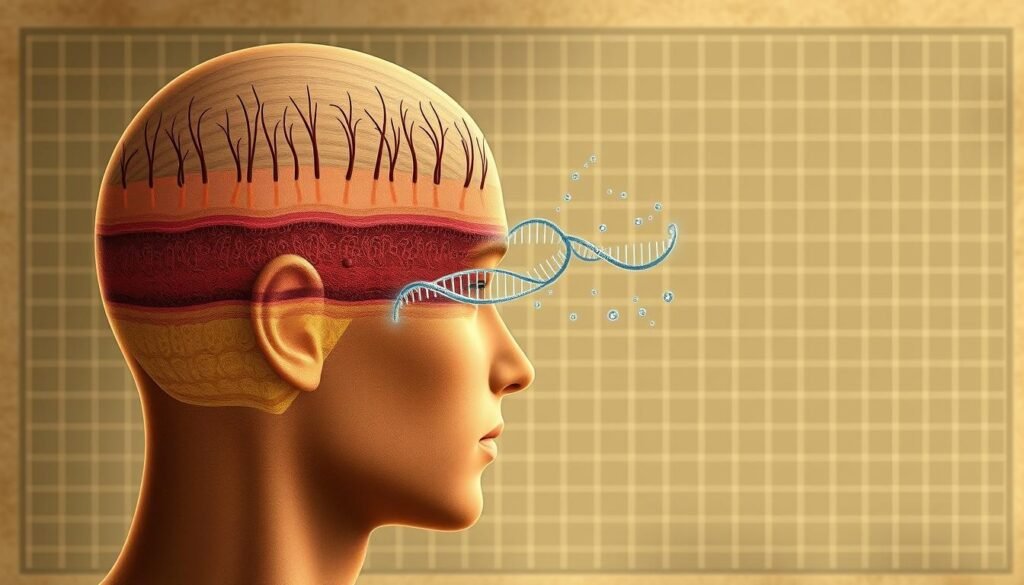
Genetics is key to predicting if you might face hair thinning. It impacts both men and women, often seen in families with a history of hair loss. Knowing about these genetic factors helps us understand the chances of inheriting such conditions. Studies have shown that having family members with hair loss increases your own risk.
How Family History Affects Hair Health
About 80 percent of men will face male pattern baldness (MPB) by 80. Genetics cause about 80 percent of these cases. A specific study showed men with the AR gene are more likely to have MPB. For women, around half might face female pattern baldness (FPB) by 80, often due to menopause.
Many people with noticeable hair loss had fathers with the same issue. This shows genetics play a big part in hair thinning. But, it’s not just about genes. Hormones, lifestyle, and environment also affect hair health.
| Gender | Percentage Affected by Pattern Baldness | Genetic Influence |
|---|---|---|
| Men | 80% by age 80 | ~80% genetic factor |
| Women | 50% by age 80 | Influenced by hormonal changes |
Hereditary hair loss, known as androgenetic alopecia, is common worldwide. Once hair follicles shrink, it’s hard to restore hair. Understanding these genetics helps people look for early treatments for better hair health.
Embracing Hair Styles for Thinning Hair
Finding hairstyles for thinning hair can boost your look and confidence. The right products and techniques make hair seem fuller. Styles and accessories help get the look you want.
Hairstyles That Add Volume
Hairstyles that frame your face can make your hair look thicker. This is helpful if your hair is thinning at the hairline. About 70% of hairstylists suggest side-swept bangs for this. Other good styles include:
- Blunt Cuts: These can make your hair look 20% fuller than layers.
- Curls and Waves: Adding curls or waves can make hair seem 30% more voluminous.
- Strategic Layers: The right layers can add 20% more volume but avoid choppy cuts.
Styling tools and products can help you get a fuller look. Volumizing items can make hair seem 50% thicker. Root sprays offer a quick fix by adding up to 40% more volume.
Hair Accessories to Enhance Appearance
Choosing the right hair accessories also makes a big difference. They should match your style and be practical. Here are some good choices:
- Volume-Boosting Clips: These clips add height and a natural lift at the roots.
- Headbands: A stylish headband can cover thin spots and add some flair.
- Hair Fibers and Mousse: These create the look of thicker hair and add texture.
People feel more confident with the right hairstyle and accessories. Styling to hide thin spots can take 10 to 30 minutes. Effective products and methods are key to looking fuller.
The Psychological Impact of Thinning Hair
Thinning hair deeply affects how people feel about themselves. It can lower self-esteem and change how one sees their body. This struggle can cause anxiety, shame, and sadness. It might even make someone avoid hanging out with others. Learning coping strategies for confidence is crucial. It helps people manage these difficult emotions.
Coping Strategies for Confidence
Gaining confidence with thinning hair can take different steps. Saying positive things about oneself helps highlight inner value, not just looks. Other helpful actions include:
- Joining groups where people offer encouragement, both online and in real life.
- Finding a professional to talk to about any anxiety or sadness.
- Trying new hairstyles that boost how one feels and looks.
- Using mindfulness or meditation to lessen stress and worry.
Support Groups and Resources
Meeting others who understand what it’s like can be really supportive for those with thinning hair. Support groups create a space to share stories and tips. There are many groups and websites focused on hair loss. Getting support can make a big difference in coping with hair loss. To find more help, check out community-driven resources for those on this journey.
Staying Updated with Hair Care Research
It’s vital for people dealing with hair thinning or loss to keep up with hair care advancements. Research into hair regrowth treatments is ongoing and promising. For example, microneedling with minoxidil can increase hair density by about 50%. There are also trials for therapies targeting the JAK-STAT pathway, showing new hope in hair loss treatment.
Emerging Treatments in Hair Regrowth
The understanding of hair health is growing, offering more treatment options. Minoxidil, for instance, helps regrow hair in 40% of users within 12 weeks. Studies also show that combining finasteride and dutasteride lowers DHT levels. This is key in treating androgenetic alopecia. These new treatments highlight the need to stay informed on hair care research for better treatment choices.
Resources for Latest Studies and Findings
People interested in hair care should look for trustworthy sources for the latest hair loss studies. Clinical trials and reviews offer insights into both known and new therapies. For instance, PRP therapy has led to a 60% improvement in hair regrowth for some. By staying engaged with current research, individuals can take control of their hair care journey. This allows for using new information to improve treatment results.
FAQ
What are the common causes of thinning hair?
How can I recognize the signs of thinning hair?
When should I see a doctor about my hair thinning?
What vitamins are essential for promoting hair growth?
Are there natural remedies to help regrow thinning hair?
How can scalp care contribute to better hair health?
What hair care products are best for thinning hair?
How does stress affect hair health?
What are the most common hair care mistakes to avoid?
What professional treatments are available for hair regrowth?
How does genetics play a role in hair thinning?
What hairstyles can help create the illusion of volume?
What coping strategies can help with the emotional impact of thinning hair?
How can I stay updated on the latest research in hair care?
Source Links
- How to regrow hair naturally
- Is Your Hair Thinning? Try These 9 Remedies
- Hair loss – Diagnosis and treatment
- 12 Ways to Stop Hair Thinning
- Treatments for Thinning Hair: Do They Work?
- Best Foods for Hair Growth: What to Eat, Drink & Avoid
- Guide to Best Vitamins and Minerals for Hair Growth – ISHRS
- Diet and hair loss: effects of nutrient deficiency and supplement use
- 8 Natural Remedies for Hair Loss – Harley Street HTC
- 10 Tips to Naturally Regrow Your Hair in 2024
- Scalp Massage for Hair Growth: Does It Really Work?
- 15 Expert-Backed Strategies for Hair Regrowth
- How to Get a Healthy Scalp: 10 Tips from Haircare Experts
- Is Your Hair Thinning? These 3 Editor-Tested Hair Growth Serums Delivered Impressive Results
- 11 Truly Effective Hair Growth Treatments (See Photos), Starting at $15
- Best ways to stop hair loss
- How to Maintain Hair Growth After 50
- 6 Lifestyle Changes For Healthy Hair Growth | The Hairy Pill
- Avoid These Hair Care Mistakes to Preven
- The 8 Most Common Mistakes People Make When They Have Hair Loss
- Hair loss: Diagnosis and treatment
- Medication for Hair Loss
- We Spent Nearly 1,000 Hours Testing 20 Hair Loss Treatments — These 6 Actually Work and Start at Just $13 a Month
- Baldness Gene: How Genetics Influence Hair Loss
- Finding the right treatments for genetic hair loss
- An overview of the genetic aspects of hair loss and its connection with nutrition
- 10 Hairstyles That Disguise Hair Loss and Thinning
- Styles for Thin Hair: Haircuts & Hairstyles for Thinning Hair | ROGAINE®
- Psychology of Hair Loss Patients and Importance of Counseling
- Psychological effects of hair loss
- The Science of Healthy Hair, Hair Loss and How to Regrow Hair
- Hair Loss and Thinning Hair Treatment Options
- Studies Uncover New Approaches to Combat Hair Loss in Men and Women