Are you still using old ways to fix thinning hair? It’s time to see what modern hair growth medicine offers! There are many treatments out there, from stuff you apply directly to your hair to supplements that help. Many think only chemicals can bring back hair, but natural options also work well. Finding the right treatment can lead to healthier, fuller hair.
It’s key to look at all the hair growth products out there today and pick the best one for you. You might choose topical treatments, pills, or natural remedies. It’s important for effective results. A lot of people forget how vital a healthy scalp is to having strong hair. Each part is important in promoting growth. To learn more about how herbal supplements can help, check out this detailed guide on the top choices available.
Key Takeaways
- Healthy hair growth is closely linked to a nourished scalp.
- Topical and natural treatments can work as well as chemicals.
- Knowing what causes hair loss helps in choosing the right treatment.
- Regular care and treatment can show real improvements.
- Talking to healthcare professionals helps get a plan that’s just for you.
Understanding Hair Growth Medicine
Hair growth medicine comes in various forms to help with hair loss. Those experiencing hair loss look for effective solutions. These medicines aim to improve hair health by focusing on the hair follicles.
What Is Hair Growth Medicine?
Hair growth medicine includes treatments taken by mouth or applied directly. Well-known options include minoxidil and finasteride. Minoxidil, also known as Rogaine, boosts blood flow to the hair follicles. This action enhances nutrient delivery. Finasteride, on the other hand, prevents hormone production that causes hair loss. It is a go-to for fighting male pattern baldness.
How Does Hair Growth Medicine Work?
The way hair growth medicine works is key to fighting hair loss. Minoxidil increases scalp blood circulation, encouraging hair growth. It’s shown to make hair thicker and slow down hair loss. Over half of its users see improvement. Finasteride works by blocking a specific hormone, protecting the hair follicles from shrinking. Together, these treatments offer a powerful way to combat hair loss for both genders. They tackle different reasons for hair thinning.
| Treatment Type | Mechanism | Key Ingredient | Formulation |
|---|---|---|---|
| Topical | Increases blood flow to hair follicles | Minoxidil | Liquid or foam |
| Oral | Blocks DHT production | Finasteride | Tablet |
| Natural Supplement | Supports overall hair health | Biotin, vitamins | Capsule or softgel |
Types of Hair Growth Medications
There are many paths to hair restoration, and they include different hair growth treatments. You can choose from topical treatments, oral medications, and natural supplements. Each has its own advantages, making it easier to find what works best for you.
Topical Treatments
Topical solutions are a favorite for encouraging hair to grow back. A key player is minoxidil, which works against various hair loss types, like pattern baldness in men and women. People apply it directly on their scalp. It might take from four months to a year to see changes.
Doctors check the progress by counting new hairs after half a year, showing why sticking with the treatment matters. Initially, some might notice more hair falling out, but this is typically short-lived.
Oral Medications
Doctors often suggest finasteride for men with male pattern baldness. Results could begin to show in about four months, with significant growth possibly taking a year. It attacks the hormonal causes of hair loss, so you must keep taking it to keep the hair.
Women may use antiandrogens like spironolactone, which can also start working in around four months.
Natural Supplements
More people now turn to natural options for hair growth. Popular choices include saw palmetto and biotin to enhance hair health. Products like Restore Supplements are known to help hair grow back. Picking well-reviewed products with these ingredients can aid existing treatments for a full hair care plan.
| Type of Medication | Examples | Time to See Results | Considerations |
|---|---|---|---|
| Topical Treatments | Minoxidil | 4 months to 1 year | Possible initial shedding; dermatological assessments |
| Oral Medications | Finasteride | 4 months to 1 year | Continuous use required; hormonal effects |
| Natural Supplements | Saw Palmetto, Biotin | Varies | May support overall hair health; less clinical data |
Key Ingredients in Effective Hair Growth Medicine
Knowing the key parts of hair growth medicine helps shoppers choose wisely. Minoxidil, finasteride, and certain herbs are vital. They are essential for reviving hair follicles and boosting hair health.
Minoxidil and Its Benefits
Minoxidil is a top treatment found in many hair growth aids. It boosts blood flow to the scalp, aiding regrowth. Users often see improvements in a few months. Its success in treating androgenetic alopecia has made it popular.
Finasteride: What You Need to Know
Finasteride tackles hair loss by blocking a certain hormone conversion. It’s effective in preventing hair thinning, mostly in men. Before using finasteride, talking to a doctor is crucial.
Herbal Ingredients to Look For
Herbal ingredients for hair growth are also worth considering. They can boost the effects of conventional treatments. For instance, rosemary oil and ylang-ylang promote a healthy scalp and thicker hair. Ashwagandha is great too, as it lowers stress and supports hair health. Adding these herbs can make hair treatments work better.
The Science Behind Hair Loss
Understanding hair loss science is key to finding real solutions. Many things cause hair loss, like hormones, genes, and life choices. Most people lose 50 to 100 hairs daily, but some lose much more.
Common Causes of Hair Loss
Hair loss can come from stress, hormone shifts, and not enough vitamins. Events causing shock can lead to lots of hair falling out. Stress hurts hair growth by affecting hair roots. This shows how feeling good helps keep hair healthy.
The Role of Genetics in Hair Loss
Genes are big in hair loss, making up 80% of the risk for it. About half of all people might get pattern hair loss. As we get older, this becomes more likely. Genetic clues can show who might have hair loss issues. For more, check this resource.
Environmental Factors Affecting Hair Growth
Things like pollution and bad eating can make hair loss worse. Toxins and poor diet harm hair roots and growth. Fighting off these stressors and eating well can make hair stronger and healthier.
How to Choose the Right Hair Growth Medicine
When looking for hair growth medicine, you should think carefully about several factors. Knowing your type of hair loss is vital. Different treatments work better for certain conditions. This knowledge helps pick the best options for hair regrowth.
Assessing Your Hair Loss Type
First, figure out your type of hair loss. Consider how your hair is thinning, your age, and any health issues. Getting advice from a healthcare pro can offer custom tips. This helps pick the right treatment for you.
Consulting with a Healthcare Professional
Talking to a healthcare professional is key. They can recommend the best hair growth medicine for you. This is based on your health history and specific needs. It helps you make a smart choice for your hair.
Reading Labels and Ingredients
Look closely at labels and ingredients. Good treatments have things like minoxidil and biotin. Knowing what’s in products helps make choices that fit your hair goals. You can learn more about which treatments work by checking out OTC hair loss treatments.
Recommended Hair Growth Medicine Brands
About 80 million people in the United States face hair loss due to hormone changes and stress. Many top-rated hair growth products are available, including over-the-counter options, prescriptions, and natural remedies. Picking the right brand can make treatments more effective and improve hair health. Here are some of the best brands to consider.
Minoxidil Alternatives
For those avoiding traditional minoxidil, there are effective alternatives. Hers, with its 5% minoxidil solution, has FDA approval and can show effects in a month. Rogaine is another good choice. It has been thoroughly tested and is proven to help grow hair.
Trusted Prescription Options
For serious hair loss, Propecia (finasteride) is a common prescription. It’s effective but think about its possible side effects. Platelet-rich plasma (PRP) therapy is getting popular, especially for androgenetic alopecia, and shows good results after regular treatment.
Natural and Organic Brands
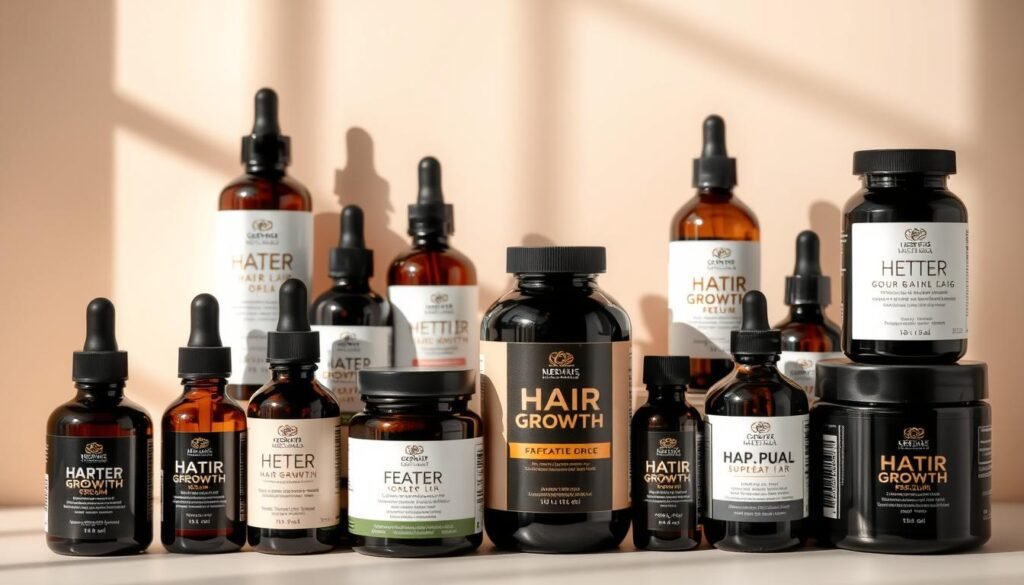
If you prefer holistic remedies, some natural brands are great. Viviscal Pro and Nutrafol offer nutrients and herbs for hair growth. Viviscal Pro has Vitamin C and biotin. Nutrafol uses curcumin and ashwagandha to fight stress and inflammation. Mielle Organics Scalp and Hair Strengthening Oil is affordable, and Vegamour Gro Hair Serum is a pricier option—both offer unique benefits.
Potential Side Effects of Hair Growth Treatments
People looking for a hair loss solution should know the possible side effects. Clinically tested pills and treatments like minoxidil can help with hair growth. But, they might also cause effects you didn’t want. Knowing this helps pick the best product, keeping safety and success in mind.
Common Side Effects to Watch For
Some people might face mild side effects from hair growth products. These issues often include:
- Burning or stinging at the place you applied it
- Redness or discomfort on the scalp
- Itching or a skin rash
Less often, people might see hair grow where they don’t want it. Even though it’s rare, serious effects can happen, like:
- Heart beating fast or not regularly
- Dizziness or passing out
- Really bad chest pain
- Hands and feet swelling
- Gaining weight and having trouble breathing, more so when lying down
It’s important to watch for these symptoms, especially with new treatments.
Allergic Reactions and Precautions
Sometimes, serious allergic reactions happen, but it’s not common. You might see:
- A big rash or swelling, mainly on the face, tongue, or throat
- A lot of dizziness
- Hard time breathing
Talking to a doctor is wise, especially if you have health conditions like scalp problems, heart issues, or liver and kidney diseases. It’s also key to talk to a doctor about treatment safety if you’re pregnant or breastfeeding. This ensures safety for both mom and baby.
A lot of people using these treatments don’t face serious side effects. By talking to a doctor and staying aware, you can be safe while trying to grow your hair.
Tips for Maximizing Hair Growth Results
Getting thick hair is not just about using products. It’s also about living well. Eat right, take care of your hair, and make good life choices. This way, you help hair treatments work better for both men and women.
Healthy Diet and Nutrition
A healthy diet is key for strong hair. Eat foods full of vitamins B, D, E, zinc, and iron. Hair needs protein to grow, so include eggs, nuts, fish, and greens in your meals. Try to eat 50 grams of protein a day. For more tips, check out natural treatments for hair growth.
Proper Hair Care Practices
Good hair care is very important. Trim your hair every 10 to 12 weeks to avoid split ends. Use conditioners to stop breakage. Choose styles that protect your hair and use less heat. Massaging your scalp can make hair thicker by improving blood flow. Be gentle when washing your hair and stay away from bleach and strong chemicals.
Lifestyle Changes for Better Growth
Handling stress is crucial for hair growth. Too much stress can cause hair loss. Try yoga, meditation, or exercising to reduce stress. Stop smoking and sleep well, between 7 to 9 hours, to help your hair grow. Talking to a doctor and trying treatments like microneedling can also help.

Success Stories and Testimonials
People looking for hair growth solutions often find success in certain treatments. Success stories reveal how hair growth medicine transforms lives. Individuals report feeling more confident and happier after seeing significant changes.
Real Users Share Their Journey
Users have seen great results with products like ROGAINE® minoxidil. After regular use, they notice big differences. ROGAINE® minoxidil is known for its effectiveness and has the FDA’s approval. People, even those with hereditary hair issues, see hair regrowth and feel better about themselves. Some say their hairline looks fuller, others notice denser hair after months of use.
Before and After Comparisons
Photos showing before and after results highlight how well treatments work. Testimonials with photos show the clear improvements. For example, one person saw a much fuller hairline after eight months. This shows that with the right product and commitment, achieving fuller hair is possible.
Frequently Asked Questions About Hair Growth Medicine
Many people have frequently asked questions about hair growth medicine. They want to know if it’s safe, effective, and accessible for everyone. It’s important to know what to expect with these treatments. This includes who can use them and how they work for different people.
How Long Does It Take to See Results?
2 to 6 months is the usual time to see results from hair growth medicine. This depends on the type of treatment and how your body responds. At first, you might notice more hair shedding. But then, you should see less hair loss and more growth over time.
Is Hair Growth Medicine Safe for Everyone?
Safety is key when considering hair growth solutions. These medicines are usually safe for adults. But, if you’re pregnant or breastfeeding, it’s best to talk to a doctor first. Even though many treatments are tested, individual health issues can influence their safety.
Can Women Use Hair Growth Medicine?
Yes, hair growth medicine is for both men and women. Some products are even made just for women. They address the unique challenges that women face with hair loss. This makes effective treatments available to everyone, regardless of gender.
FAQ
How Long Does It Take to See Results?
Is Hair Growth Medicine Safe for Everyone?
Can Women Use Hair Growth Medicine?
What Are the Most Effective Hair Growth Treatments?
Are Natural Remedies Effective for Hair Growth?
What Side Effects Can Occur While Using Hair Growth Treatments?
How Do I Choose the Best Hair Growth Treatment for My Needs?
What Are Some Top-Rated Hair Growth Products?
Can Lifestyle Changes Affect Hair Growth?
Source Links
- 5 Benefits of Scalp Treatments: Unlock Healthier Hair with Keravive
- The Inside Out Method™ – Unlock the power of Hair Growth Supplements
- Amazon.com : PEFAMNE 5% Minoxidil for Men and Women Hair Growth Oil, Biotin Serum, Hair Regrowth Treatment for Scalp Hair Loss, Natural, for Thicker Longer Fuller Healthier Hair 2.02 oz : Beauty & Personal Care
- Integrative and Mechanistic Approach to the Hair Growth Cycle and Hair Loss
- Physiology, Hair – StatPearls – NCBI Bookshelf
- Treating Hair Loss
- Medication for Hair Loss
- Hair loss – Diagnosis and treatment
- Hair Loss and Thinning Hair Treatment Options
- Guide to Best Vitamins and Minerals for Hair Growth – ISHRS
- Essential Oils for Hair
- Hair loss: The latest research on causes and treatments
- Male Androgenetic Alopecia – Endotext
- Is Your Hair Thinning? These 3 Editor-Tested Hair Growth Serums Delivered Impressive Results
- These Are the Hair Growth Products We Tested—And That Really Work
- Hair Loss Treatment Nutrafol
- The Absolute Best Hair Growth Products We Tested, Including a $9 Oil with Over 65,000 5-Star Ratings at Amazon
- Hair Regrowth Treatment Topical: Uses, Side Effects, Interactions, Pictures, Warnings & Dosing – WebMD
- Minoxidil (topical route)
- 14 Ways to Help Your Hair Grow Faster and Stronger
- How To Make Your Hair Grow Faster: Tips for Healthy Growth
- 8 Experts Told Me Their Secrets to Growing Super Long Hair
- Hair Growth Success Stories & Testimonials | ROGAINE®
- Success Stories – Patient Testimonials – Hair Medical Restoration
- Unlocking the Secret: Success Stories of Minoxidil and Hair Regrowth
- Hair loss and MDhair – frequently asked questions
- Frequently Asked Questions (FAQs)
- FAQ – Frequently Asked Questions