Why is good sleep hard to achieve for many, despite its importance for health? Quality sleep is key for our bodies and minds. Yet, factors like stress and habits may disrupt sleep. In this guide, we dive into what affects our sleep and how to improve it. We’ll talk about the science of sleep and share tips to help you drift off easily. By tackling common sleep problems and forming better habits, this piece shines a light on getting the rejuvenating sleep we all need.
Key Takeaways
- Most adults need around 7 hours of sleep within a 24-hour period.
- Maintaining a cool room temperature can enhance sleep quality.
- Daytime activities correlate with earlier sleep onset at night.
- Creating a bedtime routine with relaxing activities can help you wind down.
- Reducing caffeine and screen time before bed is crucial for better sleep.
Understanding Sleep: Importance and Stages
Sleep is a must for everyone. It’s not just about not feeling tired; it’s essential for mental, physical, and emotional health. Adults need 7 to 9 hours of good sleep to stay healthy and perform well. Knowing about sleep stages helps us see why it’s so important.
The Science of Sleep
Sleep is made up of different stages of sleep that happen through the night. Usually, we go through these stages four to five times, in cycles lasting 90 to 120 minutes. The stages include:
- Stage 1 NREM: Light sleep, which is about 5% of sleep time.
- Stage 2 NREM: This is the longest stage, making up about 45% of sleep.
- Stage 3 NREM: Deep sleep that’s key to recovery, is 25% of sleep time.
- REM Sleep: This starts around 90 minutes after falling asleep. It’s 25% of sleep time and is when we dream most.
As we’re awake, we build up a need to sleep, similar to hunger. Staying awake longer makes sleep deeper and more replenishing. Not sleeping enough can cause health issues like heart problems.
Benefits of Quality Sleep
Good sleep brings many benefits of quality sleep that help us in daily life:
- It makes us think better and be more creative.
- Helps control emotions and mood.
- Improves metabolism and keeps the immune system strong.
- Helps us remember and learn better.
Not getting enough sleep can hurt how we learn and remember. Bad sleep habits can also lead to long-term health problems, showing how crucial good sleep is.
Common Sleep Problems
Understanding common sleep problems is key for those seeking better sleep. Many face sleep issues like insomnia, sleep apnea, and nightmares. These can greatly disturb a good night’s rest. Here, we’ll explore these problems, why they happen, their effects, and how to solve them.
Insomnia: Causes and Effects
Insomnia means you can’t fall or stay asleep well. It happens to about 30% of adults at times, in short or long forms. Stress, anxiety, and bad sleep habits are common causes. Women often have it more, especially with hormonal changes like during periods or menopause.
About 10% of adults have chronic insomnia. It lasts over three months. Many with this problem also have mental health issues like anxiety or depression. This can badly affect job performance and raise the risk of heart disease. Treatments like exercise, managing stress, or therapy can help.
Sleep Apnea: What to Know
About 22 million in the U.S. have sleep apnea. It stops your breathing while asleep, making rest poor. Those with it wake up tired, even after enough sleep. It can make insomnia worse and bring other health problems like high blood pressure and heart troubles. Options to treat it include lifestyle changes, devices, or CPAP therapy. Handling sleep apnea well improves sleep and health.
Nightmares and Night Terrors
Nightmares and night terrors can mess with sleep a lot. Nightmares are scary dreams, often from stress or trauma. Night terrors happen in deep sleep, causing panic and confusion. Both make going back to sleep hard. Managing these can involve relaxation methods, therapy, or sometimes meds. Knowing their causes and effects helps find the right treatment. Those with stress-related sleep disorders might find stress reduction techniques useful.
Tips for a Better Night’s Sleep
To sleep better, you need to make your bedroom ideal for sleeping. This includes keeping a regular bedtime. By setting the right scene and sticking to a plan, you’ll likely sleep much better.
Creating a Sleep-Inducing Environment
Creating a good place to sleep involves a few changes. Keep your room cool, ideally between 65 to 70 degrees. It’s also key to keep it quiet and dark, using blackout curtains to block light.
Think about your bed too. A medium-firm mattress might help you sleep better and ease back pain. The right bedding, like using wool in colder temperatures, can also improve sleep.
Importance of a Consistent Sleep Schedule
Having a regular sleep schedule is very important for good sleep. Going to bed and getting up at the same times every day helps. This routine makes falling asleep easier and mornings less groggy.
Keeping to a routine helps in many ways, such as better mood and sharper thinking. It can also help with sleep apnea, a common problem. If you’re having trouble sleeping, looking into effective ways to improve could help.
Sleep Hygiene Practices
Good sleep hygiene is essential for refreshing sleep. Our habits can greatly influence our sleep. They decide how well we fall and stay asleep. Knowing these habits leads to a better sleeping environment and life habits. Adding the right diet for better sleep also helps us sleep well.
Personal Habits for Better Sleep
Good sleep habits can really improve sleep. But, many find it hard to stick to these habits. This causes sleep issues. About 60% of people have trouble with sleep hygiene, which includes:
- Having a set wake-up time helps keep a consistent rhythm.
- Cutting down screen time is key. 65% report better sleep when they avoid screens before bed.
- A 30-minute calm routine before bed helps 75% of people fall asleep faster.
It’s also key to take care of where you sleep. The best sleep happens in a room that’s cool, around 65 degrees Fahrenheit, and quiet and dark. Activities like reading or listening to calm music make falling asleep easier.
The Role of Diet in Sleep Quality
The right diet for better sleep can boost sleep quality. Key diet tips include:
- Avoiding big meals, caffeine, and alcohol before bed makes sleep easier.
- Eating foods with magnesium and tryptophan, like nuts and turkey, helps with sleep.
- It’s important to not have caffeine in the afternoon or evening. About 70% of those who do find sleeping hard.
Eating well and following good sleep habits together can improve sleep a lot.
| Dietary Choices | Effects on Sleep |
|---|---|
| Heavy Meals | Can cause discomfort and disrupt sleep quality |
| Caffeine | Increases difficulty in falling asleep |
| Alcohol | Leads to sleep disruptions |
| Magnesium-Rich Foods | Supports relaxation and better sleep onset |
| Tryptophan Sources | May enhance sleep quality |
Relaxation Techniques to Fall Asleep
Many people find it hard to sleep because of stress in their lives. Learning how to relax before bed can make sleep easier and more peaceful. Deep breathing is a key technique that helps calm both mind and body, getting them ready for sleep.
Deep Breathing Exercises
Deep breathing exercises are a great way to relax. For example, diaphragmatic breathing strengthens your diaphragm and makes breathing easier, helping to let go of tension. Another method, the 4-7-8 technique, involves breathing in for 4 seconds, holding for 7, and exhaling for 8. It’s especially good for easing anxiety and helping you sleep. Try starting with 10 deep breaths to feel calmer.
Guided Imagery and Meditation
Meditation and guided imagery help focus your thoughts on calm scenes. These techniques increase mindfulness, which takes your mind off worries that can prevent sleep. By practicing mindfulness, you keep your mind in the present, making it easier to fall asleep. Doing this for about 20 to 25 minutes every day for two weeks can be really helpful.
Progressive Muscle Relaxation
Progressive muscle relaxation involves tightening and then relaxing different muscles. This helps you recognize body stress and its effect on sleep. Take 10-20 seconds to relax between muscle groups to get the full benefit. This method lets you find and relieve remaining tension before sleep, helping you fall asleep faster.
The Impact of Technology on Sleep
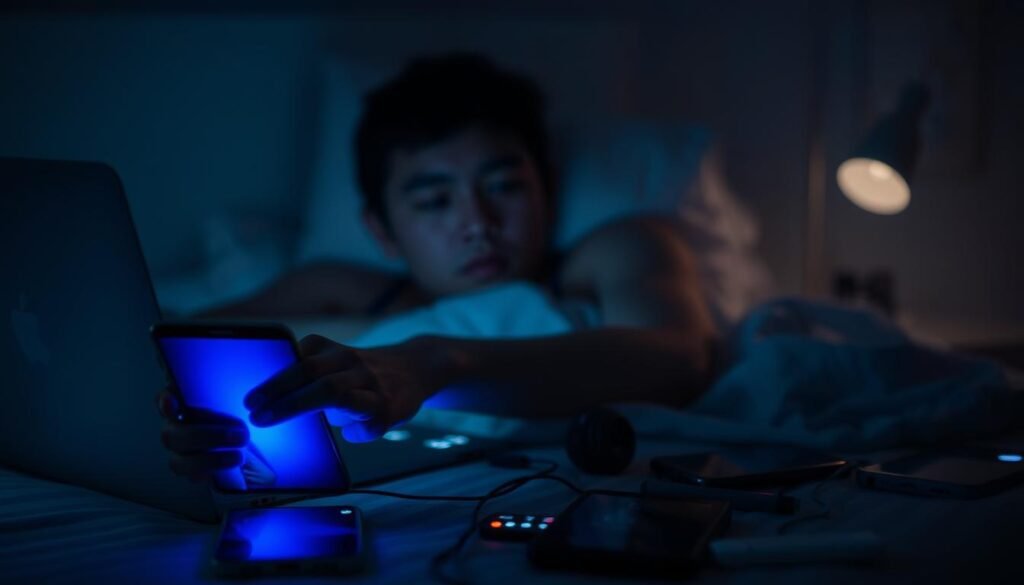
Technology’s impact on sleep quality is a major topic, especially with more children and adults using electronic devices. Screens in the bedroom have big effects of screen time on sleep health. A 2016 study found that the average U.S. household has five electronic devices, which mess up sleep patterns at night.
Screen Time and Its Effects
About 75% of kids and 70% of adults use devices in their bedrooms, raising sleep quality worries. Screens block melatonin, which we need for sleep. Kids using devices before bed get about one hour less sleep than those who don’t. Noises from devices also wake people up, harming sleep even more.
Managing Your Devices Before Bed
Controlling device use before bed can make sleep better. Experts say to stop using electronics one hour before bed. A digital curfew makes good sleep habits. Using night mode and blue light glasses can also cut screen light at night. Keeping tech out of the bedroom helps you sleep better.
Knowing how technology and sleep relate is key to better sleep habits. For solutions to hair loss and health issues, look at lifestyle changes. These changes can boost your health and sleep quality.
Natural Remedies for Sleep Issues
People often turn to natural remedies to solve sleep problems. These solutions can improve sleep without the downsides of drugs. They use herbal supplements and essential oils to help you sleep better, in a natural way.
Herbal Supplements to Consider
Many look into herbs to sleep better at night. Some top choices include:
- Melatonin: A well-known aid that helps fix sleep patterns.
- Valerian root: Helps you fall asleep faster.
- Lavender: Used in teas or pills, it aids in relaxation and better sleep.
Taking magnesium daily might ease insomnia. Also, lavender oil pills could help those with depression to sleep better.
Essential Oils for Relaxation
Essential oils are key for better sleep. Lavender is well-researched for its soothing effects.
Using these oils in diffusers or on skin can make your bedroom a tranquil place. Adding these scents to your night routine might help you sleep more soundly.
When to Seek Professional Help
Knowing when to get help is key to better sleep and health. If sleep problems keep happening, it’s smart to see a sleep expert. Feeling very sleepy during the day, having trouble focusing, and mood swings can all come from poor sleep.
Signs That You Need Assistance
There are clear signs that it’s time for expert advice on sleep issues:
- Frequent difficulty getting to sleep or staying asleep.
- Feeling tired during the day despite obtaining sufficient sleep.
- Experiencing excessive daytime sleepiness that affects daily activities.
- Noticing that others comment on how tired you look.
- Struggling to concentrate or stay alert at work or while driving.
- Using sleep aids regularly without successful results.
- Having symptoms that last longer than four weeks.
There are over 100 types of sleep disorders like sleep apnea, insomnia, and narcolepsy. These can really lower your quality of life. If you don’t handle these sleep issues, they can lead to serious problems like heart disease and diabetes. Spotting these signs early helps get the right help soon.
What to Expect During a Sleep Study
Taking a sleep study can seem scary, but knowing what happens can ease worries. It starts with a detailed look at your sleep habits, maybe even keeping a sleep diary. After that, doctors might suggest going through a sleep study. This study keeps track of important health signs.
| Metric | Description |
|---|---|
| Eye Movements | Tracks REM sleep phases and sleep disruption. |
| Pulse | Monitors heart rate variations throughout sleep. |
| Breathing Rate | Assesses any respiratory issues like apneas. |
| Body Movements | Observes restlessness or other movement-related disorders. |
| Snoring | Identifies severity and potential sleep apnea issues. |
| Blood Oxygen Level | Evaluates oxygen supply during sleep for potential apnea. |
| Brainwaves | Monitors sleep stages and irregularities. |
It takes a couple of weeks to get the results from these tests. Knowing about the sleep study process can lessen your worry. This allows for a better talk with your doctor about improving your sleep.

Long-Term Strategies for Better Sleep
Developing a solid sleep routine is key for good long-term sleep. It’s good to have a set time for going to bed and waking up that gives you at least seven hours of sleep. Making your bedtime surroundings calm, and avoiding bright lights and screens, helps you fall asleep easier. The blue light from screens can mess with melatonin, making sleep harder to come by.
Building a Healthy Sleep Routine
Starting a healthy sleep routine takes effort but is very rewarding. It means not having caffeine or nicotine before bed since they can disrupt sleep. It’s also wise to use the bed just for sleep and intimate moments. This tells your brain that the bed means it’s time to sleep. Doing calm activities like reading or stretching before bed can help ease you into sleep too.
Tracking Sleep Patterns and Progress
Keeping track of how you sleep can reveal what changes to make for better rest. Writing down how long and well you sleep in a sleep journal helps spot problems. Also, sleep trackers can show more about your sleep stages and any issues during the night. By understanding these patterns, you can adjust your routine to sleep better, fight tiredness, and improve your mood.
FAQ
What are some natural ways to fall asleep and stay asleep?
How can one improve sleep quality?
What tips can help establish a bedtime routine for better sleep?
What relaxation techniques are recommended for sleep?
How does modern technology affect sleep quality?
What are some common sleep disorders, and how do they affect sleep?
When is it necessary to seek professional help for sleep issues?
What long-term strategies can support better sleep?
Source Links
- 20 Simple Ways to Fall Asleep Fast
- How to Fall Asleep Fast: 5 Tested Strategies
- How to Fall Asleep in 10, 60, or 120 Seconds
- Brain Basics: Understanding Sleep
- The Science of Sleep: Understanding What Happens When You Sleep
- Controlled ZZZs
- Insomnia – Symptoms and causes
- Insomnia: What It Is, Causes, Symptoms & Treatment
- Frequent waking
- How to stay asleep all night
- 15 Proven Tips to Sleep Better at Night
- Sleep and Older Adults
- Mastering Sleep Hygiene: Your Path to Quality Sleep
- Fall asleep faster and sleep better – Every Mind Matters
- 12 Tips for Better Sleep Hygiene
- Relaxation Exercises To Help Fall Asleep
- Sleepless Nights? Try Stress Relief Techniques
- Technology in the Bedroom
- Bedtime Use of Technology and Associated Sleep Problems in Children
- Technology’s Impact on Sleep: Screen Time, Blue Light, and More
- 8 Insomnia Home Remedies: Exercises, Oils, and More
- Natural Cures for Insomnia: From Acupressure to Yoga
- When to See Your Doctor About a Sleep Problem
- Not Sleeping Well? It Might Be Time to See a Healthcare Provider – National Sleep Foundation
- 6 steps to better sleep
- 20 Tips for How to Sleep Better
- Natural Sleep Aids: Home Remedies to Help You Sleep