Have you ever questioned if the remedies for thinning hair really work? Or if they’re just in our heads? Thinning hair impacts lots of people everywhere. It’s not just about looks—it’s about feeling confident and in control again. This article will show you many ways to help your hair, including natural remedies, lifestyle tweaks, and doctor-recommended steps. You’ll learn how to take care of your hair’s health on your own.
Key Takeaways
- Understand the causes behind thinning hair to tailor effective remedies.
- Explore natural treatments that can promote hair growth safely.
- Learn about medical treatments and when consulting a specialist is necessary.
- Implement lifestyle changes that support overall hair health.
- Discover the potential benefits of scalp care routines and products.
Understanding the Causes of Thinning Hair
Thinning hair comes from many sources, making the problem complex. Figuring out why hair thins is key to deal with it. Lifestyle habits and body factors play big roles in hair health, leading to hair loss in many people.
Common Factors Contributing to Hair Loss
It’s important to know what leads to hair loss. Usually, people lose 50 to 100 hairs a day, which is normal. But losing more can be a sign of trouble. Stress, lack of good food, and some health issues can all make hair thin. In particular, too much stress can mess with hair growth cycles.
Genetic vs. Environmental Influences
Genes and the environment affect hair health. Male or female-pattern baldness touches many, with 50 million men and 30 million women affected in the U.S. alone. If your family has a history of hair loss, you’re more likely to experience it too. Meanwhile, bad habits like smoking and poor diet can hurt your hair. Studies show smoking is linked to hair loss due to inflammation.
Hormonal Changes and Their Impact
Hormones are big players in hair thinning. Changes from pregnancy or stopping birth control can thin hair. Issues like PCOS or thyroid problems can also mess with hair health. Knowing how hormones affect hair can guide people to understand their hair thinning issues.
Natural Remedies for Thinning Hair
People often look for natural ways to make their hair thicker and fuller. There are simple, natural methods that don’t involve chemicals. This part talks about oils from plants, herbs, and healthy foods that can keep hair looking good.
Essential Oils to Promote Hair Growth
Essential oils are popular for helping hair grow. Rosemary oil is especially known for helping with Alopecia Areata, as studies have shown. Pumpkin seed oil can stop DHT, a hormone that causes hair loss in men. Olive oil is another old remedy that helps fight hair loss. Adding these oils to your hair care can lead to great results.
Herbal Treatments You Can Try at Home
Herbal treatments are good for thinning hair too. Green tea has antioxidants that fight DHT, a cause of hair loss. Onion juice is also effective, as it has been proven to boost hair growth more than just water. These treatments are easy to use every day, offering a natural way to improve hair thickness.
Nutrient-Rich Foods for Healthy Hair
Eating well is key for healthy hair. Foods like salmon, eggs, and avocados have vitamins and fats good for hair growth. Lack of iron and zinc can lead to hair loss, so it’s crucial to eat foods rich in these nutrients. Adding these foods to your diet helps your hair be strong and healthy. Learn more about natural hair health methods in this informative guide on treatments.
Medical Treatments for Hair Loss
There are many treatments for hair loss, including FDA-approved drugs and new hair fixing methods. People losing hair can find these treatments helpful. They help bring back confidence and improve hair’s health.
FDA-Approved Medications
Two main FDA-approved hair loss treatments are Minoxidil and Finasteride. Minoxidil (Rogaine®) is a liquid you put on your scalp. It helps about 40% of people grow their hair back after a few months. You must use it for at least six months to see results. Finasteride (Propecia®), on the other hand, is a pill. About 80% of men find it effective for a type of hair loss called androgenetic alopecia. Yet, it might not work well for men over 60.
Innovations in Hair Restoration Techniques
New hair restoration options include PRP therapy and hair transplant surgeries. PRP therapy uses your blood to encourage hair growth. Studies show 50-75% of patients see denser hair after treatment. Hair transplants move hair to where it’s needed. This has a 60-80% success rate. These surgeries are usually outpatient but have some risks, like bleeding or infection.
When to Consult a Specialist
It’s key to seek expert advice if you’re losing hair fast or a lot. A healthcare provider can suggest the best hair loss treatments. Talking to a specialist helps you get the right advice, solutions, and care for your hair.
| Treatment Type | Success Rate | Notes |
|---|---|---|
| Minoxidil (Rogaine®) | 40% users | Requires at least 6 months for results |
| Finasteride (Propecia®) | 80% in men | Less effective for men over 60 |
| PRP Therapy | 50-75% improvement | Requires several sessions |
| Hair Transplant | 60-80% success | Multiple surgeries may be needed |
| Low-Level Laser Therapy | 70% of patients | Further research on long-term effects needed |
Lifestyle Changes to Combat Thinning Hair
Making certain lifestyle choices can really help your hair become healthier and fight off thinning. People who lose their hair often see benefits from looking at the whole picture. This means eating right, managing stress better, and following good hair care habits. These changes can not only make your hair stronger and grow more, but they also help you feel better overall.
The Importance of a Balanced Diet
Eating well is key for keeping your hair in top shape. Important nutrients like iron, zinc, protein, and vitamins are crucial for your hair to grow. Foods such as leafy vegetables, nuts, fish, and whole grains are packed with these hair-boosting nutrients. By adding these foods to your meals regularly, you could start seeing your hair improve. For more nutrition tips, you can find helpful advice here.
Stress Management Techniques for Hair Health
Stress is a big reason why some people lose their hair. It’s important to manage stress well to keep your hair growing healthy. Doing yoga, meditating, and staying active can lower your stress levels and help you relax. Taking care of your mental health like this can mean less hair loss from stress.
Proper Hair Care Routines
It’s crucial to take good care of your hair to keep it healthy and strong. Stay away from harsh chemicals, cut down on using hot styling tools, and choose mild shampoos and conditioners. Regular trims and picking hairstyles that don’t pull on your scalp are also good for your hair’s health. Getting into these habits can really make a positive impact on your hair’s condition over time.
| Lifestyle Change | Benefit for Hair Health |
|---|---|
| Balanced Diet | Provides essential nutrients for hair growth |
| Stress Management | Reduces hair thinning related to stress |
| Hair Care Routine | Minimizes damage and promotes healthy growth |
Scalp Care: A Key Element
Having a healthy scalp is essential for shiny, strong hair. By focusing on your scalp, you might see thicker, more vibrant hair. We’ll look at practical ways and products to keep your scalp healthy. Methods like scrubbing and massaging your scalp help with hair growth and health.
Exfoliation Techniques for Hair Growth
Clean your scalp well with exfoliation. Use gentle scrubs or chemicals to take off dead skin and buildup. Doing this helps hair follicles grow by keeping them in a good environment. Try exfoliating once a week for the best hair growth.
Massaging Your Scalp: Benefits and Methods
Scalp massages are great for many reasons. They improve blood flow, feeding your hair roots and boosting growth. Even a short massage when you apply treatments can make those products work better. Try massaging your scalp for five minutes daily for fuller hair over time.
Choosing the Right Shampoo and Conditioner
Picking the best shampoo and conditioner for thin hair is key. Find products without bad stuff like parabens and phthalates. Choose ones that help your scalp and keep it moist. A proper routine helps keep your scalp clean, lowers damage, and aids in growing healthy hair. Using these regularly lays the groundwork for strong, thick hair, making your hair care better.
Supplements for Stronger Hair
For those wanting better hair health, supplements are key. They can really help your hair grow stronger and healthier. Many look to food and store-bought supplements for help. It’s important to know which vitamins are best for hair growth and their benefits.
Vitamins and Minerals Essential for Hair Health
Vitamins like biotin, iron, and vitamin D are crucial for hair health. Even though biotin is popular, not everyone needs more of it. Doctors say 30 mcg of biotin a day is enough for most. Yet, up to 5,000 mcg is okay for better hair, according to some experts.
The Role of Biotin in Hair Growth
Biotin is famous for making hair grow. There are no bad side effects, but it’s good to not overdo it. A regular amount of biotin can make hair thicker and stronger. But be careful with supplements, and always think about what else you eat.
Evaluating Over-the-Counter Supplements
Choosing hair supplements needs careful thought. Products like Pantogar and Nutrafol have good results in studies. For example, zinc can really help with hair loss. But always talk to a professional before starting any supplement. They can help avoid any bad reactions and give advice on what’s best for you.

Advanced Treatments and Procedures
People dealing with hair thinning have hope with advanced treatments. These solutions are designed for various reasons behind hair loss. PRP therapy, hair transplants, and laser therapy are among the top choices. Each technique boosts hair growth and betters hair quality. They offer different ways to get more full hair.
PRP Therapy Explained
PRP therapy is a popular way to restore hair without surgery. The process takes a little of your blood, enriches it with platelets, and injects it back into your scalp. PRP boosts hair growth by improving blood flow and repairing hair follicles. Patients usually get this treatment monthly for three months, then every three to six months to keep up the results.
Hair Transplant Options
Hair transplants are a surgical fix for ongoing hair loss. This method moves hair from where you have a lot to where you don’t. New techniques like Follicular Unit Extraction (FUE) reduce recovery time and scarring. Hair transplants give permanent outcomes. This makes them a chosen option for people who want a long-term solution for thinning hair.
Laser Therapy for Thinning Hair
Laser therapy treats thinning hair with low-level lasers to activate the scalp. Research shows this can lead to thicker, fuller hair over time. Although results differ, the usual plan involves several months of weekly sessions. After regular treatments with devices like laser combs or caps, many see denser hair. This makes laser therapy a simple choice for at-home care.
Maintaining Hair Health: Daily Tips
To keep your hair healthy, it’s important to follow daily practices. Starting a hair care routine can really help your hair’s health. Knowing how to protect your hair from damage and avoiding common mistakes makes a big difference in hair care.
Setting Up a Hair Care Routine
Having a regular hair care routine is key for healthy hair. It’s crucial to pick a routine that fits your hair type. Some tips include:
- Gently wash hair 2-3 times a week, but don’t overdo it to keep the natural oils.
- Use a good conditioner often to keep your hair moisturized.
- Before using hot tools, apply heat protectants.
- Include deep conditioning treatments now and then for extra moisture.
Protecting Your Hair from Damage
Different things and not handling your hair correctly can harm it. Here’s how you can protect your hair:
- Don’t pick hairstyles that pull the hair too much.
- Wear hats or use sun protection on your hair when it’s sunny.
- Try not to expose your hair too much to chlorine and saltwater; they can dry it out.
- Use silk pillowcases to reduce hair friction while you sleep.
Avoiding Common Hair Mistakes
Avoiding frequent hair care errors can lead to better hair health. Here are some tips:
- Wash your hair with lukewarm water, not hot, to keep it moist.
- Don’t brush too much; it can lead to breakage and frizz.
- Try not to use too many hair products at once.
- Limit chemical treatments to prevent hair damage over time.
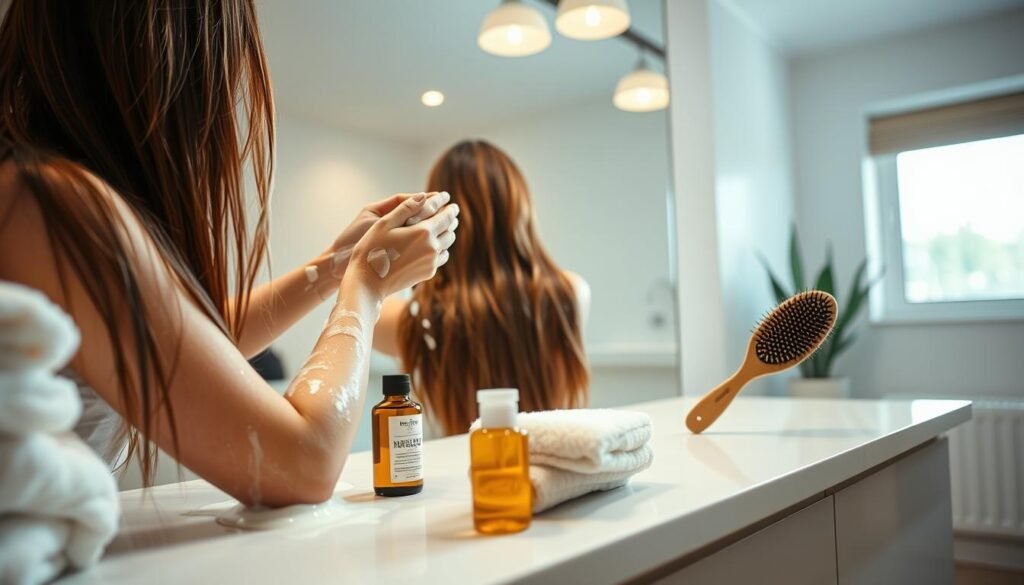
Focusing on your hair care routine and protection tips, while avoiding mistakes, is vital. By practicing good hair care, you can make your hair stronger and more beautiful.
Emotional Well-being and Thinning Hair
Hair loss deeply impacts emotions. It can hurt how we see ourselves and feel inside. For many, especially women, thinning hair can bring stress, shame, and sadness. Knowing these feelings is key to coping well with hair thinning and feeling good again.
Coping with Hair Loss
Being part of a supportive group can make us stronger in handling hair loss. Whether in therapy or online groups, connecting with those in similar situations makes us feel less alone. The support for hair loss lets people share their stories and tips, helping to deal with hair loss emotionally.
Building Confidence Amidst Changes
Growing confidence while losing hair means accepting our unique paths and getting positive vibes from friends and pros. We must fight against bad thoughts about ourselves and take care of our well-being. Saying nice things to ourselves every day and staying in touch with a caring group can truly boost our mood.
Supporting Each Other: Community and Resources
Understanding hair loss’s emotional impact is key for well-being. Exploring hair loss solutions, we find strength together. Building a support network encourages those facing hair challenges to stay strong and positive.
FAQ
What are the most common remedies for thinning hair?
How do I know what is causing my hair thinning?
Are there effective natural treatments for hair loss?
What medical treatments are available for hair loss?
How important is scalp health for hair growth?
What lifestyle changes can I make to combat thinning hair?
Which supplements are beneficial for hair health?
Are there advanced treatment options for hair thinning?
What are some daily tips for maintaining hair health?
How can I cope emotionally with hair loss?
Source Links
- Treatments for Thinning Hair: Do They Work?
- Women and hair loss: coping tips
- 6 natural remedies to help with hair loss: Everything you need to know
- 12 Ways to Stop Hair Thinning
- Hair loss – Symptoms and causes
- Thinning hair: Causes, types, treatment, and remedies
- 8 Natural Remedies for Hair Loss – Harley Street HTC
- How to regrow hair naturally
- Hair loss – Diagnosis and treatment
- Hair Loss and Thinning Hair Treatment Options
- What you can—and can’t—do to stop hair loss
- Diet can make a difference in age-related thinning hair
- Why Your Hair Might Be Thinning and How to Stop It
- Scalp Treatments: What’s All the Buzz About?
- Scalp Condition Impacts Hair Growth and Retention via Oxidative Stress
- Hair Loss
- Guide to Best Vitamins and Minerals for Hair Growth – ISHRS
- Hair loss treatment: Researchers pinpoint best supplements
- Hair loss: Diagnosis and treatment
- Remedies for Hair Loss
- Simple Secrets to Healthier, Fuller, Shinier Hair
- Is Your Hair Thinning? Try These 9 Remedies
- Psychology of Hair Loss Patients and Importance of Counseling