Ever wonder why some have thick hair and others don’t? Many people look for ways to make their hair grow. They often think about natural remedies versus store-bought products. Natural methods, like eating right, using good oils, and changing your lifestyle, can boost hair growth. This article will show the best natural products and ways to get healthier hair.
Key Takeaways
- Iron deficiency is a common cause of hair loss worldwide.
- Zinc deficiency may contribute to brittle hair, while adequate zinc can support hair regrowth.
- Essential fatty acids are crucial for maintaining overall hair health.
- Natural oils like coconut and rosemary can significantly aid in promoting hair growth.
- Healthy dietary changes support hair vitality and growth.
- Regular scalp massages can improve blood flow, potentially enhancing hair growth.
Understanding Hair Growth Basics
Hair growth is a complex process that is key to having healthy hair. It goes through three crucial stages. Understanding these stages can help improve your hair care routine. This knowledge is the base for useful hair growth tips.
The Hair Growth Cycle
The hair cycle has three phases: anagen (growth), catagen (transition), and telogen (resting). The anagen phase can last 2 to 7 years, with hair growing about 0.5 inches per month. Then, the catagen phase is when hair starts to shed for 2 to 3 weeks.
Finally, the telogen phase, which is about 3 to 4 months long, is when hair rests before falling out. At any time, 10 to 15% of hair is in this phase. This is part of normal hair shedding.
Factors Affecting Hair Growth
Many things can impact how hair grows, including genetics and age. Genetics determine your hair type and if you might lose hair, while getting older can mean more hair shedding. Stress and health issues can also make hair enter the resting phase too soon, leading to thinning or lots of shedding.
Eating a diet low in iron, zinc, and vitamins D and E can slow hair growth. Eating well and getting enough protein is important for hair. For more tips on hair care, you can look at resources like hair growth tips.
Nourishing Your Hair from Within
Starting a journey to vibrant hair begins with watching what you eat. Good nutrition is key for healthy hair. Vitamins, minerals, proteins, and water work together to make hair strong and grow well.
Essential Vitamins for Hair Health
Vitamins play a big role in making hair grow and keeping it healthy. Important ones include:
- Vitamin B: Important for hair growth and health.
- Vitamin D: Helps create new hair follicles.
- Vitamin E: Boosts scalp health by being an antioxidant.
Minerals like zinc and iron are also critical. Not enough iron can cause anemia, affecting hair growth. Eating foods rich in these vitamins and minerals helps hair grow stronger and faster.
Benefits of Protein for Hair Growth
Protein is essential because hair is mostly made up of a protein called keratin. Not having enough protein can slow down hair growth. To keep hair healthy, eat foods high in protein such as fish, eggs, and legumes. Pregnant women need to watch their protein to keep their hair healthy.
Hydration and Its Role in Hair Health
Staying hydrated is crucial for keeping hair healthy. Drinking enough water keeps your hair moist, preventing dryness and breakage. Aim for 6-8 cups of water a day. Eating foods high in water like cucumbers and watermelons also helps with hydration, which is good for hair growth.
Natural Oils to Boost Hair Growth
Natural oils like castor and coconut oil can make hair healthier. They help hair grow faster and nourish the scalp well. These oils are top choices for many.
Castor Oil: Nature’s Miracle
Castor oil is full of ricinoleic acid, which boosts scalp blood flow. This helps hair grow healthier. It strengthens hair roots and makes hair thicker and fuller with regular use.
Coconut Oil and Its Nourishing Properties
Coconut oil is great at keeping hair moisturized. It goes deep into hair, stops protein loss, and keeps hair hydrated. This oil also protects hair from damage, helping it grow.
Jojoba Oil for Scalp Health
Jojoba oil is similar to our scalp’s natural oils. It’s great for keeping the scalp moisturized and avoiding dryness. Using jojoba oil regularly creates a perfect setting for hair to grow well.
Scalp Care for Enhanced Growth
It’s essential to keep your scalp healthy to boost hair growth. An unhealthy scalp can cause itching, too much oil, and hair loss. Keeping your scalp in good shape with exfoliation and massage helps keep hair healthy. We’ll look into how important exfoliating is and the perks of scalp massages.
Importance of Scalp Exfoliation
Exfoliating helps remove dead skin and leftover products that block hair roots. A clean scalp lets hair roots grow better. Studies show issues like dandruff and inflammation can stop hair from growing by damaging the scalp. Exfoliating often keeps your scalp healthy and fights these problems.
Massaging Techniques for Hair Growth
Talking about scalp massage benefits, regular massages can boost blood flow to the hair roots. This increased blood flow gives hair roots the oxygen and nutrients they need to grow. Doing scalp massages daily can make your hair thicker and your scalp healthier. You can use your fingertips in circular moves or essential oils to make it fun and work well.
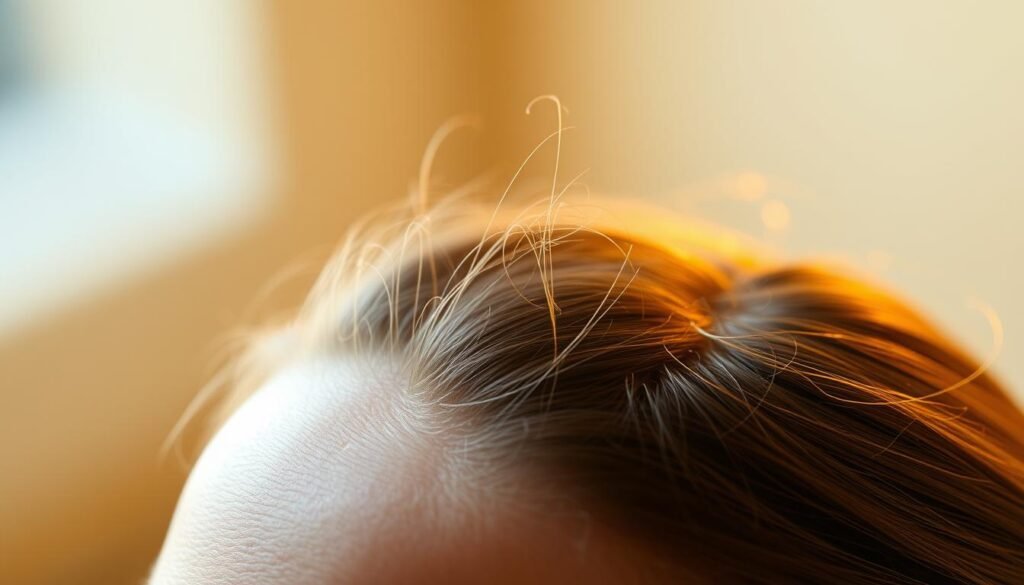
If you want to know more about natural ways to grow hair, including diet and lifestyle changes, check out these helpful hints. Putting effort into scalp care with exfoliating and massaging is a step towards getting full, healthy hair.
Dietary Changes for Healthier Hair
Changing what you eat can make your hair healthier. Research shows certain foods boost hair growth. A diet good for hair has fats, antioxidants, and minerals. These nutrients help your hair.
Foods Rich in Omega-3 Fatty Acids
Omega-3s are key for a healthy scalp and more hair growth. You can find omega-3s in:
- Salmon
- Walnuts
- Flaxseeds
- Chia seeds
- Sardines
Eat these foods with omega-3 to fight scalp swelling. They give your hair follicles what they need to be healthy.
Importance of Antioxidants and Minerals
Antioxidants protect hair roots from damage. They fight off harmful stress that can cause hair loss. Great antioxidant foods are:
- Blueberries
- Spinach
- Artichokes
- Red cabbage
- Sweet potatoes
Minerals like iron and zinc are vital too. Not having enough can slow hair growth or cause loss. Good sources are:
| Mineral | Food Sources | Daily Value (%) |
|---|---|---|
| Iron | Red meat, spinach, lentils, beans | 14% |
| Zinc | Oysters, pumpkin seeds, beef | 100%+ |
To make your hair healthy, eat foods full of omega-3, antioxidants, and minerals. This improves hair health over time.
Herbal Remedies to Promote Hair Growth
Looking for natural ways to boost hair growth? Herbal remedies are getting a lot of buzz. These natural solutions are softer on your hair than harsh chemicals. Using things like aloe vera and rosemary oil, you can tap into nature’s power for richer, healthier hair.
Aloe Vera: The Hair Miracle Plant
Aloe vera is a favorite for its calming and hydrating effects. It’s perfect for fighting hair loss due to its ability to lessen dryness and keep the scalp healthy. The aloe leaf’s gel, full of good stuff for your hair, helps keep your scalp’s pH in check. This environment lets hair follicles flourish.
Rosemary and Its Benefits
There’s more to rosemary oil than its pleasant smell. Studies show it can improve blood flow in the scalp. This means more nutrients reach the hair roots. One important study saw it boost hair growth, just like common treatments. Rubbing this oil on your scalp can fire up the hair roots, sparking new growth.
Lifestyle Changes to Support Hair Growth
Want better hair growth? Start by changing your lifestyle. Managing stress is key. Stress can actually cause hair loss. So, it’s vital to find ways to relax. Try meditation, yoga, or exercise to lower stress and help your scalp. Don’t forget how important sleep is too. Good sleep is a big part of having healthy hair because it helps with hormone production.
Stress Management Techniques
Stress can really harm your hair. But you can fight its effects by relaxing. Here are some good ways to keep stress in check:
- Daily meditation sessions to promote a calm mind.
- Yoga routines that enhance flexibility while relieving stress.
- Engaging in regular physical activity to boost circulation and deliver oxygen to hair follicles.
- Incorporating deep breathing exercises to center oneself during stressful moments.
The Impact of Sleep on Hair Health
Getting enough sleep does wonders for your hair. It helps your body fix and grow cells. Not sleeping enough messes with your hormones and can stop hair from growing. Try to get between 7 to 9 hours of sleep every night. Having a steady bedtime and a relaxing routine before sleep can make your sleep better.
If you’re curious about natural ways to grow your hair, check out these tips for healthier locks.
Avoiding Harmful Products and Practices
Healthy hair begins with careful product selection. Some hair care items have harmful ingredients like sulfates and parabens. They can take away hair’s natural moisture, leading to problems like dryness, breakage, and an unhealthy look. Opting for sulfate-free shampoos can make a big difference, feeding your hair rather than harming it.
Dangers of Sulfates and Parabens
Sulfates make shampoos foam up, which many people like. Yet, they can be too harsh, causing scalp irritation and dryness. Parabens help products last longer but might disturb hormone levels. Nowadays, many are turning to softer options, knowing the risks.
Gentle Hair Washing Techniques
Being gentle when washing your hair can really help. Use the tips of your fingers instead of scrubbing hard. This boosts circulation and lessens harm. Rinse with lukewarm water, not hot, to prevent making dryness worse. These methods protect your hair and scalp, reducing potential damage.
Key Hair Care Practices to Adopt
Right hair care practices make a huge difference in hair health and growth. Effective washing and smart heat styling are key. They keep hair beautiful and prevent damage.
Best Practices for Hair Washing
For healthy hair, start with the right washing techniques. Use a gentle, sulfate-free shampoo that suits your hair type. It keeps the scalp balanced and saves the natural oils. Then, use a good conditioner to boost moisture and strengthen hair.
It’s best not to wash your hair every day. Try washing it two to three times a week. This lets your scalp’s oils nourish your hair.
Using Heat Styling Tools Wisely
Using heat tools can change your look but be careful. Always use a heat protectant. It shields your hair from damage. Choose the lowest heat setting that works and don’t use heat tools too often. This keeps your hair healthy.
Buying professional tools with ionic technology is a smart move. They help keep moisture in your hair while you style it.
| Hair Washing Technique | Description | Benefits |
|---|---|---|
| Mild Shampoo | Choose sulfate-free products. | Maintains natural oils and prevents irritation. |
| Conditioning | Apply conditioner post-shampoo. | Strengthens and hydrates hair strands. |
| Frequency | Wash hair 2-3 times weekly. | Allows natural oils to thrive. |
| Heat Protection | Use a protectant product before styling. | Minimizes heat damage. |
| Low Temperature | Style at the lowest effective heat. | Reduces damage while achieving styles. |
| Ionic Tools | Use tools with ionic technology. | Locks in moisture and promotes shine. |
Following these hair care tips will lead to healthier hair. They help in growing strong hair and reduce damage from bad washing or styling habits.
Supplements for Hair Growth Support
Hair growth supplements are key for healthier hair. Among many, biotin is a top choice. It’s known to boost hair strength and growth. These supplements have vitamins and minerals for your hair.
Biotin: The Popular Choice
Biotin is famous for boosting hair health. It’s essential for those wanting stronger hair. Experts recommend taking 3 to 5 mg of biotin daily. High doses, up to 100,000 mcg, are also safe.
Other Beneficial Supplements
Vitamin D helps hair follicles and is needed in amounts of 2,000 to 5,000 IU daily. For areas with less sunlight, it’s more crucial. Zinc and iron also play important roles in scalp health. Men should aim for 11 mg of zinc and women for 8 mg. Iron helps hair cells divide, needing 8 mg for men and 18 mg for premenopausal women.
A good multivitamin covers these important nutrients. Omega-3 fats, though indirectly, support hair by boosting scalp blood flow. They’re important for overall hair health.
| Nutrient | Recommended Daily Allowance | Role in Hair Health |
|---|---|---|
| Biotin | 30 mcg | Strengthens hair and promotes growth |
| Vitamin D | 2000-5000 IU | Supports hair follicles |
| Zinc | 11 mg (men), 8 mg (women) | Aids cell division and scalp health |
| Iron | 8 mg (men), 18 mg (women) | Nourishes rapidly dividing hair cells |
Taking hair growth supplements like biotin promotes health and well-being. Always check with a healthcare pro for the right doses. This way, you optimize your hair care journey.
When to Seek Professional Help
It’s important to know when to get help for hair loss. If you see a lot of hair falling out suddenly, have scalp problems, or home treatments aren’t working, it’s time to see a professional. A dermatologist can find the cause and the best way to treat it early on.
Signs You Should Consult a Specialist
Some signs point out that you need expert advice. If you see swelling or sores on your scalp or your hair loss pattern suddenly changes, see a specialist. They might suggest treatments like minoxidil or finasteride that need to be customized and watched closely for good results. Knowing when to seek help can lead to better hair care.
Types of Treatments Available
There are many professional treatments out there, like minoxidil or PRP therapy. PRP therapy has helped 75% of people get better after several sessions. There are also surgeries and FDA-approved laser treatments for hair growth. With a customized plan, people get treatments suited for their situation, boosting their hair recovery.
FAQ
What are effective ways to promote hair growth naturally?
Which vitamins are essential for hair health?
How can I improve my hair’s moisture retention?
What natural remedies are good for hair growth?
Are there any specific hair care practices I should follow?
What role does stress play in hair loss?
How can diet affect hair growth?
What supplements should I consider for hair growth?
When should I see a professional for hair issues?
Source Links
- How to regrow hair naturally
- 10 Tips to Naturally Regrow Your Hair in 2024
- 9 Ways to Make Your Hair Grow Faster | How to Grow your Hair
- How To Make Your Hair Grow Faster: Tips for Healthy Growth
- Physiology, Hair – StatPearls – NCBI Bookshelf
- Science of Hair: Understanding the Basics of Hair Growth and Loss
- 14 Ways to Help Your Hair Grow Faster and Stronger
- How to Nourish Your Hair for Healthy Growth
- Nutrition: How To Nourish Your Hair From The Inside Out
- Essential Oils for Hair
- 10 Essential Oils Proven to Enhance Hair Growth and Health
- Maintaining a Healthy Scalp & Hair for Improved Hair Growth – Maningas Cosmetic Surgery
- How to Get a Healthy Scalp: 10 Tips from Haircare Experts
- Is Your Hair Thinning? Try These 9 Remedies
- What to eat for healthy hair
- Here Are 12 Foods To Eat for Healthy Hair Growth
- Diet and hair loss: effects of nutrient deficiency and supplement use
- 19 Herbs for Hair Growth
- Can Herbs Help With Hair Growth?
- Herbs for Hair Growth: Herbs, Spices, and Plants That May Help Regrow Hair
- Best Foods for Hair Growth: What to Eat, Drink & Avoid
- Lifestyle Factors and Hair Health: Tips to Prevent Hair Loss
- 12 Hair Growth Tips to Stimulate Thicker Locks
- 6 Ways to Make Your Hair Grow Faster and Stronger
- Modulation of Hair Growth Promoting Effect by Natural Products
- Nurture Your Scalp, Nourish Your Hair: Essential Tips and Treatments for Healthy Hair Growth
- 12 Healthy Hair Habits You Should Adopt Right Now
- Proven Techniques for Strong and Healthy Hair – Bens-Beauty
- Guide to Best Vitamins and Minerals for Hair Growth – ISHRS
- Best Vitamins & Supplements for Hair Growth
- 7 Hair Growth Supplements
- Hair loss – Diagnosis and treatment
- Hair Loss and Thinning Hair Treatment Options
- How to Maintain Hair Growth After 50