Have you been lying awake at night, unable to find sleep? Millions suffer from insomnia, enduring not just exhaustion but also anxiety and reduced performance. In today’s world, it’s key to understand sleep problems and their impact. This article offers effective ways to fight insomnia and improve sleep quality. It helps those struggling with sleeplessness return to restful nights.
Key Takeaways
- The ideal sleep temperature is between 68 and 72 degrees Fahrenheit.
- Avoid caffeine after noon to prevent disruption in the night.
- Limit alcohol intake to minimize nighttime awakenings.
- Regular exercise supports sleep, but should be done 3 to 4 hours before bedtime.
- Dim lighting 2 to 3 hours prior to sleep aids the brain in melatonin production.
- Engaging in quiet activities outside the bedroom if unable to fall back asleep can be beneficial.
- Establishing a consistent sleep routine by waking at the same time daily is critical for better sleep.
Understanding Insomnia: Causes and Effects
Insomnia is a common problem seen in adults. It makes falling asleep hard, staying asleep through the night, or waking up too early. Because of this, people don’t get the sleep they need. Research shows almost 30% of adults have problems with insomnia at times. Around 10% have chronic insomnia. This means they have trouble sleeping three times a week for over three months.
What is Insomnia?
Insomnia can show up in different ways and affects both men and women. Women report it more often. This is due to hormonal changes during the menstrual cycle and menopause. Short-term insomnia can be for a few days or weeks. But chronic insomnia can last for months. It seriously harms one’s health and daily life.
Common Causes of Insomnia
Insomnia can be caused by different things, including:
- Stress: This often leads to short-term insomnia.
- Mental health disorders: Anxiety and depression are linked with insomnia.
- Health conditions: As people age, they might get sleep apnea and restless legs syndrome, making it hard to sleep.
- Lifestyle choices: Drinking coffee or smoking at night can mess up sleep patterns.
- Medications: Some drugs, like antidepressants and asthma medicine, might make it hard to sleep.
The Impact of Sleep Deprivation
Sleep deprivation is more than just feeling tired. People with insomnia often do worse at work and are more likely to get into accidents. Over time, they might get long-term health issues like high blood pressure and heart disease.
| Impact of Sleep Deprivation | Description |
|---|---|
| Higher risk of chronic diseases | Increased chances of getting high blood pressure and heart problems. |
| Cognitive impairment | Problems with focusing and remembering, which makes daily tasks hard. |
| Mood disturbances | More cases of anxiety, depression, and irritability among those affected. |
| Quality of life | Insomnia leads to a much lower quality of life than those who sleep well. |
Recognizing Your Sleep Patterns
Knowing your sleep patterns is key to solving sleep problems. Many folks find it hard to sleep at night. It’s useful to spot what leads to poor sleep. Keeping an eye on sleeping habits, quality, and sleep disruptors helps make good changes.
Keeping a Sleep Diary
A sleep diary helps see sleep patterns clearly. It records when you fall asleep, wake up, and any awakenings. Here’s what a sleep diary includes:
- Date
- Bedtime and wake time
- Total hours slept
- Quality of sleep (e.g., rested, restless)
- Mood and energy levels the following day
This data shows trends, pointing out when sleep problems happen most.
Tracking Sleep Quality
It’s crucial to check how well you sleep. Quality isn’t just the hours slept, but how refreshing it is. Good sleep quality features are:
| Criteria | Description |
|---|---|
| Time to Fall Asleep | Less than 30 minutes |
| Awakenings at Night | Waking up no more than once |
| Sleep Duration | At least 7 hours per night |
| Ability to Fall Back Asleep | Within 20 minutes after awakenings |
| Sleep Efficiency | 85% or more of time in bed asleep |
Monitoring these elements can pinpoint what needs to be fixed for better sleep.
Identifying Triggers
Finding out what causes bad sleep is crucial. Common triggers include:
- Caffeine intake, especially later in the day
- Drinking alcohol close to bedtime
- Stress or anxiety
- Not sticking to a regular sleep schedule
Understanding these triggers offers a chance to reduce sleepless nights. Being aware of these factors greatly improves sleep.
Creating the Perfect Sleep Environment
Having the right sleep environment is key to fighting off insomnia and getting better sleep. The things that make a space good for sleeping include the room’s temperature, the amount of light, and what your bedding is like. Each part helps make troubled sleep less common, which means you can have a more refreshing night.
Optimal Room Temperature
Experts say the best temperature for your bedroom is between 60 and 67 degrees Fahrenheit. A cooler room helps lower your body temperature, which is important for getting into deep sleep. Being at a comfortable temperature doesn’t just help you sleep longer; it also makes sure you wake up feeling great.
Reducing Noise and Light
Noise can mess with your sleep and harm your health in different ways. White noise machines can drown out annoying sounds, so your sleep environment is calmer. At the same time, it’s crucial to cut down on light; too much light at night can make it harder to stay asleep. Using blackout curtains can keep your room dark, which is good for your body’s melatonin levels.
Choosing the Right Mattress
The mattress you sleep on is super important for how well you sleep. Studies show that a new mattress can really help with back pain and make your sleep better compared to an old one. Having comfy pillows and bedding can stop you from being uncomfortable at night, leading to better sleep. Cleaning your sheets every two weeks gets rid of dust mites and allergens, making your sleep space ideal.
| Aspect | Ideal Range/Recommendation | Effect on Sleep |
|---|---|---|
| Room Temperature | 60 – 67°F | Enhances deep sleep and reduces awakenings |
| Noise Control | Use White Noise Machines | Promotes tranquil sleep environment |
| Light Levels | Below 10 Lux in the evening | Supports melatonin production and reduces awakenings |
| Mattress Age | Replace every 7-10 years | Alleviates back pain and promotes sleep quality |
| Bedding Maintenance | Wash every 1-2 weeks | Reduces dust mites and allergens |
Establishing a Sleep Routine
A regular sleep pattern is crucial for anyone dealing with insomnia. It helps sync up the body’s natural clock, aiding easy sleep at night. Sticking to a fixed routine lessens sleep issues and fosters better rest.
Setting a Consistent Sleep Schedule
Sticking to the same sleep times each day boosts sleep quality. Adults should aim for at least 7 to 8 hours of sleep. Varying sleep times can disrupt a reliable sleep rhythm. This disruption can increase the risk of heart issues and feeling down.
Pre-Sleep Activities to Relax
Relaxing activities before bedtime can make falling asleep smoother. Reading, light stretching, or mindfulness practices can prep the body for sleep. If sleep doesn’t come within 20 minutes, try a calming activity instead. Managing stress better can lead to improved sleep and overall health.
Limit Naps During the Day
Short naps are okay, but they should be under 30 minutes and earlier in the day. Long naps can make it hard to sleep at night. A steady sleep schedule helps the body work best and reduces sleep trouble.
| Practice | Benefits |
|---|---|
| Consistent Sleep Schedule | Regulates internal clock |
| Calming Pre-Sleep Activities | Eases transition to sleep |
| Limiting Daytime Naps | Improves nighttime sleep quality |
The Role of Diet in Sleep Quality
Eating right plays a big part in how well we sleep. Some foods can make insomnia better, but others worsen it. Knowing what to eat helps those who can’t easily fall asleep. By choosing good foods and eating at the right times, you can sleep much better.
Foods That Promote Sleep
Certain foods help you get a good night’s rest. Foods with magnesium and tryptophan, like almonds and turkey, are helpful. Adding fish, veggies, and whole grains to your meals supports sound sleep. The Mediterranean diet, rich in proteins, healthy fats, and carbs, fights insomnia in women well.
Caffeine and Alcohol’s Effects
Drinking caffeine or alcohol before bed can ruin a good night’s sleep. Caffeine, even six hours before bed, messes with falling asleep and staying asleep. While alcohol might seem to help at first, it actually disturbs sleep later. To beat sleep troubles, avoid these drinks before bed.
Timing Your Meals
When you eat can also affect your sleep. Eating big meals too close to bedtime can keep you awake. It’s best to finish eating dinner at least two hours before bed. Eating breakfast regularly and keeping meal times consistent helps with better sleep. Skipping meals can lead to insomnia.
Importance of Physical Activity
Being active is key to sleeping better. For many, sleep issues come from not exercising enough. Knowing how working out affects sleep can help you sleep better and fix sleep problems.
Exercise Timing and Its Impact
When you exercise matters for sleep. It’s best to finish intense workouts 3-4 hours before going to bed. This helps lower your energy levels and makes sleep easier. Studies show that adults who exercise for 30 minutes daily sleep about 15 minutes more than those who don’t.
However, some people can exercise any time without it affecting their sleep. Finding what exercise time works best for you is key.
Types of Exercise for Better Sleep
Doing aerobic exercises like walking, biking, or swimming can help you sleep better. People who did moderate exercise three times a week for 8 weeks saw their sleep improve. Yoga also helps with relaxation and aiding those with sleeping problems.
A review found that exercising greatly improves sleep, especially for those with insomnia.
Finding a Balance
It’s important to find the right amount of exercise for good health and sleep. Some may like intense workouts, while others might prefer gentler exercises. Even light activities can help link physical health to better sleep. The right balance makes it easier to sleep well.
For those with sleeping troubles, like fibromyalgia, managing stress and eating well can also help. These steps support better sleep and overall health. For more information, visit this link.
Mindfulness and Relaxation Techniques
Countless people in America struggle to find good sleep. Mindfulness and relaxation methods can help those with trouble sleeping. By adding these exercises to nighttime routines, better sleep and a happier life are possible.
Deep Breathing Exercises
Deep breathing can help ease sleep issues. It leads to stress reduction and relaxation, vital for good sleep. The 4-7-8 technique is recommended: breathe in for four seconds, hold for seven, then exhale for eight.
This approach not only relaxes you but also slows down your mind, easing insomnia symptoms.
Guided Meditation for Sleep
Guided sleep meditations can effectively tackle sleep problems. They focus on breathing and being in the moment, invoking the body’s relax response. Regularly practicing mindfulness meditation improves sleep quality and length.
By using this method, you can calm your mind and enjoy deeper sleep while lowering anxiety.
Progressive Muscle Relaxation
Progressive muscle relaxation (PMR) is a technique to fight sleeplessness. It alternates between tensing and relaxing different body muscles. This action eases physical stress and fosters a calming atmosphere for sleep.
Going through the muscle groups builds awareness of body sensations. This leads to deeper relaxation before sleep.
Harnessing Natural Sleep Aids
Many people have trouble sleeping at night and often look for natural ways to sleep better. Some effective natural sleep aids can ease the frustration of insomnia without the side effects of medicines. These include herbal supplements and remedies that could offer the relief many are searching for.
Herbal Remedies to Consider
Herbs like valerian root and chamomile tea are known for their calming effects. Valerian root aids in relaxation and can greatly decrease insomnia symptoms. Chamomile tea, acting as a natural sedative, helps people relax and get ready for sleep.
Using these herbs regularly can help create a better sleeping environment.
The Role of Melatonin
Melatonin is crucial in setting our sleep-wake cycle. This hormone’s levels rise about two hours before bedtime, telling our body it’s time to sleep. For those facing insomnia, melatonin supplements can help speed up sleep.
They are usually taken in doses of 1 to 3 milligrams, two hours before bed. Research shows melatonin notably betters sleep, especially for people with delayed sleep phase syndrome.
Essential Oils and Their Benefits
Essential oils, especially lavender, can make a sleep-friendly space. Studies show that lavender oil capsules have helped people with depression sleep better, as they promote relaxation and readiness for sleep. Using lavender oil in the bedroom or as massage oil can also help combat insomnia.
| Natural Sleep Aid | Benefits |
|---|---|
| Valerian Root | Promotes relaxation and reduces insomnia symptoms. |
| Chamomile Tea | Acts as a natural sedative, aiding in deeper sleep. |
| Melatonin | Regulates sleep-wake cycle and helps individuals fall asleep faster. |
| Lavender Oil | Enhances relaxation and improves sleep quality. |
When to Seek Professional Help
Knowing when to get professional help is important for those with insomnia or sleep troubles. If sleeplessness lasts over four weeks, it may show a deeper problem. Also, feeling very tired during the day, even after sleeping enough, could mean a sleep disorder.
Signs You Should See a Doctor
Pay attention to signs that could mean serious sleep issues. If you wake up often at night, snore loudly, or fall asleep when you shouldn’t, take note. Having trouble focusing or being told you look tired often are also reasons to see a doctor.
Sleep Studies: What to Expect
A doctor might suggest a sleep study, or polysomnography, if you can’t sleep well. This study looks at eye movements, heart rate, breathing, and more while you sleep. Knowing how you sleep can lead to treatments that improve your sleep.
Treatment Options Available
There are different ways to treat insomnia. Cognitive Behavioral Therapy for Insomnia (CBT-I) is very effective and often chosen over medicines. While sleeping pills are an option, they’re not great for long-term use because of possible bad effects. Changing your lifestyle and sleep habits can fix many sleep problems.

Understanding how sleep problems connect to your health is worth it. Issues like autoimmunity or thyroid problems can be linked to not sleeping well. Knowing these links can help you on your journey to better sleep and health. Learn more about related health concerns.
Cognitive Behavioral Therapy for Insomnia
Cognitive Behavioral Therapy for Insomnia (CBT-I) is a well-structured method meant to address insomnia and related sleep issues. It helps people change the thoughts and actions that stop them from sleeping well. Studies show it’s a top choice for treating persistent sleep problems, with many seeing great results.
What is CBT-I?
CBT-I aims to turn negative thoughts about sleep into positive ones. With this therapy, patients tackle their insomnia head-on. They might keep a sleep diary to spot patterns. Wrong ideas about sleep can lead to anxiety and bad habits that make sleeping even harder.
How Does CBT-I Work?
The therapy generally takes six to eight meetings, lasting 30 to 90 minutes each. The time varies based on how the patient is doing. Those struggling to sleep might stay out of their bedroom for 20 minutes. This method helps change bad feelings linked with their sleeping space. CBT-I also includes sleep restriction therapy to improve sleep quality gradually.
Benefits of Therapy
CBT-I offers more than just relief from symptoms. Most people see lasting gains in how quickly they fall asleep and stay asleep. Around 70% to 80% of users report good outcomes. With no significant side effects, CBT-I is a safe option for long-term sleep issues. It’s an effective defense against problems like anxiety and heart disease that poor sleep can bring.
| Aspect | CBT-I | Sleep Medications |
|---|---|---|
| Long-term Efficacy | Lasting improvements in sleep | Temporary relief |
| Side Effects | No harmful side effects | Potential for dependency |
| Sessions Required | 6 to 8 sessions | As needed |
| Focus of Treatment | Changing thoughts and behaviors | Symptom relief |
| Accessibility | Limited specialists available | Widely available |
The Role of Technology in Sleep
Technology greatly affects how well we sleep. It has good and bad sides. Sleep apps help some find peace and handle sleepless nights. They offer calming sounds or meditations. Yet, using electronics in bed is worrying. This is because of the blue light they emit. It messes with our natural sleep hormone.
Sleep Apps to Aid Relaxation
There are lots of sleep apps available now. They have features like soothing sounds and stories, and track sleep. Many people say these apps help them sleep better.
The Impact of Screens Before Bed
Using screens at night is bad for sleep. A study found 95.1% have phones in their bedrooms. And 80.7% use them at night. This leads to a harder time falling asleep. Blue light from screens changes our sleep cycles. It can make insomnia worse and cut down sleep time.
Wearable Sleep Trackers
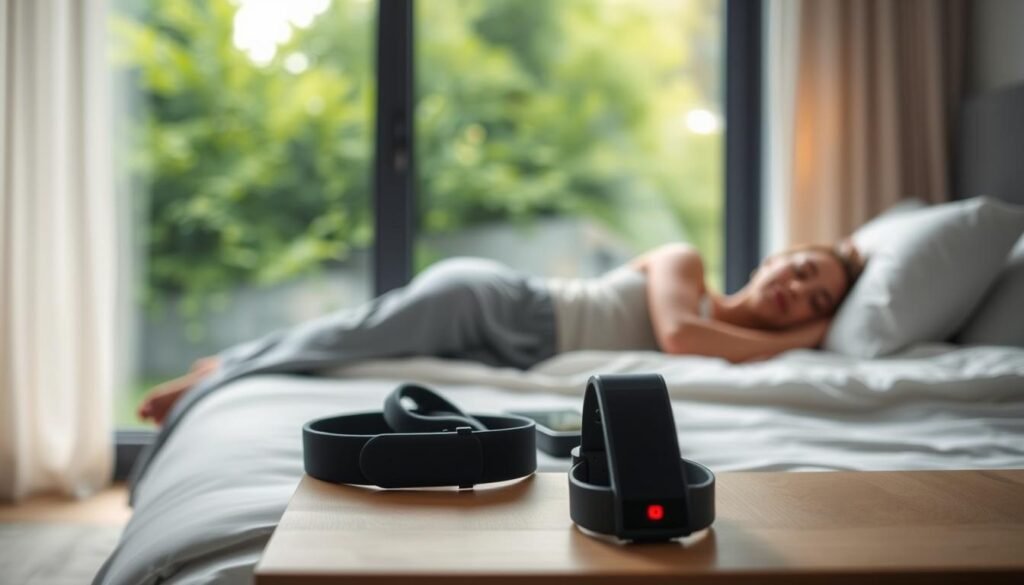
Wearable sleep trackers are becoming more common. They monitor how long and well you sleep. This helps users figure out their sleep issues. With these details, you can change your habits to sleep better. Tracking sleep can reveal what causes insomnia, allowing for better fixes.
Lifestyle Changes for Better Sleep
Changing your lifestyle is key if you have trouble sleeping. It’s especially important to handle stress and worries well. Writing in a journal or sharing your feelings with someone you trust can help. By doing these, you calm your mind and sleep better. Addressing anxiety head-on is critical because it’s linked to sleep issues.
Managing Stress and Anxiety
Create a sleep-supportive circle of friends and family. Being around people who support healthy sleep habits helps fight insomnia. When everyone values good sleep, it creates an environment of rest. Keeping a positive attitude toward sleep is just as crucial. Thinking positively about sleep eases worries related to sleeping issues. This understanding makes achieving calmness easier.
Creating a Sleep-Friendly Social Environment
Seeing sleep in a positive light is very important. View sleep as an essential part of staying healthy. Positive reinforcement about sleep boosts the quality of your rest. For more tips on managing anxiety linked to sleep problems, check out recognizing sensations and finding relief. These lifestyle changes can greatly improve how well you sleep.
FAQ
What are the primary symptoms of insomnia?
How can I create a sleep-friendly environment?
How does my diet affect my sleep quality?
What lifestyle changes can help with insomnia?
When should I consider seeking professional help for insomnia?
Can natural sleep aids be effective?
How does physical activity influence sleep?
What techniques can help with relaxation before bed?
Is Cognitive Behavioral Therapy for Insomnia (CBT-I) effective?
How does technology impact sleep health?
Source Links
- 20 Tips to Reduce Your Sleep Problems
- Frequent waking
- Insomnia – Symptoms and causes
- Insomnia: What It Is, Causes, Symptoms & Treatment
- Sleep disorders – Symptoms and causes
- Insomnia: What You Need to Know as You Age
- How To Determine Poor Sleep Quality
- Bedroom Environment: What Elements Are Important?
- How to Make a Sleep-Friendly Bedroom – National Sleep Foundation
- 18 Tips to Create the Ultimate Sleep Environment and Improve Your Quality of Sleep
- 6 steps to better sleep
- How to Fix Your Sleep Schedule
- Effects of Diet on Sleep Quality
- Nutrition and Sleep: Diet’s Effect on Sleep
- The Effect of Physical Activity on Sleep Quality and Sleep Disorder: A Systematic Review
- Exercising for Better Sleep
- How to Fall Asleep With Mindfulness Techniques
- Relaxation Exercises To Help Fall Asleep
- The Ultimate Guide to Mindfulness for Sleep
- 8 Insomnia Home Remedies: Exercises, Oils, and More
- Melatonin for Sleep: Does It Work?
- When to See Your Doctor About a Sleep Problem
- Insomnia – Diagnosis and treatment
- Insomnia treatment: Cognitive behavioral therapy instead of sleeping pills
- Cognitive Behavioral Therapy for Insomnia (CBT-I): An Overview
- Cognitive Behavioral Therapy for Insomnia (CBT-I): A Primer
- The impact of bedtime technology use on sleep quality and excessive daytime sleepiness in adults
- Technology in the Bedroom
- Bedtime Use of Technology and Associated Sleep Problems in Children
- 15 Proven Tips to Sleep Better at Night
- Fall asleep faster and sleep better – Every Mind Matters