Did you know that almost 85% of men will see their hair thin by the time they’re 50? It’s a big number that makes many wonder if fighting hair loss is a lost cause. Are there truly ways to get your hair back? It’s important to understand how hair loss works if you’re seeing thinner hair. This article will take you through the best hair regrowth treatments for men. We cover everything from medicines like finasteride and minoxidil to natural treatments.
Losing hair can really hit your confidence. That’s why we’re looking at both the treatments you can use and how hair loss affects you mentally. Let’s find out the truths about growing hair back. Because feeling good about yourself matters.
Key Takeaways
- Over 60% of men under 35 experience hair loss, increasing to over 80% by age 50.
- The combination of oral finasteride and topical minoxidil boasts a success rate of approximately 83% for hair regrowth.
- A balanced diet with essential vitamins and minerals is crucial for maintaining hair health.
- Psychological support is just as important as physical treatment when addressing hair loss.
- Topical treatments can be effective, but proper care and consistency are key to achieving results.
Understanding Hair Loss in Men
Hair loss in men is a big concern that comes from different hair loss factors. Knowing why it happens helps us find the right treatments. This includes treatments for male pattern baldness. When men lose hair or go bald, it’s important to know the main causes.
Common Causes of Hair Loss
Male pattern baldness, or androgenetic alopecia, is a main reason men lose hair. Studies say that 30-50% of men will experience it by age 50. The chance of getting it goes up as men get older. For those aged 40-49, about 53% may have moderate to severe baldness. Other common causes are:
- Stress-related hair loss, like telogen effluvium
- Alopecia areata, an autoimmune issue
- Changes and imbalances in hormones
How Genetics Plays a Role
Genes are a big factor in male pattern baldness. Twin studies show genes cause about 80% of the risk. If a man’s family has a history of baldness, his chances are higher. Especially, white men are more affected than Asian or African men.
The Impact of Lifestyle Choices
What you choose to do affects your hair’s health. Bad diet, smoking, and poor stress management can make hair loss worse. Eating well helps keep hair healthy. Men with a family history of baldness should act early to reduce its impact. Healthy habits could slow down hair loss and boost chances of hair growing back.
Effective Hair Regrowth Treatments
Exploring different hair regrowth treatments is crucial for anyone dealing with hair loss. There are many options available, from store-bought products to natural remedies. These are designed for men’s various needs, especially for those with pattern baldness. These treatments include over-the-counter products, prescription meds, and natural remedies known to help regrow hair.
Over-the-Counter Solutions
Minoxidil, also known as Rogaine, is a top choice for treating hair loss without a prescription. It’s approved by the FDA for battling pattern baldness. Using it twice a day consistently can yield results within six months. It’s especially good for men under 40, helping them start treatment early.
Prescription Medications
For those looking at prescription options, finasteride (Propecia) is available. It blocks DHT, a hormone linked to hair loss in men and is favored for treating androgenetic alopecia. While effective, it may lower sex drive and increase some health risks. Men over 60 might find it less helpful. Keeping in touch with a doctor to monitor side effects is wise.
Natural Remedies
Natural remedies are becoming more popular among men avoiding meds. Essential oils like rosemary and peppermint can improve hair health. Supplements like saw palmetto show promise in enhancing hair thickness and health. Scalp massages might help by boosting blood flow. Along with these, eating well supports hair health from within.
The Role of Diet in Hair Health
Eating well is key to great hair health and helping hair grow back. Some nutrients are really important for making hair strong and healthy. Knowing what these nutrients are can make a big difference in how healthy your hair looks.
Nutrients Essential for Hair Growth
Important nutrients for hair include:
- Biotin: Important for making keratin, a main hair protein.
- Zinc: Keeps hair strong and helps the scalp stay healthy.
- Vitamin D: Helps with hair growth cycles, might stop hair loss.
- Omega-3 Fatty Acids: Needed for a healthy scalp; not enough may cause hair loss.
Foods to Include for Stronger Hair
Adding certain foods can boost hair health:
- Nuts and seeds: Have lots of vitamin E and omega-3s.
- Lean meats: Great for protein and zinc, like chicken and turkey.
- Leafy greens: Spinach and kale are full of vitamins and minerals.
- Fish: Oily kinds like salmon have omega-3s and protein.
- Sweet potatoes: They have beta-carotene for a healthy scalp.
Supplements That May Help
If you can’t get all nutrients from food, some vitamins may help. Supplements like Nutrafol provide important nutrients for hair. These include:
- L-lysine: Helps with iron absorption for better hair health.
- Tocotrienols: Shown to make hair count go up in studies.
- Biotin: Good for growth in a complete supplement.
Hair Care Practices for Regrowth
A good hair care routine is key for hair growth and scalp health. Many men face hair loss, but using the right products and techniques helps a lot. We’ll cover important steps like picking the best shampoo, taking care of your scalp, and other hair regrowth methods for men.
Choosing the Right Shampoo
Choosing a good shampoo for men’s hair regrowth is crucial in fighting hair loss. It’s best to use shampoos with ingredients like DHT blockers, biotin, and caffeine. These improve scalp health and hair thickness. Avoiding harsh chemicals keeps your scalp’s natural oils balanced. Check out this guide for advice on top shampoos for men looking to get their hair back.
Importance of Scalp Care
A healthy scalp is vital for regrowing hair in men. Regular scalp cleaning removes dead skin and boosts blood flow to hair roots. A simple scalp massage every day can also increase blood circulation. This might help your hair grow. Taking good care of your scalp can lead to healthier hair and reduce thinning issues.
Techniques to Stimulate Growth
There are many ways to help your hair grow back. Using grooming tools like brushes with soft bristles is good for the scalp. Also, using essential oils like rosemary and peppermint oil can promote hair growth. Having a solid hair care routine, along with these methods, can greatly increase hair regrowth chances.
Professional Treatments and Procedures
Men dealing with hair loss have many professional options. Treatments like hair transplants, microneedling, and laser therapy are available. They help fight thinning hair with their own benefits, fitting different needs.
Options for Hair Transplant Surgery
Hair transplant surgery is a chosen path for those wanting a lasting fix. It moves hair from thick areas to places where it’s needed. Techniques like FUT and FUE give natural-looking, dense hair. Yet, costs ranging from $6,000 to $15,000 might make some think twice, despite the promise of enduring results.
Benefits of Microneedling
Microneedling improves scalp health with fine needles. It boosts blood flow and enhances how well the scalp takes in treatments like minoxidil. Pairing microneedling with minoxidil has shown to boost hair growth in men aged 20 to 35 with genetic hair loss. This method can amplify the effects of other regrowth strategies.
Laser Therapy Explained
Laser therapy offers a gentle method to excite hair follicles. Low Level Laser Therapy (LLLT) slows hair loss effectively. It needs several weekly sessions for months for visible impacts. Research shows tools like laser combs make hair thicker and fuller with regular use. This therapy is an attractive choice for pain-free hair growth support.
The Psychological Impact of Hair Loss
The emotional impact of hair loss can deeply affect one’s self-confidence and mental health. Many people, especially men, struggle with how they feel about themselves as they lose hair. It’s vital to recognize and tackle these psychological effects to improve lives.
Coping with Hair Loss Emotionally
Hair loss can lead to anxiety and sadness. Research shows those with hair loss often feel more depressed and anxious than others. It’s important to find support during these times. Talking with friends, joining support groups, or getting counseling can help. Practices like mindfulness and hobbies offer comfort and strength, too.
Building Confidence During Transition
Gaining confidence is key when dealing with hair loss. Trying new hairstyles or hairpieces can boost how you see yourself. Staying active and eating well also helps with self-perception. Options like FUE hair transplants have helped many men feel better about themselves.
Seeking Support from Others
Getting support can ease the stress of hair loss. Being part of a group with similar experiences can make you feel less alone. Studies suggest social support can decrease worry and help manage the situation better. Talking to professionals or loved ones offers extra care and understanding, improving emotional well-being.

Myths and Misconceptions About Hair Regrowth
Knowing the truth about hair regrowth is crucial for those looking for real answers. Myths can lead people to choose treatments that don’t work. It’s best to focus on facts to find the right treatment for hair regrowth.
Debunking Common Myths
There are many wrong beliefs about hair loss and how to regrow hair. One myth is that washing your hair too much causes it to fall out. This isn’t true. It’s normal to lose 50 to 100 hairs a day. Another myth is that wearing hats too often can cause hair loss, but that’s not true either, as wearing a hat moderately doesn’t affect hair growth.
Misunderstood Treatments Explained
Many are curious if treatments like minoxidil actually work. Studies show that minoxidil, approved by the FDA, helps 60-80% of users slow hair loss. Ignoring the truth about hair growth treatments can limit choices for those affected. Consistent treatment is important. Around 30% stop using it within the first year due to side effects or not seeing results. Knowing why these challenges happen can make it easier to overcome them.
Facts vs. Fiction in Hair Loss Solutions
Sharing true information about hair loss can clear up many misunderstandings. For instance, 40% of women face hair loss by the time they’re 50. Genetics play a big role in hair loss in both men and women. Over 200 genes are involved. Understanding these facts can help people find the right treatments and boost their confidence.
The Importance of Consistency in Regrowth
Consistency is key in finding success with hair regrowth for men. It’s super important to stick to a hair care schedule. Using treatments regularly, eating well, and living a healthy life help a lot. Together, these steps boost your results and keep them.
For real progress, men must follow their hair care plan closely over time. Then, they’ll see significant changes.
Establishing a Hair Care Routine
Having a good hair care routine ups your chances of getting your hair back. Men should use products made to help hair grow, like special shampoos. Scalp massages are great too because they get more blood to your hair roots, helping it grow.
Choosing the right routine depends on your hair type and needs. Sticking to your routine without fail is what matters most.
Tracking Your Progress
Keeping an eye on how you’re doing helps keep you going. You can take pictures or write down how your scalp feels often. You might see your hair get thicker, which feels awesome.
This way, you’ll know what’s working and keep your hopes in check. Remember, good things take time, especially with hair treatments.
Staying Motivated Throughout the Process
Keeping up the drive can be tough with long projects like regrowing hair. Setting small goals helps you feel good about your progress. Joining groups online or in real life brings support and advice from others doing the same thing.
Celebrating every win, no matter the size, helps keep you excited. This shows how sticking to your plan is linked to staying motivated.
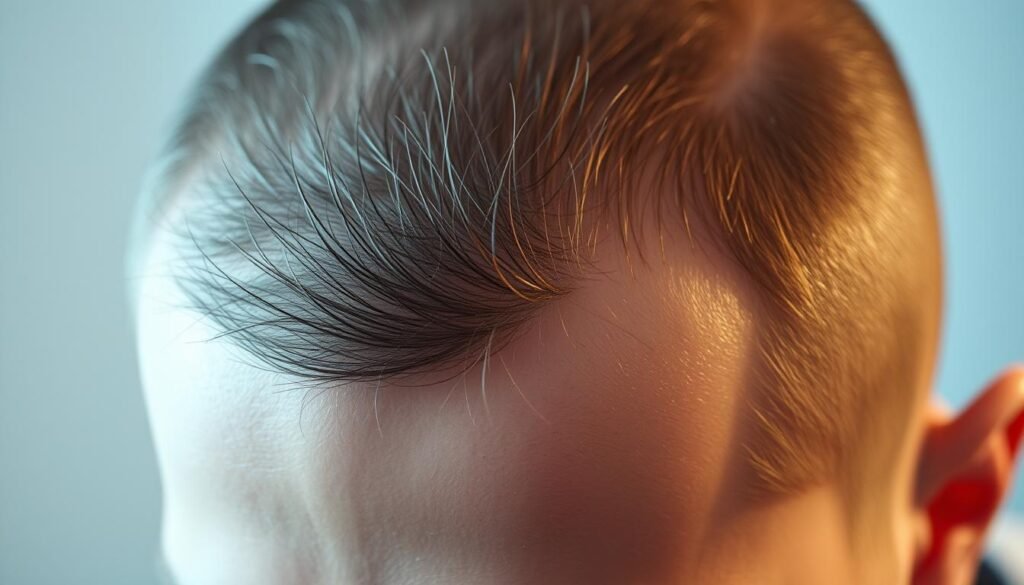
Choosing the Right Products
It’s crucial to pick the right hair regrowth items if you want good results. With so many choices, look for brands that science backs up. Rogaine, Hims, and Keeps are highly recommended because they really work.
Recommended Brands for Hair Regrowth
Some hair regrowth brands are better than others:
- Rogaine (5% Minoxidil Foam): Selling for $50 at Amazon and Walmart, it’s proven to help with Male Pattern Hair Loss.
- Hims Topical Finasteride & Minoxidil Spray: For $50, this mix of two approved ingredients targets hair growth effectively.
- Nutrafol Proactive Thinning: At $79, this supplement needs four pills a day to work best, aiming to thicken hair.
- MDHair Hair Regrowth Treatment: Their kits begin at $24 and include a classic minoxidil serum option.
How to Read Product Labels
Understanding the labels on hair products is key for treatment success. Look at what’s in them and how much. Minoxidil, for example, can really help hair grow by increasing blood flow to the roots. Not everything added by marketers is useful, though. Knowing what the labels mean helps make better choices.
Understanding Ingredients That Work
Some ingredients are known to help with hair regrowth:
- Minoxidil: This has been shown to thicken hair and wake up follicles.
- Finasteride: It’s effective in reducing hair loss, especially around the forehead area.
- Botanical Extracts: For instance, rosemary oil may be as good as lower doses of minoxidil.
Picking the right hair regrowth items means looking at how well they work and being clear about what’s in them. Compare to find what fits your needs best.
Hair Regrowth Success Stories
Stories of hair regrowth are truly inspiring, based on real experiences. Many men have overcome the emotional struggle of losing hair. They have shown great hair restoration success. These stories not only share personal journeys. They also shed light on treatments that have worked well.
Inspiring Transformations
The journey from losing hair to getting it back can change lives. By age 30, 30% of men start seeing hair thinning. But, hearing success stories gives them hope. Each story shines as a source of motivation. Treatments like Finasteride and Minoxidil change lives. Leo, for example, saw his hair get thicker in just six months of treatment. His experience shows the positive impact of choosing the correct treatment.
Interviews with Men Who Regrew Their Hair
Interviews with those who’ve beaten hair loss offer key insights. Many saw big improvements with a mix of treatments. An impressive 90% of men using Manual’s methods reported good results. Adding both Finasteride and Minoxidil showed a 90% success rate. These talks share details of their regrowth and the emotional support they found, reminding them they are not alone.
Lessons Learned from Real Experiences
The lessons from these success stories hit home. Persistence is often the key, as many men have said sticking with treatment works. Joe realized he was more than just a number; many men share his fight. This helps boost the determination to pursue their own hair regrowth. The journey teaches about commitment, understanding the process, and staying positive. For more info, explore these proven techniques.
Next Steps for Men Facing Hair Loss
Men facing hair loss should first make a plan that fits their own needs. This plan might include changing daily habits, eating differently, and considering treatments like minoxidil or finasteride. These treatments work well for many if started early. Getting ahead of hair loss as soon as it starts can really help your hair grow back.
It’s also key to know when it’s time to get expert advice. Meeting with doctors who specialize in hair, like dermatologists or trichologists, can open up options like PRP therapy or laser treatments. These options might be a good choice if what you’re doing at home isn’t working. Making regular appointments helps keep track of your hair health and any changes needed in your care.
Last but not least, it’s important to stay confident through your hair journey. Trying new hairstyles or wearing cool hats can help you feel good about yourself. Finding friends and groups who support you makes a big difference too. Keeping a positive attitude is crucial. It not only makes you feel better but also helps you enjoy life, hair changes and all.
FAQ
What are the most common causes of hair loss in men?
What treatments are effective for hair regrowth?
How can diet influence hair health?
What proper hair care routines can promote regrowth?
What professional treatments exist for hair loss?
How does hair loss affect men’s mental health?
Are there any myths about hair regrowth I should be aware of?
Why is consistency important when seeking hair regrowth?
How can I choose the right hair regrowth products?
What success stories can inspire those dealing with hair loss?
What are the next steps for men dealing with hair loss?
Source Links
- The Best Hair Loss Treatment for Men [2025]
- Revitalize Your Locks: The Power of Healthy Hair Habits
- Male Androgenetic Alopecia – Endotext
- Male Pattern Baldness (Androgenic Alopecia): Stages, Treatment
- Hair loss – Diagnosis and treatment
- Hair Loss and Thinning Hair Treatment Options
- Best Hair Loss Treatments for Men
- Diet and hair loss: effects of nutrient deficiency and supplement use
- “Let Food be Thy Medicine”: Value of Nutritional Treatment for Hair Loss
- Best Foods for Hair Growth: What to Eat, Drink & Avoid
- What is male pattern hair loss, and can it be treated?
- Is Your Hair Thinning? Try These 9 Remedies
- 10 Tips to Naturally Regrow Your Hair in 2024
- Hair loss: Diagnosis and treatment
- Different Ways to Stimulate Hair Regrowth for Men in 2025
- Surgical and Non-Surgical Treatments for Hair Loss
- The psychological consequences of androgenetic alopecia: A systematic review
- The Psychology of Hair Loss: Understanding the Mental Impact of Hair Loss in Men
- Psychological effects of hair loss
- Jesse E Smith, MD, FACS
- Myths and Facts About Hair Growth – Common Misconceptions
- 10 Myths and Truths about Hair Loss
- A Novel Hair Restoration Technology Counteracts Androgenic Hair Loss and Promotes Hair Growth in A Blinded Clinical Trial
- The Power of Patience: Navigating Your Hair Regrowth Journey
- Regenerative medicine strategies for hair growth and regeneration: A narrative review of literature
- Doctors Say These Supplements and Sprays Might Help Prevent Hair Loss
- Hair Loss Treatment Nutrafol
- Dermatologists Say These Hair Growth Products *Actually* Work for Men
- Success Story: Leo’s Hair Regrowth
- Success Story: Joe’s Hair Regrowth
- Hair loss