Did you know hair grow about 1/2 inch a month? A small trim every three months can boost growth. Understanding hair health and growth is important. Stress can lead to hair loss, like alopecia areata. So, it’s crucial to use good hair growth tips and natural remedies. While no single product works magic overnight, knowing what practices to combine with the right products can lead to longer, stronger hair.
Being patient and consistent is key. Paying attention to factors that affect hair health is essential. By focusing on diet and habits, you can make your hair healthy and beautiful. Trying these proven methods will help anyone achieve gorgeous hair.
Key Takeaways
- Hair grows about 0.5 inches per month.
- Regular trims can help prevent split ends and promote growth.
- Stress management is crucial, as it can impact hair growth.
- A well-balanced diet with essential nutrients supports hair health.
- Caffeine-infused products may be effective for encouraging hair growth.
- Daily routines and gentle care can significantly improve hair health.
Understanding Hair Growth: The Basics
Knowing how hair grows is key for anyone wanting better hair. Hair grows in three phases: anagen, catagen, and telogen. Each phase is vital for hair health.
The Hair Growth Cycle
The anagen phase is where hair grows. It can last 2 to 7 years. During this phase, hair can grow about 1 cm each month. Most of your hair is growing at this time. Then comes the catagen phase, which takes 2 to 4 weeks. Here, hair gets ready for the rest phase. Finally, during the telogen or resting phase, hair takes a break for 3 to 4 months. After this, old hair falls out, and new growth starts.
Factors Influencing Hair Growth
Many things affect hair growth. These include your genes, age, hormones, and your health. Stress can also make hair fall out more. Bad environment and harmful products can hurt hair growth, too. It’s important to watch what you use on your hair and scalp.
Nutrition’s Role in Hair Health
Nutrition is super important for healthy hair. Needs like biotin, vitamin D, and iron are key for growth. Not eating well can slow hair growth or cause loss. A balanced diet helps make hair follicles strong, leading to lovely, healthy hair.
| Hair Growth Phase | Duration | Characteristics |
|---|---|---|
| Anagen | 2 to 7 years | Active growth; about 90% of hair is in this phase |
| Catagen | 2 to 4 weeks | Transition phase; hair follicles shrink |
| Telogen | 3 to 4 months | Resting phase; hair may shed and new growth begins |
Essential Nutrients for Healthy Hair
Getting great hair is more than just regular washing. It’s about giving your hair the nutrients it needs to thrive. When you know how these nutrients help your hair grow, you can make better choices in your hair care routine.
Proteins: Building Blocks of Hair
Protein is key for strong hair. Hair is mainly keratin, so getting enough protein helps prevent breakage. Eggs are great because they have lots of protein and biotin, which is good for growth. Eating lots of protein from fish and legumes is great for your hair.
A serving of cooked sirloin steak packs about 29 grams of protein. This makes it awesome for helping your hair grow.
Vitamins and Minerals for Growth
Vitamins and minerals help keep your hair healthy and growing. Vitamins A, C, D, E, and B-vitamins like biotin are super important for a healthy scalp. For instance, a medium sweet potato covers 160% of your vitamin A daily needs.
Zinc is also key, and just one medium oyster gives women 96% of their daily zinc needs. Eating a diet full of vitamins for hair growth helps avoid thinning hair.
The Importance of Omega-3 Fatty Acids
Omega-3 fatty acids are good for your heart and your scalp. They help keep hair follicles healthy, which is good for hair growth. Even though there’s not a lot of research on omega-3s and hair growth, eating foods rich in these fats is good for your scalp. Foods like walnuts and fatty fish are key for adding hair growth supplements to a healthy diet.
Daily Habits for Healthier Hair
Adding specific habits into your daily life can make your hair healthier and look better. It’s key to wash your hair gently, boost scalp blood flow, and cut down on heat. These steps are crucial for gorgeous, healthy hair.
Gentle Hair Washing Techniques
It’s important to use shampoos without sulfates to keep hair’s natural oils. Aim to wash your hair only once a day at most. Washing too often can dry out and irritate your scalp. After washing, a wide-toothed comb is best for gently untangling your hair.
People with oily hair may need to wash theirs every day. But if you have dry hair, washing it less frequently is better for it.
The Benefits of Regular Scalp Massages
Massaging your scalp regularly boosts blood flow, which is good for your hair roots and can even help it grow. Doing scalp massages daily can also lower stress levels, which sometimes cause hair to fall. Gently massaging the scalp keeps it healthy and full of life.
Avoiding Heat Damage
To prevent heat damage, try to reduce how often you use hair styling tools. If you must use heat, protective sprays are a must to keep your hair safe. Letting your hair air dry is best whenever you can.
When you do use heat tools, choose professional ones with ionic technology to cut down on damage. These steps build a solid foundation for healthy hair habits.
Choosing the Right Hair Products
Finding the perfect hair products is key to healthier, shinier hair. It’s important to choose products that match your hair type. This not only improves texture and shine but also boosts hair health. Sulfate-free products help prevent damage and keep hair moisturized. This is essential for strong, healthy hair.
Sulfate-Free Shampoos and Conditioners
Sulfate-free shampoos and conditioners are essential for locking in moisture. They help avoid damage. These products are designed for all hair types, offering specific benefits:
- 70% of individuals report better texture and shine with suitable products.
- 40% of people with oily hair prefer non-drying, lightweight shampoos.
- 60% find hydrating conditioners boost the health of thick or curly hair.
- 75% with fine hair choose volumizing conditioners for a lightweight lift.
Essential Oils for Hair Growth
Essential oils are great for hair growth. Oils like rosemary and jojoba boost scalp blood flow. This creates a healthy environment for hair follicles. Argan oil shampoos reduce frizz by 80%, showing their effectiveness. Using these oils regularly improves shine and supports natural hair growth.
Finding the Best Hair Masks
Hair masks with avocado or coconut oil deeply condition and hydrate. They are ideal for fixing damaged hair. 65% of users with brittle hair prefer deep conditioning for strength. The K18 Mask repairs hair in just 4 minutes, while the Virtue Labs Flourish Mask nourishes and thickens thinning hair. Choosing products like Goldwell Dualsenses Treatments ensure hair gets the care it needs, improving its health.
DIY Hair Treatments You Can Try
Interested in better hair health? Try DIY hair growth treatments. They use natural ingredients from your kitchen. These remedies help your hair and scalp become healthier, leading to stronger hair.
Avocado Hair Masks
An avocado is full of good fats and vitamins, making it great for your hair. Used as a mask, it deeply conditions and stops your hair from breaking. For added benefits, mix mashed avocado with olive oil and honey.
Coconut Oil Treatments
Coconut oil can deeply moisturize your hair because it gets into the hair shafts. It’s a top-notch deep conditioner. Using it often helps your scalp stay healthy. Heat it up a little, massage into your scalp, then let it sit for 30 minutes before washing.
Egg-Based Nourishing Packs
Eggs have proteins that your hair needs to grow. They make a great conditioner, leaving your hair shiny and strong. Combine an egg with coconut oil for a special treatment. Leave on for 20-30 minutes, then wash well. These DIY treatments are simple but very good for your hair.
The Role of Hydration in Hair Growth
Hydration is key for overall health, including hair health. Drinking enough water makes your hair stronger and improves its texture. If you don’t stay hydrated, your hair might become brittle and shed more. To grow healthy hair, it’s important to know how water helps and to eat foods that keep you hydrated.
How Water Benefits Your Hair
Water makes up 55-60% of our bodies, which shows how vital it is. It helps keep hair follicles healthy by improving blood flow. A hydrated scalp means less dandruff, balanced sebum production, and a good environment for hair to grow.
If you don’t drink enough water, you might notice your hair growing slower and shedding more. The University of Missouri System suggests drinking half your body weight in ounces of water, plus 12 ounces for every half hour you exercise. Usually, drinking eight glasses of water a day is a good goal to support hair growth.
Foods That Help with Hydration
Eating foods high in water also helps in keeping your hair moisturized from the inside. The best choices for hair growth include:
- Watermelon – It’s very high in water, offering great hydration.
- Cucumbers – These are mostly water, which helps with hydration.
- Oranges – They are full of vitamin C and water, which is good for your hair.
- Strawberries – They hydrate and provide valuable nutrients.
- Leafy Greens – They hydrate and are loaded with vitamins and minerals good for hair growth.
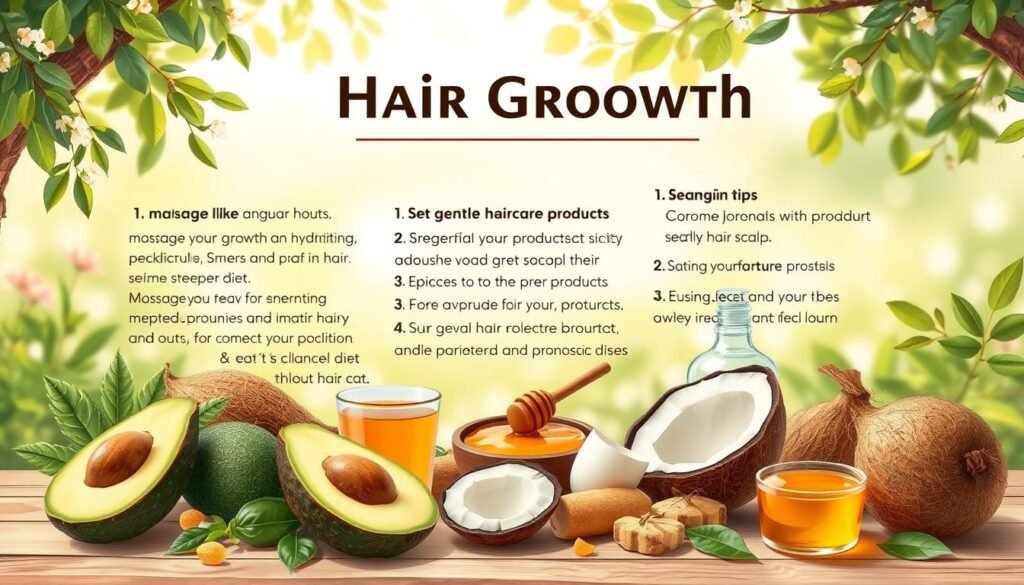
By adding these foods to your meals, you ensure you’re hydrated. This, along with drinking water, leads to healthier, shinier hair. It proves how crucial hydration is for hair growth.
Stress Management for Healthier Hair
Managing stress is key to feeling good and keeping your hair healthy. When too stressed, many hair follicles enter a resting phase. This phase can cause more hair to fall out. To avoid this, using stress-busting methods is vital for helping hair grow.
Techniques to Reduce Stress
- Practicing yoga can improve flexibility and help unwind tension, providing both physical and mental relief.
- Meditation fosters mindfulness, which can enhance resilience against stress.
- Engaging in regular physical exercise releases endorphins, which effectively lower cortisol levels.
- Hobbies, such as painting or gardening, serve as positive outlets for stress relief.
The Connection Between Stress and Hair Loss
It’s important to understand how stress affects hair health. Stress triggers a condition called telogen effluvium. This condition causes lots of hair to shed, impacting the hair growth cycle. Stress can cause you to lose up to 300 hairs a day. So, managing stress is crucial for hair growth.
Stress can lead to conditions like alopecia areata, where the immune system attacks hair follicles. Eating foods rich in iron, biotin, vitamin C, and omega-3s can fight stress-related hair problems. Drinking plenty of water and massaging your scalp often also helps your hair.
To learn more about preventing hair loss and finding effective treatments, check out this expert advice.
Regular Hair Care Routine
It’s key to have a regular hair care routine to keep your hair healthy and growing. Cutting your hair properly and regularly helps it look and feel its best. Doing things the right way can also prevent damage.
How Often Should You Trim Your Hair?
Getting trims often is a must for keeping hair in top shape. Experts recommend a trim every 6 to 8 weeks to avoid split ends and breaks. If you prefer not to trim too often, try slight trims three times a year.
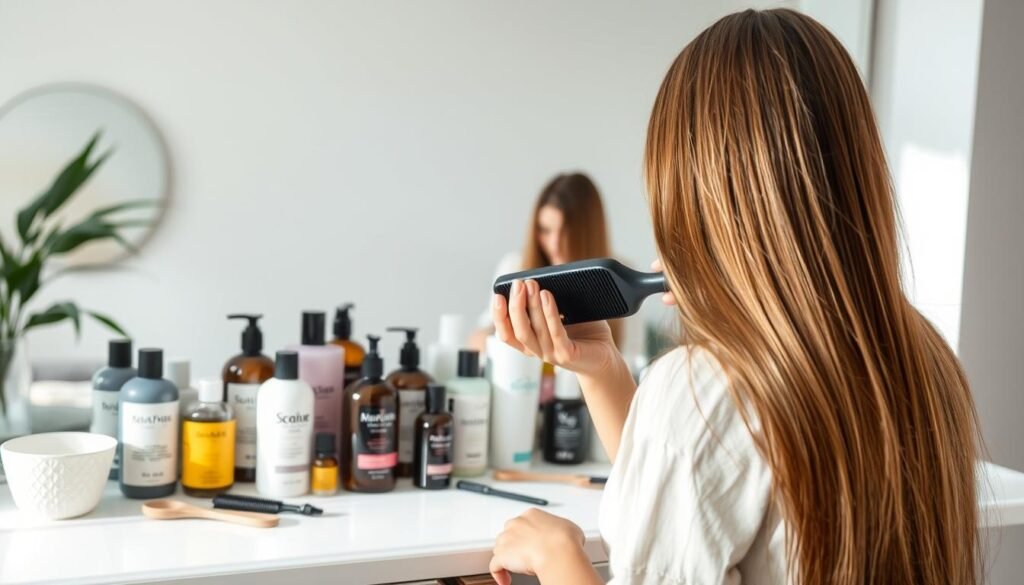
Best Practices for Hair Maintenance
Follow these steps for the best hair health:
- Wash hair every 3 to 4 days to keep natural oils and have a healthy scalp.
- Deep-condition your hair once a week, especially if it’s fine, curly, or dyed.
- Use heat protectants with styling tools to prevent heat damage.
- Add scalp massages to your routine to boost blood flow and hair growth.
- Try supplements like BioSil for thicker hair.
Eating well also improves hair health. Include foods rich in iron, zinc, and omega-3s in your diet. To learn more about growing healthy hair, check out these tips and advice. Following these methods lays the groundwork for strong, healthy hair.
The Impact of Lifestyle Choices
Choosing a healthy lifestyle can really help your hair. Small changes can make a big difference in hair growth. Knowing what habits are good or bad for your hair is key for anyone wanting healthier hair. By following simple tips, you can help your hair grow strong and keep yourself well too.
The Effect of Smoking on Hair Health
Smoking is bad for your hair among other things. The bad stuff in cigarettes makes it harder for blood to reach your scalp. This weakens your hair roots. Studies show that smokers might start losing their hair sooner than non-smokers. Smoking messes with how your hair grows, leading to early thinning. But if you stop smoking, your scalp and hair can start to get better.
How Exercise Promotes Growth
Working out regularly makes blood flow better, which is good for your hair roots. Exercise like running, yoga, and lifting weights helps your whole body work better. This includes lowering stress which helps keep your hair thick. Adding exercise to your daily life is a smart way to help your hair grow.
| Lifestyle Factors | Effects on Hair | Recommended Actions |
|---|---|---|
| Smoking | Weakens hair follicles; increases hair loss risk | Quit smoking; seek support or resources |
| Regular Exercise | Improves blood circulation; nourishes hair follicles | Engage in physical activities; aim for 30 minutes daily |
| Poor Diet | Nutrient deficiencies can lead to hair thinning | Incorporate balanced meals rich in vitamins and minerals |
| Stress | Triggers hair loss; hampers growth cycle | Adopt mindfulness techniques; practice relaxation exercises |
Seeking Professional Help
When you keep losing hair and nothing you try helps, it’s time to get professional help. Catching the problem early can really help your hair grow back and prevent more loss. Dermatologists are key because they find the root cause and give you specific treatments.
When to Consult a Dermatologist
If your hair is getting thin, you see bald spots, or you’re losing lots of hair fast, see a dermatologist. Issues like androgenetic alopecia are common, and a pro can figure out what’s wrong. If you’re losing more than 100 hairs a day or noticing bald areas, getting expert help is crucial. They can suggest treatments like minoxidil or even PRP therapy. And if your hair loss is due to health issues like thyroid problems, a good diagnosis is key.
Treatments and Procedures for Hair Loss
Minoxidil, an FDA-approved treatment, helps grow hair back. You need to use it regularly, and you might see changes in four months. For some, it takes up to a year to see results.
PRP therapy is another option, helping about 20% of patients significantly. Treatments like scalp microneedling can also boost hair growth but they are expensive. Hair transplants are there for those looking for a quick, lasting fix.
Dealing with hair loss means considering all your options. Often, this involves professional advice and treatments meant just for you.
Embracing Natural Hair Growth Methods
Turning to natural remedies for hair growth can be refreshing and effective. Using herbs like nettle and horsetail promotes healthier hair. These herbs help nourish hair and scalp, boosting hair vitality. This approach taps into ancient wisdom and respects our body’s natural processes.
Herb-Based Solutions
More people are choosing herb-based treatments for their hair. These natural alternatives avoid harsh chemicals found in many hair products. By doing so, individuals reduce exposure to harmful ingredients and see improvements in their hair health.
Mindfulness and Hair Health
Mindfulness is also key for hair health. Stress can harm hair, so managing it is crucial for growth. Practices like meditation and deep breathing lower stress and help hair health. Combining herbal remedies with mindfulness offers a full care strategy for both hair and well-being.
FAQ
What are some effective hair growth tips?
What natural remedies for hair growth are recommended?
Which foods are considered the best for hair growth?
Are there specific hair growth supplements I should consider?
How can I promote hair growth effectively?
What vitamins are essential for hair growth?
Can you suggest some DIY hair growth treatments?
What lifestyle tips can enhance hair health?
Which hair growth products should I use?
Source Links
- 14 Ways to Help Your Hair Grow Faster and Stronger
- How To Make Your Hair Grow Faster: Tips for Healthy Growth
- You Can Actually Make Your Hair Grow Faster—Here’s How
- Science of Hair: Understanding the Basics of Hair Growth and Loss
- In brief: What is the structure of hair and how does it grow? – InformedHealth.org
- Best Foods for Hair Growth: What to Eat, Drink & Avoid
- Guide to Best Vitamins and Minerals for Hair Growth – ISHRS
- Simple Secrets to Healthier, Fuller, Shinier Hair
- 12 Healthy Hair Habits You Should Adopt Right Now
- How to Select the Right Hair Products for Your Hair Type – M Beautique Salon
- How To Get Healthy Hair: Tips for Strong, Nourished Hair
- Choosing the Right Hair Treatment: Advice from a Luxury Hair Salon Expert
- 10 Tips to Naturally Regrow Your Hair in 2024
- 10 DIY Masks for Healthier Hair
- 6 Ways Drinking Water Improves Hair Growth
- Does Drinking Water Help Hair Growth?: Role of Hydration
- Does hydration impact skin and hair?
- How to Stop Losing Hair Due to Stress: Effective Remedies and Solutions –
- Stress and Hair Loss: Tips for Prevention and Management
- 7 Pro Tips for Growing Out Your Hair
- Hair Care Routine Steps for Healthy Hair
- How does our diet and lifestyle affect our hair growth?
- Influence of Nutrition, Food Supplements and Lifestyle in Hair Disorders
- 8 Experts Told Me Their Secrets to Growing Super Long Hair
- Is Your Hair Thinning? Try These 9 Remedies
- Hair Pros Say That Washing Your Hair Less Can Actually Make It Grow Longer, Faster
- Returning to Your Roots: Hair Care Tips from a Natural Hair Enthusiast
- How To: 12 Key Tips To Grow Healthy Natural Hair
- Natural Hair Growth: Tips and Tricks