Did you know that androgenetic alopecia is behind 95% of male hair loss? This fact highlights the urgent need for effective hair loss solutions. Among these, microneedling for hair regrowth stands out. It is a modern method explored since the 1990s for alopecia treatment. Today, it is recognized for its potential to restore hair.
People are now looking into non-surgical ways to regain hair, making microneedling an important option to consider. This article will cover why microneedling is getting popular. We’ll look into how it works and its benefits, such as boosting topical treatment effects and encouraging collagen production. For those with thinning hair, microneedling might be the breakthrough they need.
Key Takeaways
- Microneedling has been explored as a treatment for various forms of hair loss since the 90s.
- The procedure is quick, typically lasting less than 20 minutes.
- It may enhance the absorption of topical hair loss medications like minoxidil.
- Common side effects usually resolve within 5 days.
- Microneedling can increase hair density and thickness through collagen stimulation.
Understanding Microneedling and Its Purpose
Microneedling is making waves in the beauty world, especially as a hair loss treatment. It sparks the body’s repair process. This is good news for those thinking about microneedling for hair and scalp treatment.
What is Microneedling?
Microneedling means using a tool with small needles to slightly injure the skin. This boosts collagen and elastin, vital for fresh skin. Lately, it’s been seen as hopeful for people losing their hair.
How Microneedling Works
This method kickstarts the body’s healing, improving blood flow and helping skin and scalp heal. These steps are key for solving hair loss problems. Usually, sessions are short, under ten minutes, and with ongoing treatments, results show up in 3 to 6 months.
| Aspect | Details |
|---|---|
| Initial Recognition | 1990s as an effective scar treatment |
| Needle Length | Ranges from less than 1 mm to a few mm |
| Session Duration | Average is less than 10 minutes |
| Side Effects Recovery | Typically diminish within 5 days |
| Cost Per Session | Ranges from $200 to $700 |
| Effectiveness in Alopecia | May benefit 20%-30% of individuals with alopecia areata |
| Combination Therapies | Combining with minoxidil often yields better results |
Microneedling for Hair Loss: An Overview
Microneedling is gaining popularity in hair restoration. It makes tiny injuries in the scalp, improving its health. This boosts conditions needed for healthy hair growth. Knowing how it affects scalp health and hair conditions is key for those interested.
Link Between Scalp Health and Hair Growth
A healthy scalp is key for good hair growth. Microneedling improves scalp health by boosting blood flow and nutrients to the follicles. This creates an environment rich in nutrients, promoting hair growth.
Key Conditions Addressed by Microneedling
Microneedling helps with various types of hair loss. It shows good results for androgenetic alopecia, common in men and women by age 50. It’s also useful for those with alopecia areata. The process can wake up sleeping hair follicles, giving hope to many.
Does Microneedling Work for Hair Loss?
Many people want to know if microneedling can help with hair loss. This technique has gained popularity among patients and doctors alike. Studies back up its benefits for encouraging hair to grow back.
Evidence Supporting Hair Growth Benefits
Research shows microneedling boosts hair growth and makes it thicker. This is especially true for those with androgenetic alopecia or alopecia areata. Treatments are quick, under ten minutes, and have shown to awaken hair follicles. According to the American Academy of Dermatology, any side effects usually go away within five days, making it a good choice for treating hair loss.
Types of Hair Loss Responding to Microneedling
Microneedling helps with different kinds of hair loss, especially when hormones or immune issues are to blame. Conditions like alopecia areata, traction alopecia, and telogen effluvium see good results.
- Alopecia areata
- Traction alopecia
- Telogen effluvium
It improves blood flow and makes hair follicles healthier. So yes, microneedling does work for hair loss. New hair usually starts to appear a few weeks after the treatment as it helps follicles grow again.
| Condition | Response to Microneedling |
|---|---|
| Alopecia Areata | Significant improvement |
| Traction Alopecia | Moderate improvement |
| Telogen Effluvium | Noticeable benefits |
Microneedling Benefits for Hair Loss
Microneedling is a big help for people with hair loss. It kickstarts important scalp processes. This means better health and growth for your hair.
Inducing Collagen and Elastin Production
The tiny injuries from microneedling boost collagen and elastin. These proteins are key for a healthy scalp and hair follicles. More collagen keeps skin strong, and elastin makes it flexible.
This is crucial for hair loss benefits from microneedling.
Enhancing Absorption of Topical Treatments
Microneedling works well with treatments like minoxidil. It makes tiny channels in the scalp, letting treatments sink in better. So, people using microneedling with other treatments see better hair growth.
Studies show they get more hair growth than those using only topical treatments. For detailed info, check out this resource.
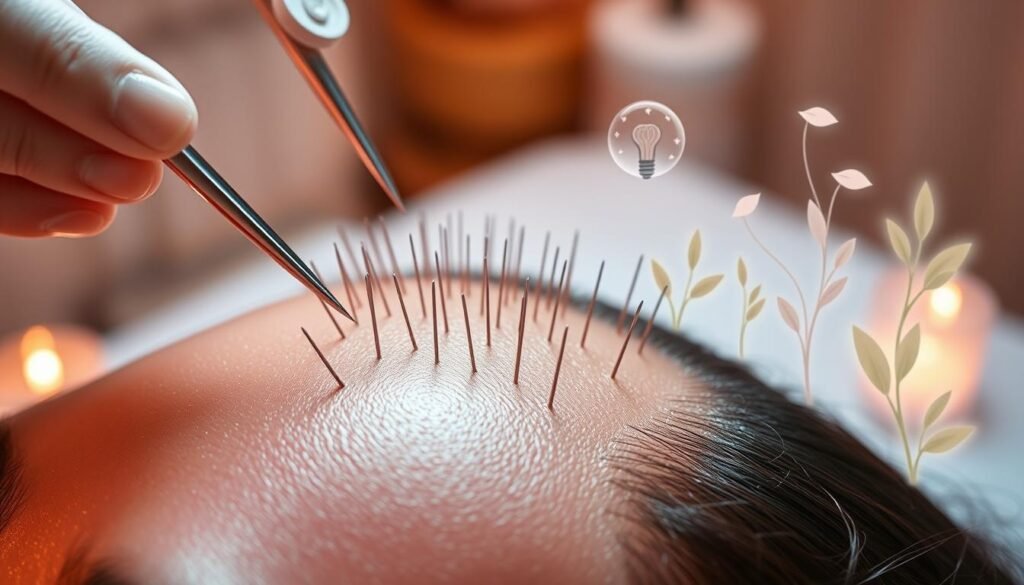
Microneedling vs Hair Transplant: A Comparison
When looking into hair loss solutions, people often consider microneedling or hair transplant. These methods offer benefits but are quite different. They vary in how invasive they are, recovery times, costs, and where you can get them. Knowing these differences helps make a good choice.
Invasiveness and Recovery Time
Microneedling is less invasive. It uses a tool with tiny needles to help the scalp heal better, boosting hair growth. People usually get back to their daily life quickly after. On the other hand, hair transplants are more intense. They involve cuts and can take weeks to heal from.
During this time, it can be uncomfortable and may swell.
Cost Efficiency and Service Availability
The cost is a big deal when choosing. Microneedling is cheaper, so more people can afford it. It’s a great option if you don’t want surgery. Hair transplants are pricier because the surgery is complex.
This higher cost might not work for everyone. This makes microneedling a good choice for those avoiding surgery.
To really understand hair loss treatments, it’s a good idea to look at expert opinions. You can find deep insights here.
Microneedling and Hair Regrowth: How It Works
Microneedling is a promising option for people struggling with hair loss. It not only boosts collagen but also makes tiny injuries on the scalp. These help in making hair grow better. The way microneedling works and improves blood flow explains its help in hair regrowth.
Mechanism of Action on Hair Follicles
Microneedling makes small channels in the scalp. These injuries start the body’s healing, which helps hair follicles revive and grow new hair. As the scalp heals, it turns on growth factors and genes linked to hair. This creates a healthy setting for hair to grow.
Stimulation of Blood Supply to Scalp
Microneedling also improves blood flow to the scalp. This means more nutrients and oxygen reach hair follicles, helping weak or sleeping ones wake up. People often see their hair get thicker and healthier in a few months. Mixing microneedling with topical minoxidil might help even more. To learn more, check out this informative resource.
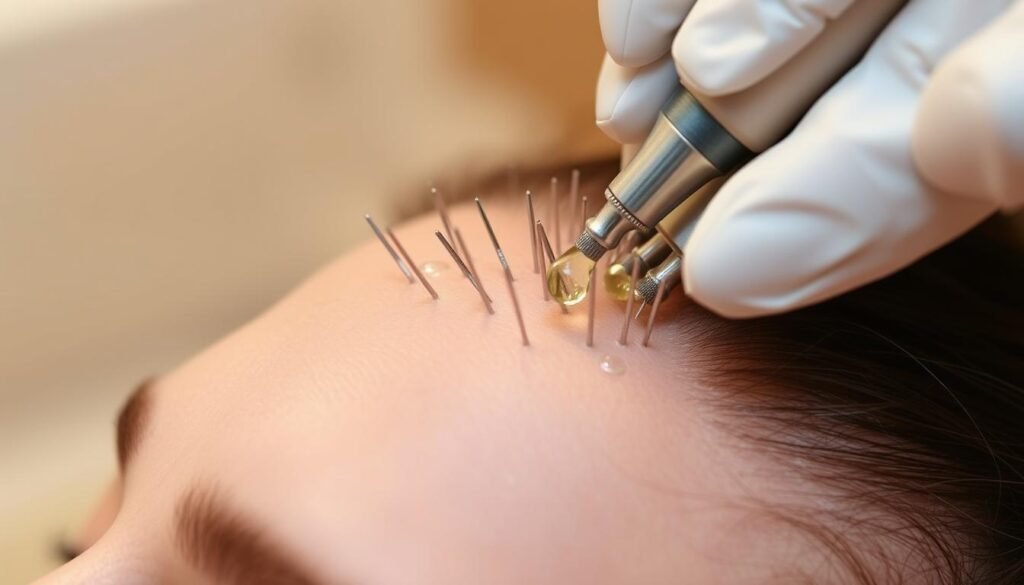
Microneedling Therapy for Hair Loss: Procedure Insights
Microneedling for hair loss is a simple medical treatment. It aims to boost hair growth. A numbing cream is used first. This cream makes the 15-minute procedure painless. A specialist uses a special tool on the scalp. This makes tiny wounds that help increase blood flow. It also makes the scalp better at taking in hair products. This leads to stronger hair roots.
What to Expect During a Session
The treatment is fast and efficient. The tool goes a little into the skin, about 2.5 to 3 millimeters down. It focuses on where hair starts to grow. As the treatment goes on, it makes small pathways. These pathways let hair products work better.
Aftercare and Follow-Up Instructions
After the treatment, taking care of your scalp is key to good results. You need to follow some steps to heal well and avoid problems. These steps are:
- Avoiding hair products containing alcohol for 2-3 days.
- Refraining from using any topical treatments for at least 24 hours post-procedure.
- Staying out of direct sunlight and applying sunscreen to protect the scalp.
Meeting with a skin doctor can give you advice that fits you. For more information on microneedling for hair loss, click here.
Side Effects and Risks of Microneedling
Those thinking about microneedling should know the possible side effects and safety steps needed. This procedure is usually easy to handle. But, there are a few common side effects to look out for.
Common Side Effects to Anticipate
After microneedling, patients may notice:
- Redness: It’s normal to have temporary redness, like a light sunburn.
- Swelling: The treated area might swell a bit.
- Discomfort: You could feel a bit of pain or tingling, mainly during the treatment.
These side effects are usually mild and go away in a few days. However, there’s a small chance of serious issues like heavy bleeding or infections. Still, infections are rare with microneedling. Many procedures have been safely done in clinics without any reported infections.
Precautions and Concerns for Candidates
Before getting microneedling, it’s key to talk about your health history with a skilled professional. This conversation can spotlight any issues that might make healing harder or up the risk of infections. Important things to think about include:
- Any history of skin diseases or infections.
- Medicines that could change clotting or the body’s defense mechanisms.
- Skipping microneedling if there’s a lot of hair, to avoid harming hair roots.
Taking these steps can help lower the risk of bad effects. This makes the procedure safer for everyone involved.
| Side Effect | Severity | Duration |
|---|---|---|
| Redness | Mild | 1-3 Days |
| Swelling | Mild | 1-3 Days |
| Discomfort | Mild to Moderate | Hours to 1 Day |
| Bleeding | Rare | Minutes |
| Infection | Very Rare | N/A |
Cost of Microneedling for Hair Loss Treatment
If you’re thinking about microneedling for hair loss, you’ll want to know how much it costs. Prices can change depending on where you are, the provider’s skill, and which parts of your head need treatment. You can expect to pay between $200 and $700 for a professional session. This range includes different services and levels of quality to fit your needs.
Average Pricing Per Session
The price of doing microneedling at home also varies. You could buy a basic dermaroller for as little as $21. On the other hand, advanced dermapens might set you back up to $3,000. Here’s a look at some options:
| Device Type | Average Cost |
|---|---|
| Manual Dermaroller | $21 – $199 |
| Eclipse MicroPen | $3,500 |
| Réjuvapen | $2,495 |
| InnoPen | $2,499 |
| Collagen P.I.N. | $2,995 |
Getting the best results usually means having 8 to 10 sessions. So, it’s important to plan how much the whole treatment will cost. This way, you won’t be surprised by the total amount.
Insurance Coverage Considerations
Most of the time, insurance doesn’t cover microneedling since it’s seen as cosmetic. However, there are exceptions, especially if hair restoration is medically needed. Always check with your insurance to see if they offer any help with the costs.
Choosing the Right Practitioner for Microneedling
Finding an expert for microneedling is crucial for your safety and results. Look for pros with the right skills and who care about their patients. They should know a lot about fixing hair issues and understand the scalp well.
Qualities to Look for in a Specialist
Here are key qualities to consider in a microneedling expert:
- Licensure: Make sure they are licensed and follow local rules.
- Training: They should have special training in microneedling and fixing hair problems.
- Portfolio: A skilled expert will show you their past work and photos before and after treatments.
- Patient Reviews: Look for feedback from others to see if they were happy with their experience.
- Consultation Style: A good expert talks with you about your goals and how they can help you.
Importance of Experience and Training
Having a lot of experience matters a lot for good microneedling outcomes. The right expert knows all about the scalp and how to do the treatments safely. They should always learn new things to make sure they offer the best care. Ask about their background and if they have any special certificates for fixing hair.
Conclusion
Microneedling is now a leading option for tackling hair loss. It’s been found to boost hair growth, with a notable increase of 91.4 hairs/cm² after 12 weeks, contrasting with 22.2 hairs/cm² when using Minoxidil. The results, showing a P value of 0.039, confirm that microneedling aids in hair comeback, highlighting its worth for those seeking new hair loss treatments.
About 82% of folks treated saw more than 50% hair improvement. This is significant. Experts suggest getting 1-2 sessions weekly for the best effect. Results are usually visible in three months. But, it’s important to speak with experts to tailor a plan that fits you best in this new therapy approach.
For those with thinning hair, microneedling presents a beacon of hope. However, it’s key to talk with a specialist about your situation. This ensures the treatment plan works best for tackling hair loss specifically for you.