Did you know that adults lose about 100 to 150 hairs every day? This fact is just a small part of the larger hair loss picture, also called alopecia. It covers many causes, like genes, hormone shifts, and health problems. Men often start losing hair in their teens or twenties. Women usually see changes in their 40s or later.
We’ll dive into what hair loss really means. We’ll look at its causes and how it links to health issues. It’s key to know these links. Spotting symptoms early and changing your lifestyle can really help your health and hair.
For extra info on how health issues tie to hair loss, see this resource.
Key Takeaways
- Hair loss can come from many sources, like genetics, hormonal changes, and health problems.
- Both genders lose hair, but how it happens can be very different.
- Early detection can help manage and even treat the loss.
- Knowing about hair loss means realizing how diet and stress affect it too.
- Women usually notice their hair changing later in life than men, underlining why different ages need to be aware.
What is Hair Loss?
Hair loss means losing hair from your head or body. It can happen to anyone, no matter their age or gender. It’s important to know what is hair loss to tell when it’s not just normal shedding. Usually, people lose 50 to 100 hairs a day without noticing, because new hair grows at the same time. But if you’re losing more hair than usual, it might be a sign of a problem.
There are many types of hair loss. Each type has different causes. Androgenetic alopecia, or male-pattern and female-pattern baldness, affects millions. In fact, more than 50 million men and 30 million women in the U.S. have it. Other types, like telogen effluvium, cause a lot of hair to fall out without new hair coming in. Alopecia areata makes hair fall out in small patches.
Doctors have ways to figure out hair loss definitions. They use tests like:
| Test | Description |
|---|---|
| Pull Test | Identifies active hair loss by checking the number of strands that fall out. |
| Tug Test | Examines types of hair loss like telogen effluvium and anagen effluvium. |
| Card Test | Assesses the health of hair shafts and the growth of new hair strands. |
| Fungal Culture | Confirms the presence of fungi, possibly indicating conditions like tinea capitis. |
| Punch Biopsy | Obtains a tissue sample for detailed diagnostics. |
| Blood Tests | Reveal underlying deficiencies or hormonal imbalances contributing to hair loss. |
These tests help doctors figure out the exact type of hair loss and why it’s happening. Knowing what is hair loss and the different types helps people find the right treatment.
Causes of Hair Loss
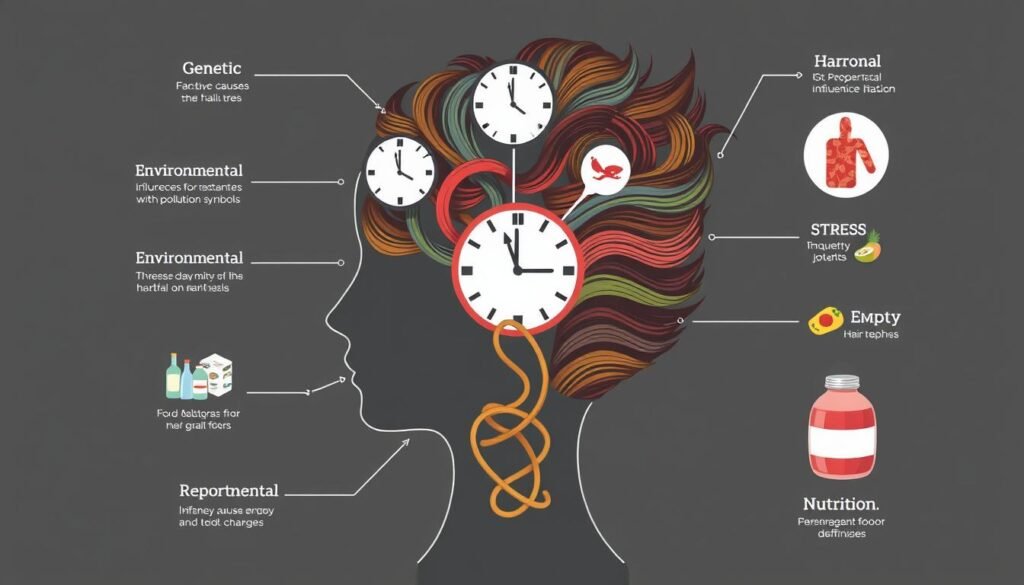
Understanding the various hair loss causes is key to handling it well. Many factors play a role in this widespread issue. Each one affects people differently.
Genetic Factors
Genetic hair loss, or androgenic alopecia, is very common. It leads to male-pattern and female-pattern baldness as people get older. Age also makes many see their hair get thinner.
Hormonal Changes
Hormonal hair loss happens with changes in hormones, like during pregnancy or menopause. PCOS can throw hormones off balance too, making hair thin. Stress, illness, or after having a baby can cause temporary hair loss. Luckily, hair often comes back full in six to nine months when stress decreases.
Medical Conditions
Medical conditions hair loss includes autoimmune diseases like alopecia areata. This disease attacks hair follicles, leading to patchy hair loss. Scalp infections and not having enough nutrients such as iron and biotin play a role too. Some medicines might cause hair fall, but hair often grows back after adjusting the treatment.
What is te hair loss?
To understand hair loss, we must know its types and how they affect us. Each type leads to different patterns of hair thinning or shedding. Knowing these helps manage and treat the condition effectively.
Types of Hair Loss
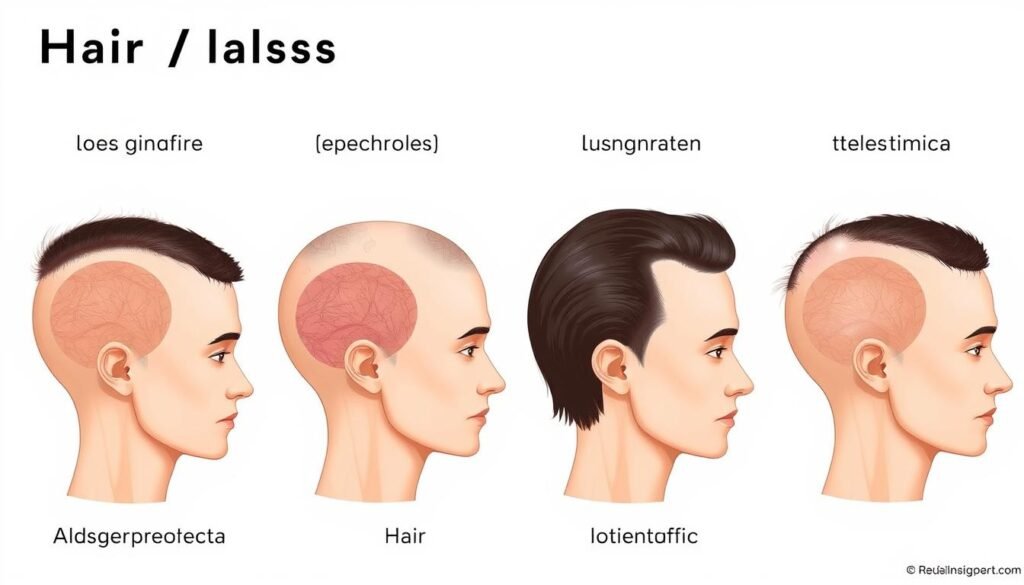
There are many types of hair loss, each with its own signs. The most common ones are:
- Alopecia Areata: This is when hair falls out unexpectedly due to an autoimmune reaction.
- Androgenetic Alopecia: Also known as pattern baldness, this type is inherited and gradually gets worse.
- Traction Alopecia: This happens because of too much pulling on hair from tight hairstyles.
- Telogen Effluvium: A temporary hair loss caused by stress or body changes, such as major weight loss. This usually ends within six months.
Knowing the types of hair loss is crucial for understanding the root cause. For example, telogen effluvium affects hair in the resting phase, causing more to shed. Stress can trigger this type, with symptoms appearing months after. For more on telogen effluvium, check this resource.
Impact on Different Genders
Hair loss shows up differently in men and women. Men often get a receding hairline or bald spots in their twenties or thirties. Women, however, tend to have a thinning across the whole scalp rather than spots. It’s important to know these differences for the right treatment.
Both men and women can feel the social and emotional weight of hair loss. The feelings they face can vary by cultural beauty standards and expectations. Recognizing these differences helps in choosing suitable treatment and support, offering a personalized experience.
| Type of Hair Loss | Description | Common Triggers | Reversibility |
|---|---|---|---|
| Alopecia Areata | Autoimmune condition leading to patchy hair loss. | Stress, genetic predisposition | Varies |
| Androgenetic Alopecia | Common hereditary pattern baldness. | Genetics, hormonal changes | Permanent |
| Traction Alopecia | Hair loss caused by pulling tension on follicles. | Tight hairstyles | Reversible |
| Telogen Effluvium | Temporary shedding due to stress or hormonal changes. | Stress, significant weight loss, medications | Usually reversible |
Symptoms of Hair Loss
Knowing the signs of hair loss early is key to dealing with it well. Hair loss can sneak up slowly or hit all at once, and it might just affect your scalp or your whole body. Learning about common symptoms can spark quicker action and treatment choices.
Patterns of Hair Thinning
Men and women lose hair differently. Guys often see a receding hairline or thinning at the head’s crown, signs of male-pattern baldness. Women might find their hair thinning on the head’s top-central part, leading to a wider part. There’s a condition called alopecia areata that causes patchy bald spots. Also, tight hairstyles like braids or buns can pull hair out over time.
Identifying Baldness Symptoms
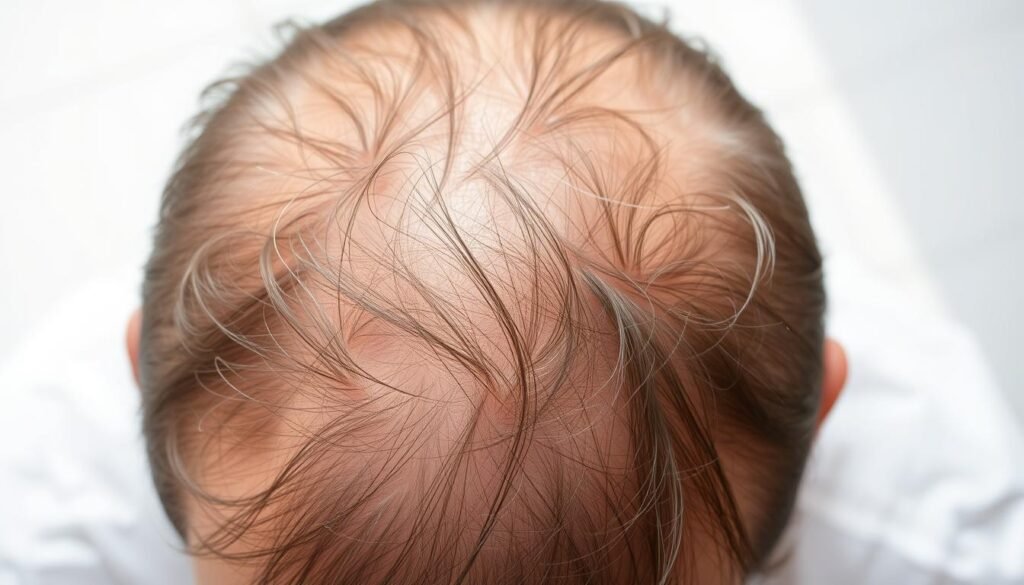
Watching for changes in hair density is crucial. Hair might start to fall out more, leaving thin spots or patches. Stress or trauma can make hair suddenly loosen, causing it to shed quickly. Treatments like chemotherapy might result in losing hair all over your body. Catching these signs early helps in managing the condition better. To get more info, visit here.
Hair Loss Prevention Techniques
Preventing hair loss means taking care of your scalp and not stressing your hair. There are several techniques to prevent hair loss that fit into your daily life. For example, be gentle when handling your hair and use a wide-toothed comb to reduce breakage.
Avoiding too much heat styling and tight hairstyles helps a lot. These steps are key to preventing traction alopecia which happens due to too much pulling.
Eating right is vital for hair loss prevention. Include foods rich in iron, vitamin D, and proteins to boost hair health. Check with a doctor about your meds; some might contribute to hair loss. Look for trusted advice on techniques to prevent hair loss to learn more.
Changing some of your lifestyle habits can improve your hair too. Massaging your scalp can help hair grow. Home remedies like coconut oil decrease hair damage. Eating a diet similar to the Mediterranean diet can also reduce the chance of baldness. By following these steps, you’ll greatly improve your hair’s condition and fight hair loss more effectively.
Hair Loss Treatment Options
Looking into different hair loss treatments can help those dealing with thinner hair or baldness. There are medications and new methods that suit various needs.
Medications and Supplements
There are many options for medication against hair loss. You can find over-the-counter products with biotin, zinc, collagen, and tea tree oil. These nourish the hair. Drugs like Minoxidil (Rogaine®) and Finasteride (Propecia®), which are approved by the FDA for pattern baldness, are available by prescription. Corticosteroids might also be used for sudden or severe hair loss.
Supplements that boost essential nutrients can also improve hair health. These supplements are filled with vitamins and minerals, promoting a healthier scalp.
Hair Restoration Procedures
For those wanting quicker results, there are both surgical and non-surgical hair restoration methods. Hair grafting, where hair is moved from one part of the body to the scalp, is popular. Scalp reduction can also help by removing areas of the scalp without hair to lessen bald spots. Light therapy uses special lasers to encourage hair growth.
PRP (platelet-rich plasma) therapy is another exciting choice. It takes a person’s blood, separates the platelets, and injects them into the scalp to help hair grow. Scalp micropigmentation is a non-surgical way to hide baldness with tattooing techniques.
| Treatment Type | Description | Method |
|---|---|---|
| Minoxidil | Topical solution that stimulates hair follicles | Topical application |
| Finasteride | Oral medication that blocks hormone effects on hair loss | Oral ingestion |
| Grafting | Surgical transplantation of hair follicles | Surgical procedure |
| PRP Therapy | Injection of platelet-rich plasma to stimulate growth | Injections |
| Scalp Micropigmentation | Non-surgical tattooing to cover bald spots | Tattooing |
Every treatment for hair loss works differently for each person. Talk with healthcare professionals to find the best option. What works best depends on personal needs and health.
Natural Remedies for Hair Loss
Natural remedies for hair loss are gaining popularity. They offer a gentler approach compared to other treatments. People are turning to essential oils and dietary changes. Rosemary and peppermint oils are top picks. They improve blood flow and encourage hair to grow.
What you eat affects your hair’s health. Foods rich in omega-3 fatty acids are key for a healthy scalp. Eating nuts, seeds, and fish helps reduce inflammation. This supports stronger and livelier hair.
Olive oil is a time-honored remedy for hair growth. It’s been used for nearly 3,000 years. It fights fungus and moisturizes the scalp. Pumpkin seed oil is known for blocking DHT, a hormone linked to baldness. Onion juice is also effective due to its high sulfur content.
While these natural methods can be beneficial, it’s important to manage your expectations. Research has shown rosemary oil may help with alopecia areata. It could encourage new hair to grow. Combining treatments like scalp massage could further improve hair health.
When exploring natural hair growth solutions, think about your overall health. Adding vitamins and minerals, like zinc and biotin, might help. Adopting a holistic lifestyle, managing stress, and maintaining healthy hair practices is crucial. It can lead to significant improvements in hair condition.
Living with Hair Loss
Coping with hair loss comes with its emotional ups and downs. It often triggers grief or a hit to one’s self-esteem. Seeking support helps those facing these image changes feel not alone. Joining groups or connecting with those in the same boat offers relief and understanding.
Sharing stories and advice is valuable. It helps people handle their emotions and find effective coping strategies. This kind of support is crucial during such tough times.
Trying out different hairstyles or headwear can lift spirits. Options like wigs, scarves, and hats not only provide practical benefits but also allow for self-expression. Since new hair doesn’t always grow back, it’s important to learn about hair loss and treatment options.
Understanding what causes hair loss, like genetics or hormones, gives people control. Emphasizing gentle hair care and a healthy lifestyle is beneficial too. In the end, dealing with hair loss means finding comfort, support, and discovering one’s identity anew.
Conclusion
Understanding hair loss means looking at many factors. Conditions like telogen effluvium affect men and women due to stress and other triggers. Emotional health is key, especially for women who seek help for hair shedding.
To handle hair loss well, we need a plan that covers both physical and emotional sides. Using prevention methods, treatments, and natural remedies can help. Knowing about things like hormonal changes and stress is also important.
Creating a supportive space and caring for emotional health can make managing hair loss easier. By learning more and looking into psychological aspects, people can choose the best care and treatment. For those focusing on emotional health in their hair loss journey, a visit to the connection between emotional well-being and hair offers great advice.