Ever wonder why many women face hair thinning as they get older, and what can help?
Hair thinning isn’t just about looks; it touches 30% of women by 30 years old. This widespread problem causes frustration and sadness. Experts, like dermatologists, highlight how vital a healthy scalp is for hair growth. The proper shampoo is key here. A shampoo made for thinning hair fights hair loss and helps develop a better environment for healthy hair. Ingredients such as biotin and keratin are central in top hair thinning shampoos.
Looking into these options, including well-known brands and useful ingredients, is a great first move towards getting back fuller hair. For more information on effective options, see this important guide to the best hair thinning solutions.
Key Takeaways
- Thinning hair impacts 30% of women by age 30 and 50% of men by age 50.
- Important ingredients like biotin, caffeine, and herbal extracts can majorly boost hair health.
- Most effective shampoos need to be used regularly for 6 to 8 weeks before seeing results.
- Having a healthy scalp and a balanced diet are crucial for hair growth support.
- Seeking professional advice is a good idea if home remedies don’t work.
Understanding Hair Thinning and Its Causes
Hair thinning can be complex, with many reasons behind it. It’s important to know why hair loss happens for the best treatment. Common reasons include hormone imbalances, stress, not enough nutrients, and medical conditions.
Common Causes of Hair Thinning
Lots of people lose hair due to several reasons. Lacking important minerals like iron and folic acid weakens hair. Stress can also cause conditions that make hair fall out. And, genetics can make some more likely to lose hair early.
The Role of Genetics in Hair Loss
Genetics is key in hair thinning. About 50 million men and 30 million women in the U.S. have androgenetic alopecia. This condition makes hair follicles smaller over time, leading to hair loss.
Environmental Factors Affecting Hair Health
The environment also impacts hair. Pollution and too much sun damage hair and scalp. Unhealthy habits like using harsh hair products also lead to thinning. It’s important to think about these factors for healthy hair.
To improve hair health, first understand these causes. Looking at solutions, like the right products and changing your lifestyle, can help fight hair loss.
Key Ingredients to Look for in Hair Thinning Shampoo
Choosing the right hair thinning shampoo is key to better hair health. Ingredients like biotin, caffeine, and herbal extracts are very important. They not only have unique benefits but also help strengthen hair and boost its growth.
Biotin: The Essential Vitamin for Hair Growth
Biotin is crucial for hair growth. It helps increase keratin production, which strengthens hair. Shampoos with biotin can make hair fuller, great for those with thinning hair.
Caffeine: Energizing Hair Follicles
Caffeine gives hair follicles a much-needed energy boost. People notice more hair vitality and thickness after using caffeine-enriched shampoos. It boosts scalp blood flow, feeding hair roots and helping to cut down on hair loss.
Herbal Extracts: Nature’s Solutions for Thinning Hair
Natural ingredients like saw palmetto, rosemary, and ginseng are great for hair. They feed the scalp and boost blood circulation. Shampoos with these extracts take a natural route to fight thinning hair.
Popular Shampoo Brands for Hair Thinning
Many brands lead the way in fighting hair thinning. Each has unique formulas and benefits. Knowing their strengths helps consumers choose what’s best for them.
Nioxin: Professional Solutions for Thinning Hair
Nioxin is a top name for thin hair care, with specially made products. Their System 2 Cleanser Shampoo, at $52 for a big 33.8 oz bottle, uses niacinamide to boost scalp health and hair growth. It’s great for making hair thicker and fuller.
Pura D’or: Organic and Effective Choices
Pura D’or shines for its organic ingredients in hair thinning shampoo. With biotin and plant extracts, it focuses on hair and scalp wellness. It’s a favorite for those preferring natural remedies for thinning hair.
Aveda: Botanical-Based Hair Care
Aveda stresses natural ingredients for hair care. It aims to nurture hair health while tackling thinning. Its products, enriched with herbs and plants, boost hair follicles and vitality.
| Brand | Key Features | Price |
|---|---|---|
| Nioxin | Includes niacinamide, promotes scalp health | $52 for 33.8 oz |
| Pura D’or | Organic ingredients, focuses on hair health | Varies |
| Aveda | Botanical ingredients, nurtures hair vitality | Varies |
How to Choose the Right Shampoo for You
When picking shampoo for thinning hair, it’s essential to know your hair type. Knowing if your hair is fine, thick, oily, or dry helps choose the right product. For example, oily hair might need daily washing, but dry hair benefits from moisturizing shampoos.
Assessing Your Hair Type
Understanding your hair type is key to finding the perfect shampoo. Volumizing shampoos work well for fine hair, making it look fuller. People with thick hair should use hydrating shampoos for better moisture and shine. For straight hair, smoothing shampoos are best, while wavy hair needs balanced moisture. Curly hair types should go for very moisturizing shampoos to keep curls defined and frizz-free.
Checking for Specific Hair and Scalp Needs
It’s important to know any special needs your hair and scalp might have. If you have an oily scalp, choose volumizing or balancing shampoos and avoid hydrating ones. Dandruff sufferers should look for shampoos with ketoconazole or zinc pyrithione. Always consult a healthcare provider if scalp issues don’t improve with regular shampoo use.
Reading Ingredient Labels
Checking ingredients in shampoo is crucial. Avoid harsh chemicals like sulfates and parabens to prevent dryness and irritation. Look for beneficial ingredients like biotin or niacin to promote hair growth. Using the right shampoo makes your hair healthier and helps it grow.
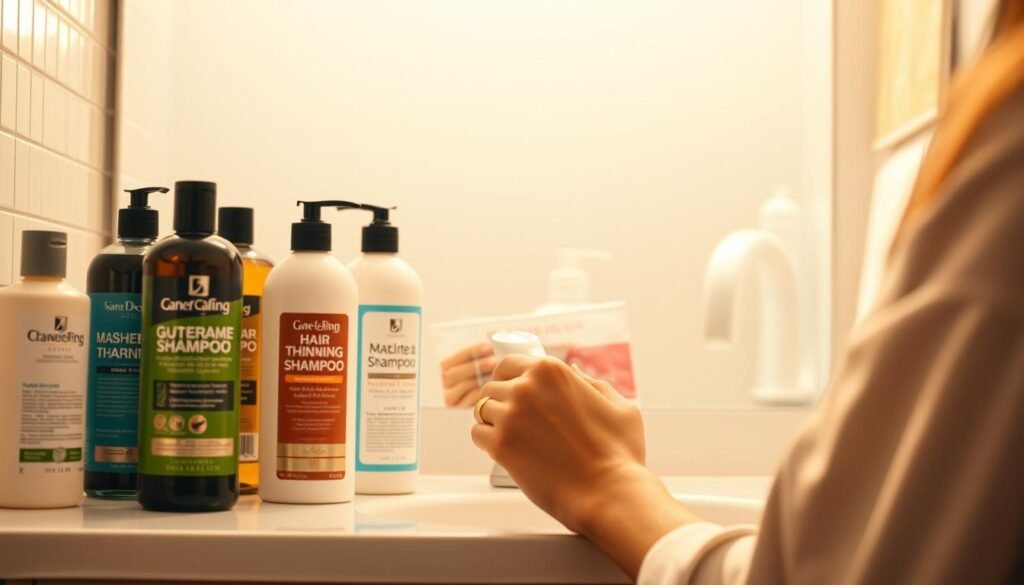
Tips for Using Shampoo Effectively
Using the right shampoo technique can really improve your hair’s health, especially if it’s thinning. Knowing the best ways to apply shampoo is key to getting the most out of it. You should learn the correct methods, figure out how often to wash your hair, and how to use conditioner alongside shampoo. This can make your scalp healthier and your hair shinier.
Application Techniques for Maximum Benefits
For best results, it’s important to gently massage your scalp when you shampoo. This helps with blood flow, so your hair gets more nutrients. You only need a small amount of shampoo, about the size of a quarter, to avoid using too much. It’s also good to pick shampoos that are mild and free of sulfates to avoid damage. Make sure to rinse well to stop buildup that can make your hair look flat.
Recommended Frequency of Use
Knowing how often to wash hair is key for keeping it in good shape. Washing it two to three times a week works for most people. This lets your scalp’s natural oils moisturize your hair. Washing too much can take these oils away, leaving your hair dry and could make it thin. Paying attention to what your hair needs helps you pick a good washing routine.
Combining Shampoo with Conditioners
When using conditioner with shampoo, it’s best to put conditioner mainly on the middle and ends of your hair. That’s where it really needs moisture. Letting the conditioner sit for a bit creates a barrier that doesn’t make roots greasy. Using both products together is great for getting softer, thicker hair.
Additional Hair Care Practices for Thicker Hair
Wanting thicker hair means looking at the big picture. It’s not just about picking the right shampoo. Your diet matters too because it strengthens hair from inside. Scalp massages increase blood flow which is great for your hair roots. Regular haircuts get rid of split ends and make your hair look healthy.
The Importance of a Balanced Diet
Eating well is key for thick, strong hair. Your hair loves proteins, biotin, and omega-3s. These nutrients are like magic, making your hair grow and shine. For the best hair health, eat lots of vitamins A, C, D, and E. Curious about more? Here’s a great read on diet for thick hair.
Scalp Massage for Improved Circulation
Scalp massages do wonders. They’re not just relaxing; they also make your hair thicker. A study in 2016 showed that doing it for 24 weeks can really help. Doing it regularly improves blood flow, which feeds your hair roots. Adding essential oils makes the benefits even better, boosting moisture and strength.
Regular Trims to Maintain Healthy Hair
Don’t forget about hair trims. They’re crucial for getting rid of split ends. Without trims, split ends could damage your hair. Aim for a haircut every 6-8 weeks for the healthiest hair. Sticking to this keeps your hair looking and feeling great.
Lifestyle Changes to Combat Hair Thinning
Making changes in your lifestyle can really help with hair health and thinning. By managing stress and building good habits, you can fight hair loss and encourage growth. Small, doable adjustments can improve your overall health and your hair’s condition.
Reducing Stress and Its Impact on Hair Health
Stress is closely linked to hair loss because it can mess with your hormones, hurting your hair roots. To relax, try mindfulness exercises like meditation or yoga. These methods help reduce stress hormones, which lead to hair fall. Realizing when you’re stressed is important for making changes to boost hair health.
The Importance of Proper Sleep
Getting enough sleep is key for healthy hair growth. Not sleeping well affects your hormones and how your body uses nutrients. While you’re asleep, your body fixes and makes new cells, including those for hair. So, good sleep helps your body heal, which is great for your hair.
Exercise and Its Benefits for Hair Growth
Exercise does more than just keep you fit. It boosts blood flow, feeding your hair roots with what they need to grow strong. Working out also lowers stress, which is linked to hair loss. So, exercising can make a big difference in your hair’s health.
| Lifestyle Change | Impact on Hair Health |
|---|---|
| Stress Reduction | Decreases hormone imbalances that lead to hair loss. |
| Quality Sleep | Enhances cell regeneration and nutrient absorption. |
| Regular Exercise | Improves blood flow to hair follicles and reduces stress. |
Myths and Misconceptions About Hair Thinning
The world of hair thinning is full of myths that cause confusion. People often don’t know how shampoos work or how aging changes hair. Understanding these myths better can help us take care of our hair and keep it healthy.
Common Misunderstandings Regarding Shampoo
Many think any shampoo can end hair loss. But shampoos just help with scalp health, not the root causes of thinning hair. It’s key to pick shampoos with good stuff like biotin and minoxidil. For more help, check out this resource.
The Truth About Hair Products and Hair Loss
It’s a myth that all hair growth products work for everyone. Success varies, as things like genes and hormones affect results. Understanding this can clear up many wrong ideas about hair care products and hair loss.
How Age Affects Hair Thickness
Many think aging and hair loss are big problems, but it’s natural. Our hair gets thinner as we get older. This isn’t just about getting bald; it’s about changes in hormones. Knowing this helps us change how we take care of our hair, focusing on good food and caring for our scalp. Being informed lets us tackle the effects of aging on hair positively.
When to Seek Professional Help for Hair Thinning
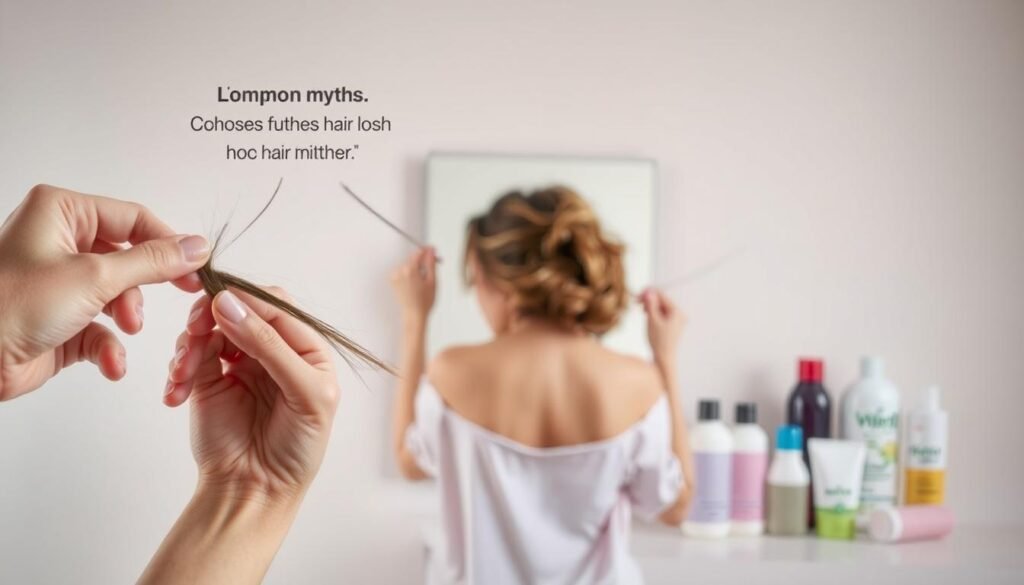
Knowing when to get help for hair thinning is key to getting better. If your hair thins a lot or falls out without a reason, it’s time to notice the signs to meet a skin doctor. If you’re losing a lot of hair, your scalp changes, or it itches and gets red, you should not wait. A skin specialist can find out why it’s happening and help you pick the right treatment.
Signs That Indicate Professional Advice is Needed
Seeing a lot more hair fall when you wash or comb it is a clear sign to get help. If pulling a bit of your hair gently ends up in too many hairs coming out, or if your hair or scalp looks different, you need an expert’s opinion. Spotting these early can help you fix your hair problems faster and get better results.
Consultation with Dermatologists or Trichologists
Meeting with a skin or hair doctor can give you insights into what treatment will work for you. They can figure out the exact reason, like hormone changes or stress, and suggest what to do next. They’ll talk to you about treatments you might need, like medicine (finasteride) or things you put on your scalp (minoxidil), to manage your hair issue.
Exploring Advanced Treatment Options
There are many treatments out there, like laser therapy and hair transplants, that can make a difference. These might take several tries to see changes, and surgeries need thinking about their effects and costs. Even if insurance doesn’t cover everything, talking with a specialist can help you find the right way to tackle hair thinning and feel good about yourself again.
FAQ
What is the best shampoo for hair thinning?
How often should I use shampoo for thinning hair?
Are there natural shampoos that help with hair thickening?
Can shampoo alone solve hair loss issues?
What should I look for in a shampoo for thinning hair and hair loss?
How do environmental factors affect hair thinning?
Is stress a contributing factor to hair thinning?
Can a balanced diet really help with hair thickness?
When should I consult a professional about my hair thinning?
Are there specific hair care practices I should adopt to improve hair thickness?
Source Links
- This $8 Shampoo Brought Life Back to My Thinning Hair
- 50% of Women Experience Hair Loss By Middle Age—These Hair Growth Shampoos Can Help
- Suds Up to Boost Volume, Thickness, and Strength (We Tested Shampoos for Thinning Hair)
- 12 Ways to Stop Hair Thinning
- Thinning hair: Causes, types, treatment, and remedies
- After 6 Months of Testing, We Found Which Shampoos for Thinning Hair Actually Work
- Dealing With Thinning Hair? Experts Swear By These Shampoos
- Don’t Let Thinning Hair Hold You Back—Try These Expert-Recommended Shampoos
- Scalp Experts Say These Shampoos Really Help Thinning Hair – Here’s How
- How to Choose the Right Shampoo For Your Hair Type, According to Experts
- How to Choose the Best Shampoo
- Shampoo Ingredients for Different Hair Needs: What to Look For
- How to Wash Thinning Hair: Tips and Techniques for Hair Care – Thinning hair
- Shower routine: how to reduce hair loss effectively?
- How To Wash Thin Hair Properly – L’Oréal Paris
- 9 natural ways to get thicker hair
- Wimpole Hair Transplant Clinic
- Best ways to stop hair loss
- Is Your Hair Thinning? Try These 9 Remedies
- 10 Myths and Truths about Hair Loss
- The Great Hair Myths – The Institute of Trichologists
- Hair loss – Diagnosis and treatment
- Hair Loss and Thinning Hair Treatment Options
- Treatments for Thinning Hair: Do They Work?