Ever thought your kitchen might hold the key to beautiful hair? Many natural ingredients can help hair grow stronger and healthier. These include foods, direct hair treatments, and lifestyle changes. Let’s explore effective home remedies for better hair growth. We’ll see how important diet is and learn about ancient methods that really work.
Key Takeaways
- Keratin, a protein, is essential for hair strength—ensuring adequate protein intake is vital.
- Iron-rich foods like spinach and red meat can combat hair thinning linked to deficiencies.
- Omega-3 fatty acids boost scalp health; sources include salmon and flaxseeds.
- Vitamins A and C promote hair health, with citrus fruits and sweet potatoes as excellent sources.
- Gentle hair care methods and stress management can prevent damage and support growth.
Understanding Hair Growth and Health
Hair grows in a complex way, with each of our 100,000 scalp follicles playing a big part. These follicles produce hair, influenced by our genes, hormone changes, how we live, and what we eat. Spotting hair loss signs early can help in keeping our hair healthy.
The Basics of Hair Growth
Hair grows about half an inch each month if everything’s right. Our scalp goes through phases of growing hair, resting, and then shedding. Each day, it’s normal to lose 50 to 100 hairs, says the American Academy of Dermatology.
Knowing about these growth cycles helps us spot problems that might cause hair to fall out more.
Factors Affecting Hair Growth
Several things can change how fast or well our hair grows:
- Genetics: Our genes decide a lot about our hair, including if we might lose it.
- Hormonal Changes: Changes, like during pregnancy or menopause, can change how our hair grows.
- Nutrition: Not getting enough important nutrients like iron or vitamin D can hurt our hair.
- Stress: Being really stressed can make more hair than normal go into a resting phase, leading to loss.
- Lifestyle Choices: Eating poorly and not sleeping enough can also make our hair health worse.
Signs of Hair Loss to Watch For
Knowing what hair loss looks like means we can act fast. Here are things to look out for:
- Thinning Spots: Places on the scalp where it looks like there’s less hair.
- Increased Shedding: Finding more hairs on your pillow or brush than before.
- Changes in Texture: If your hair feels thinner or breaks easily, it might be a sign of a problem.
Essential Nutrients for Hair Growth
To keep your hair looking great, you need to know about the right nutrients. Eating foods packed with various vitamins and minerals is key for healthy hair. These include vitamins A, C, D, and E, which are important for the scalp and hair follicles. We should also get enough protein, iron, and omega-3 fats to avoid hair thinning and loss.
Vitamins That Promote Healthy Hair
For strong and healthy hair, certain vitamins are crucial. Vitamin A helps cells grow and keeps the scalp healthy. You can find it in spinach and sweet potatoes. In fact, a medium sweet potato has about 160% of what you need each day. Vitamin C is another important one, helping make collagen that strengthens hair. Strawberries and yellow sweet peppers are great for this, especially yellow peppers with over 450% of your daily needs.
Minerals You Can’t Ignore
Iron and zinc are really important for hair growth. A lack of iron is common in people, especially women with thinning hair. Just a 3.5-ounce serving of cooked sirloin steak offers a big protein boost, and helps with iron intake. Zinc, which you can get from oysters and beans, is also key for keeping hair healthy.
Importance of Protein in Hair Health
Protein is the main ingredient your hair needs to grow. Eating enough protein helps stop hair from falling out. Foods like eggs, almonds, and black beans are good for adding protein to your diet. For those wanting more hair growth, omega-3 and omega-6 supplements have been helpful in research aimed at increasing hair density.
Popular Home Remedies for Hair Growth
Many people want to improve their hair’s health and growth. They turn to home remedies full of natural ingredients. Coconut oil, onion juice, and aloe vera are top choices, each bringing unique benefits to the table.
Coconut Oil: A Staple for Shine and Strength
Coconut oil is loved for making hair shiny and strong. It goes deep into the hair, adding shine and keeping protein in. This makes your hair stronger and stops it from breaking.
To use it, warm a bit up and massage into your hair and scalp. You can leave it on for 30 minutes or even overnight. Wash it off with gentle shampoo. Your hair will feel softer and look less frizzy.
Onion Juice: Nature’s Follicle Booster
Onion juice is known for its sulfur, which helps make hair strong. Many find it works better than some store-bought products.
Squeeze some juice from an onion and dab it on your scalp with cotton. After about 30 minutes, rinse it out. People notice their hair gets thicker with regular use.
Aloe Vera: The Soothing Solution
Aloe vera is great for soothing the scalp and promoting hair growth. It balances the scalp’s pH and reduces dandruff. This makes a perfect environment for hair to grow.
Put fresh aloe vera gel on your hair and scalp. Wash it off after 30 minutes. Many see their hair come back to life, growing naturally and healthy.
| Remedy | Main Benefit | Method of Application | Expected Outcome |
|---|---|---|---|
| Coconut Oil | Deep moisturizing and shine | Warm and massage into scalp | Improved texture and reduced breakage |
| Onion Juice | Boosts collagen production | Apply juice with a cotton ball | Increased hair density |
| Aloe Vera | Soothes and nourishes scalp | Direct application of fresh gel | Promotes healthy hair growth |
These home remedies are easy to find and use. They are a simple way to make your hair healthier. Adding these to your regular hair care can make a big difference without harsh chemicals.
DIY Hair Masks for Enhanced Growth
Trying out DIY hair masks can make your hair stronger and healthier. You can find the ingredients for these masks right in your kitchen. They help your hair grow by giving it what it needs to be healthy.
Avocado Hair Mask: Nourishing Your Strands
This avocado mask is packed with good stuff like folic acid and magnesium. Just mix an avocado with coconut oil and put it on your hair. Wash it out after 30 minutes. It makes your hair soft and strong.
Egg and Olive Oil Mix: Protein Power
An egg and olive oil mask gives your hair a protein kick. Mix an egg with olive oil, apply it to your hair, and wait 20 minutes. It helps your hair hold onto moisture and shine.
Yogurt and Honey: A Sweet Remedy
Yogurt and honey together fight bacteria and condition your hair. Mix them up, apply to your hair, and rinse off after 20 minutes. This keeps your scalp healthy, which helps your hair grow.
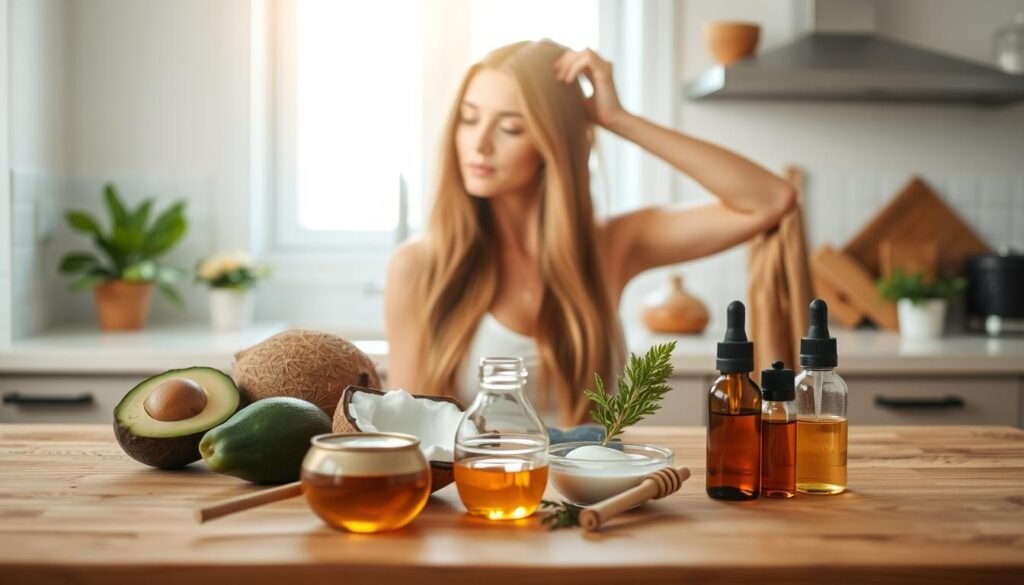
These DIY treatments are great for making your hair healthy. For more tips on what’s good for your hair, check out this guide. Using these masks can improve your hair’s moisture and protein.
| Hair Type | Recommended Frequency |
|---|---|
| Dry or Damaged Hair | 2–3 times per week |
| Color-Treated Hair | 1–2 times per week |
| Fine or Oily Hair | Once a week or every other week |
| Normal Hair | Once every two weeks |
Choosing how often to use these masks based on your hair type helps a lot. Add them to your care routine and see your hair thrive!
Herbal Remedies for Thicker Hair
Exploring herbal remedies is a smart way to get thicker hair and promote growth. Many natural remedies have become popular because they work and are easy to use. Here are some top choices known to help hair grow.
Rosemary Oil: The Aromatic Growth Stimulator
Rosemary oil is a top pick for getting thicker hair. It boosts blood flow to the scalp, making hair follicles healthier. Studies show it works as well as minoxidil, a common hair growth treatment. With regular use, hair becomes thicker and healthier.
To use rosemary oil, mix a few drops with a carrier oil like coconut or olive oil. Massage it into your scalp once or twice weekly.
Peppermint Oil: Invigorating Scalp Health
Peppermint oil is another great choice for thicker hair. It wakes up the scalp by boosting blood flow. Adding it to your scalp massage routine is a good idea.
It’s best to mix peppermint oil with carrier oil. Use it two to three times a week for the best results.
Ginseng: A Traditional Treatment
Ginseng has been used for ages to tackle health issues, including hair loss. It boosts circulation, which helps hair grow strong and healthy. You can find ginseng in various hair products or as supplements.
If you’re considering ginseng, look for products aimed at hair growth. You could also try adding ginseng tea to your diet.
Scalp Massages: An Easy Method to Boost Growth
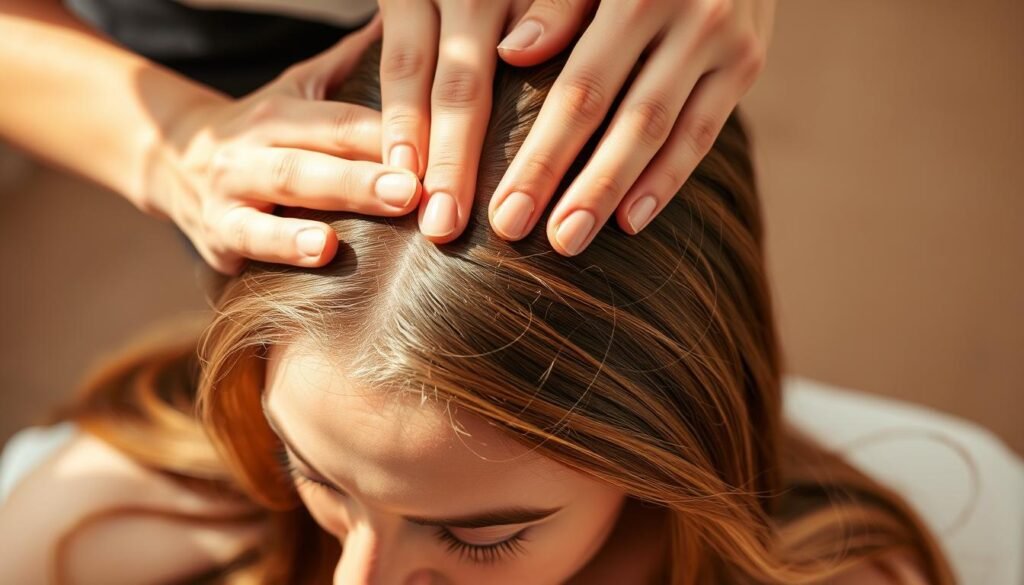
Scalp massages help your hair grow by boosting blood flow. They make the hair roots healthier when added to your hair care plan. People who massage their scalp often see better hair thickness and health.
Techniques for Effective Massaging
There are several ways to make scalp massages work better. You can use your fingertips or special tools. Here are some methods:
- Circular Motions: Move your fingertips in gentle circles on your scalp for 4-5 minutes to help blood flow.
- Tugging: Gently pull on sections of your hair for 15-30 seconds. Do this all over for about 3-4 minutes.
- Oil Application: Mix essential oils like lavender with a base oil. Rub this in while massaging.
Frequency and Duration: Finding the Right Balance
For the best results, do scalp massages 3-4 times a week. Doing them even twice a day can be extra helpful. Spend about 10 minutes each time. You can leave the oil in for a while to soak in.
Scalp massages help your hair look better and help you feel less stressed. They’re great for anyone’s hair care routine.
Lifestyle Changes to Encourage Hair Growth
Specific lifestyle changes can really help your hair grow and stay healthy. If you’re looking for natural ways to boost hair growth, think about what you eat, how you handle stress, and making sure you drink enough water. These things are key to feeding your hair roots and keeping your scalp happy.
Diet Adjustments That Make a Difference
A diet full of important nutrients is great for your hair. Iron is super important because not having enough is a common problem around the world and can lead to hair loss. For women going through perimenopause or menopause, it’s especially key to eat foods high in iron like spinach, lentils, and lean meat. Vitamin C helps your body use the iron better, so eating things like citrus fruits along with those iron-rich foods is a smart move.
Zinc is another must-have for strong hair. Not getting enough can make your hair break easily. Eat pumpkin seeds, nuts, and whole grains to keep your zinc levels up. Omega-6 fatty acids, which are in nuts and fish, are also good for your hair roots. Getting these nutrients can make your hair healthier and tougher.
Stress Management Techniques
Stress can really slow down hair growth, so it’s crucial to find ways to relax. Doing things like exercising, practicing mindfulness, and yoga can lower your stress. This can make you feel better overall and help your hair grow. Scalp massages have been shown to make hair thicker too. So, relaxing can actually be a part of taking care of your hair.
The Role of Hydration in Hair Health
Being well-hydrated is essential for a healthy scalp. Water helps with blood flow to your hair roots. If you’re not drinking enough, your hair might get dry and fragile, making it fall out more easily. Make sure to drink plenty of water and eat foods that have a lot of water in them, like cucumbers and melons. Doing this can make your scalp better and help your hair grow as part of a healthy lifestyle.
Avoiding Harmful Practices for Hair Care
Keeping hair healthy means carefully choosing how you care for it. Harsh styling can cause a lot of damage. It’s essential to know which practices to avoid and to use the right shampooing methods to keep your hair’s natural oils.
Heat Styling: When to Say No
Too much heat is bad for your hair, causing dryness and breakage. Avoid using flat irons and hair dryers too often. Choose natural styling methods and let your hair air-dry. This protects its moisture.
Chemical Treatments: Risks vs. Benefits
Chemical treatments like perms and coloring can harm more than help. They can make hair weak and lead to hair loss. Consider herbal remedies instead, as some herbs can reduce hair loss and even promote growth. For more info on herbal solutions, check out this resource.
Proper Shampooing Techniques
Good hair care starts with how you shampoo. Avoid strong shampoos that can take away your hair’s natural oils. Choose sulfate-free shampoos to keep your hair moist. Wash your hair based on its type: oily hair needs daily washing, while normal to dry should be washed 2-3 times a week. Rinse well and massage gently for healthier hair.
The Impact of Genetics on Hair Growth
It’s key to know how genetics affects hair growth to care for your hair. Many face challenges like genetic hair loss, impacting both genders. About 80 percent of men will deal with male pattern baldness (MPB) by age 80, largely due to their genes. Similarly, around half of women will face female pattern baldness (FPB) by the same age. Genes play a big role in how our hair grows and if it might thin.
Understanding Genetic Hair Loss Patterns
Genetic hair loss shows up in different ways. Research shows genes cause about 80 percent of male pattern baldness, especially due to the AR gene on the “X” chromosome. Men with this gene are much more likely to get MPB. For women, hair loss often comes with big hormone changes, like during menopause, childbirth, or pregnancy. Also, not eating right and environmental stuff can make genetic hair loss worse.
How to Adapt Your Hair Care Routine
To keep your hair healthy, making a hair care plan based on your genes is crucial. You can do things like:
- Add important nutrients, like proteins and vitamins, that help hair grow
- Use treatments with minoxidil and finasteride, which are okayed by the FDA for hair loss
- Take care of your scalp regularly to make blood flow better and wake up hair follicles
- Try natural ways that feed your hair and fight genetic hair loss
For those looking for natural hair growth solutions, check out this resource. It has lots of info on natural methods to boost hair growth.
Consultative Approaches: When to Seek Expert Help
If your hair starts to thin out significantly, you might wonder when to get help. Seeing a dermatologist is vital when your hair loss gets noticeable and doesn’t stop. They can also tell you about professional treatments that could help with serious hair problems.
When to Contact a Dermatologist
There are several signs that mean you should get advice from a hair expert. These include big changes in how thick your hair is, sudden bald spots, or if hair loss runs in your family. Stress can also cause hair loss; about half of the people with this issue are very stressed. If you notice these things, you should think about seeing a dermatologist.
Understanding Hair Growth Treatments Available
There are many professional treatments for hair loss, each made for different problems. Here are some options:
| Treatment | Type | Effectiveness |
|---|---|---|
| Minoxidil (Rogaine) | Topical | Effective for both men and women; improves hair density. |
| Finasteride (Propecia) | Oral | Primarily for men; can significantly reduce hair loss. |
| Follicular Unit Extraction (FUE) | Procedural | Success rates over 90% in restoring hair growth. |
| Follicular Unit Transplantation (FUT) | Procedural | Strong results for long-term hair restoration. |
| Scalp micropigmentation | Cosmetic | 85% satisfaction rate; provides a cosmetic solution. |
| Ginseng and Biotin supplements | Supplemental | Enhances hair quality and promotes growth. |
So, if hair loss worries you, it’s important to seek expert advice. Professionals have treatments that can help you get your hair’s health back.
Conclusion: Embracing Natural Approaches to Hair Care
On the path to better hair health, natural care methods stand out for being both effective and lasting. This article has explored various home remedies that enhance hair growth, showing how important a nutrient-rich diet is. Including iron, vitamins like B12, D3, and proteins in your meals can make your hair stronger and encourage it to grow.
On top of changing what you eat, using coconut oil, onion juice, and aloe vera helps too. These natural treatments nourish your hair and create the perfect setting for it to grow. Also, living a healthier lifestyle, by managing stress with meditation and getting enough sleep, is key for better hair.
Taking a full-care approach that mixes a good diet, scalp massages, and natural remedies works well for hair health. This way, people see their hair becoming denser, stronger, and shinier. It shows that taking care of your hair naturally can improve not just its look, but how you feel overall.
FAQ
What are some effective hair growth home remedies?
How do diet and nutrition influence hair growth?
What signs indicate I might be experiencing hair loss?
Can DIY hair masks really help with hair growth?
How often should I perform scalp massages for hair growth?
Are there any herbal remedies I can try for thicker hair?
How can I manage stress to improve hair health?
What practices should I avoid for better hair health?
When should I seek professional help for hair loss?
Source Links
- Revitalize Your Locks: Home Remedies for Thinning Hair Endorsed by Hair Restoration Experts – Charles, Glenn (charlesmedicalgroup.com)
- 8 Ayurvedic Hair Care Tips for Healthy, Lustrous Locks
- Revitalize Your Locks: Hair Growth Strategies for Thinning Hair
- 10 Tips to Naturally Regrow Your Hair in 2024
- How To Make Your Hair Grow Faster: Tips for Healthy Growth
- 14 Ways to Help Your Hair Grow Faster and Stronger
- Best Foods for Hair Growth: What to Eat, Drink & Avoid
- Guide to Best Vitamins and Minerals for Hair Growth – ISHRS
- Home Remedies for Hair Growth: Natural Solutions for Healthy Hair
- The best home remedies for hair growth
- Homemade Hair Mask for Growth & Thickness | DIY Recipes
- 10 DIY Masks for Healthier Hair
- 15 DIY Hair Masks You Can Make With Ingredients You Have at Home Right Now
- How to Get Thicker Hair: 5 Home Remedies
- 9 natural ways to get thicker hair
- Scalp Massage for Hair Growth: Does It Really Work?
- How to Give Yourself a Scalp Massage for Hair Growth
- How to regrow hair naturally
- Is Your Hair Thinning? Try These 9 Remedies
- 19 Herbs for Hair Growth
- 13 Hair and Scalp Treatments You Can Probably DIY at Home Right Now
- 7 Natural Home Remedies For Hair Growth -Thicker, Healthier Hair
- Baldness Gene: How Genetics Influence Hair Loss
- Modulation of Hair Growth Promoting Effect by Natural Products
- Unlock the Secret to Fuller Hair: Expert Tips for Hair Growth Treatment at Home from Charles Medical Group – Charles, Glenn (charlesmedicalgroup.com)
- Top 10 Natural Remedies for Hair Loss You Can Try at Home
- How to Stop Hair Loss Naturally? Natural Solutions and Remedies
- Ayurvedic Hair Growth: 7 Powerful Secrets To Achieve Exceptional Hair Growth – The Ayurvedic Clinic
- 10 Effective Home Remedies for Hair Loss in Women